Ghan Expedition
20-07-2026 to 27-07-2026
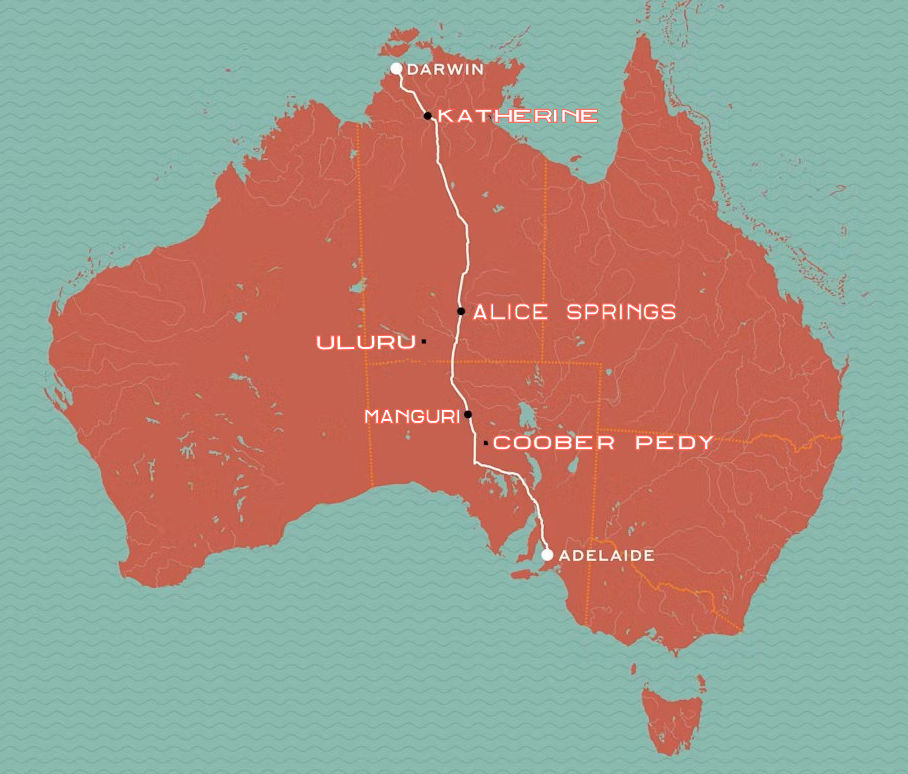
Auckland - Darwin
20th July
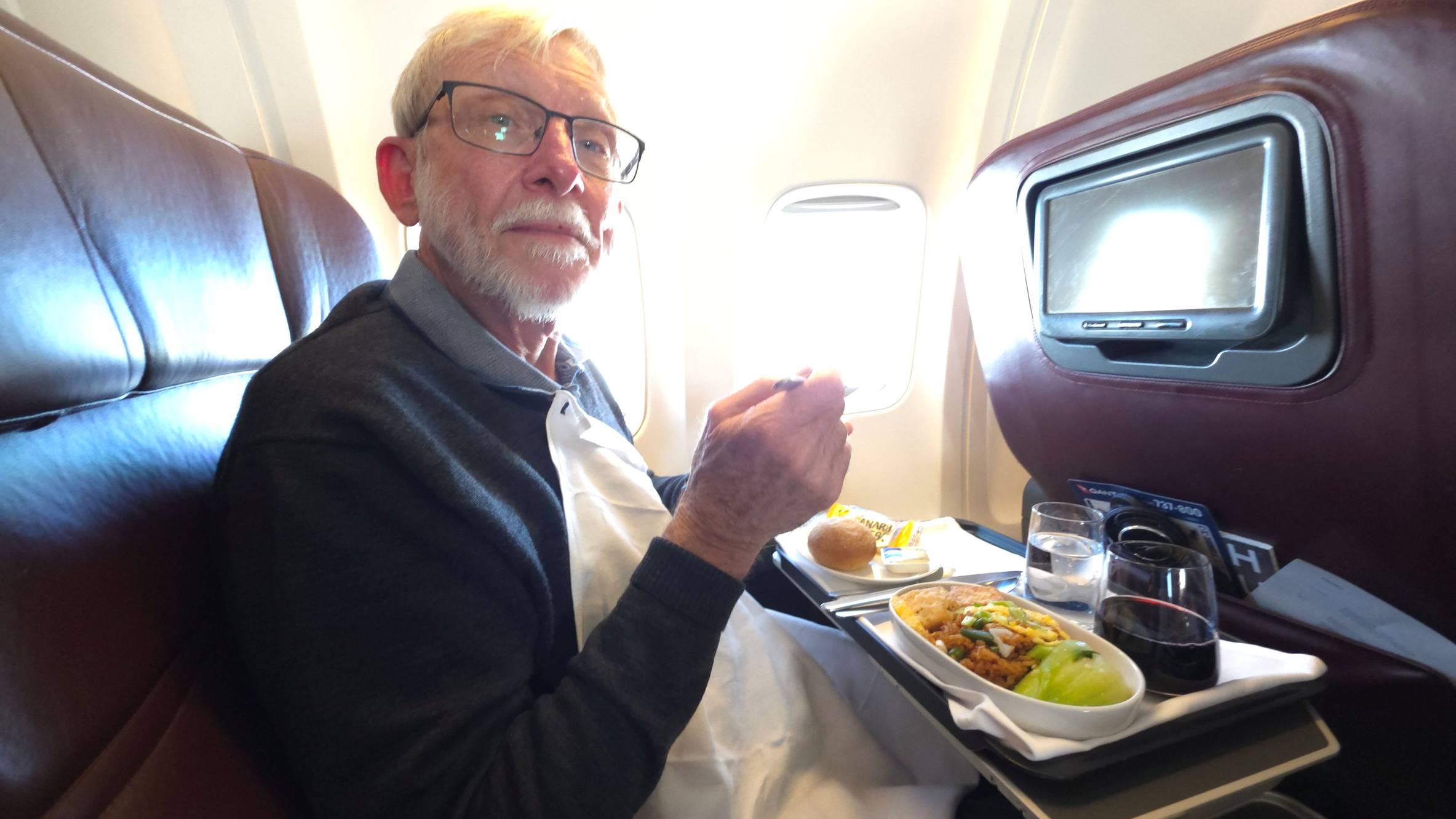
Lunch after take-off from Auckland.
We are on our way.
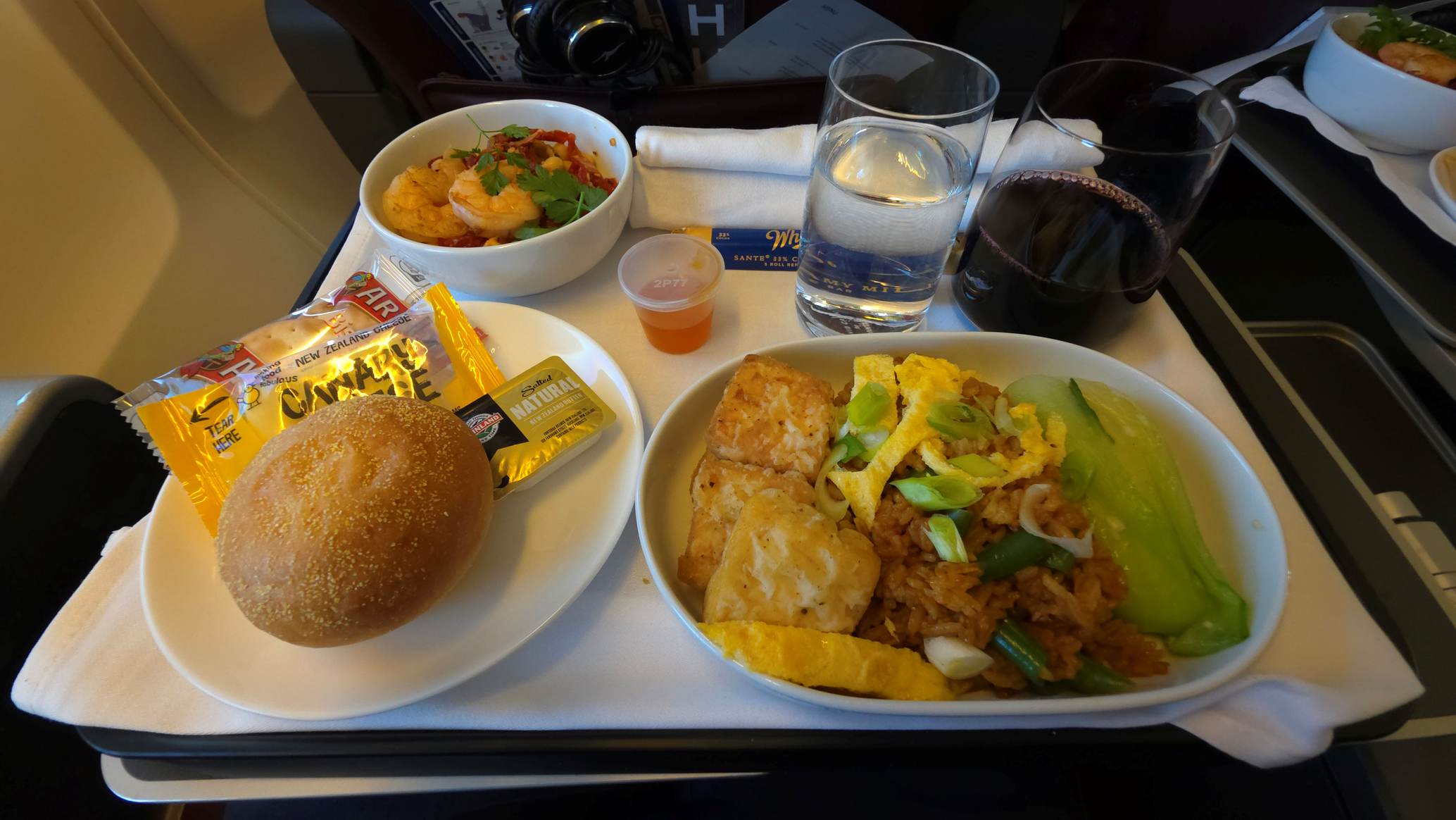
My lunch.
Nasi Goreng.
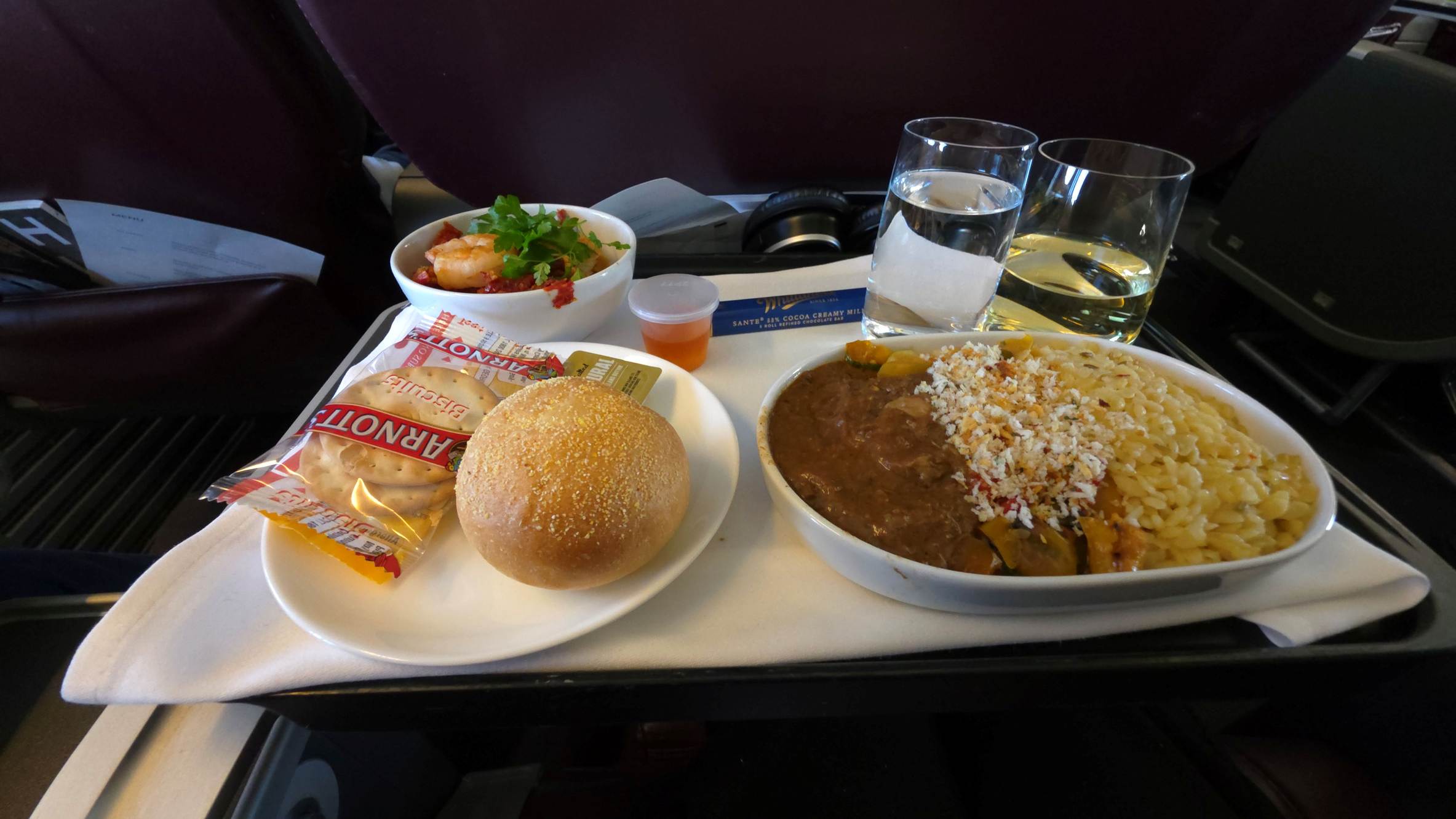
Colleen's lunch
Braised Beef.
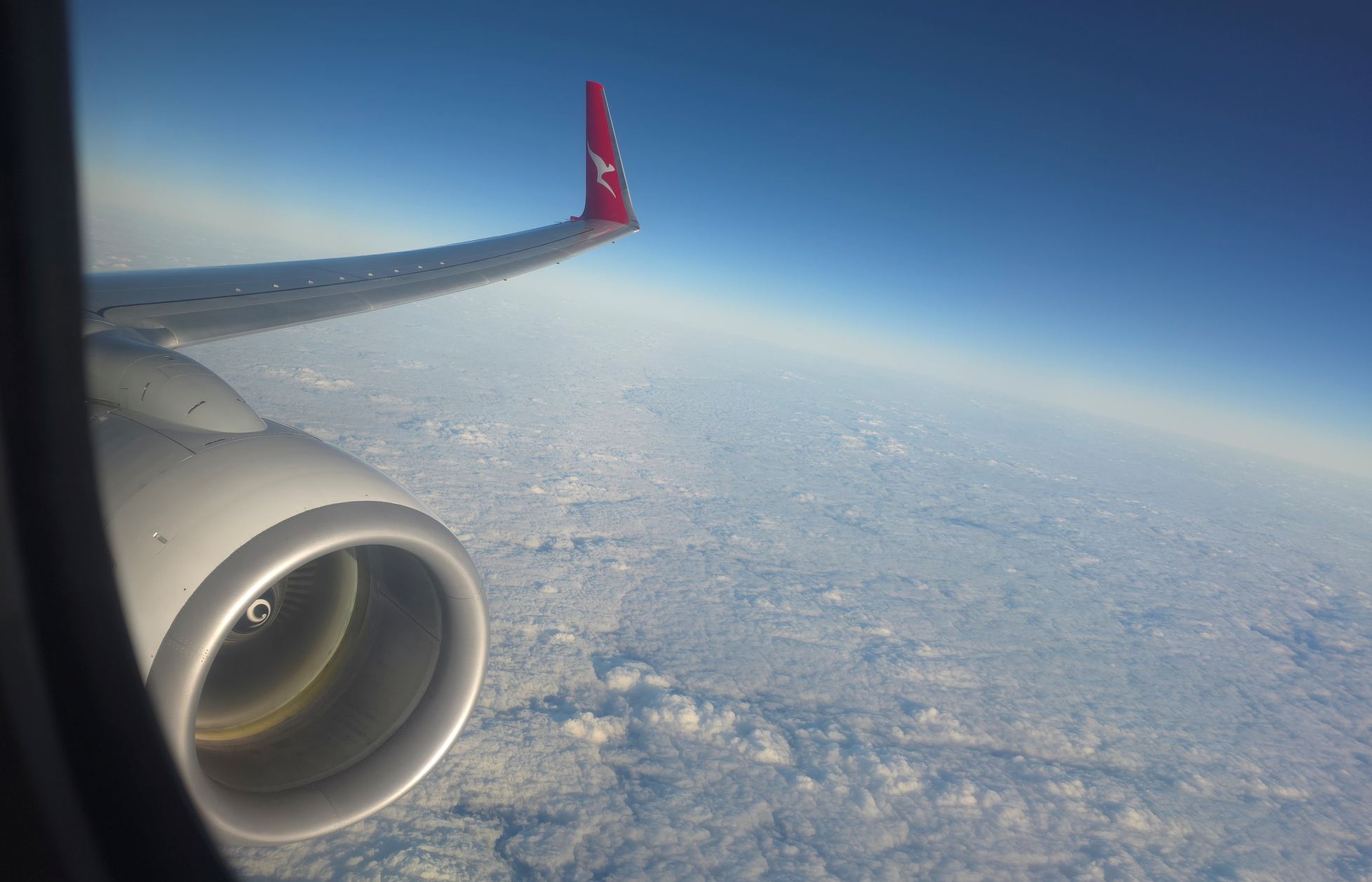
Winging our way to Brisbane.
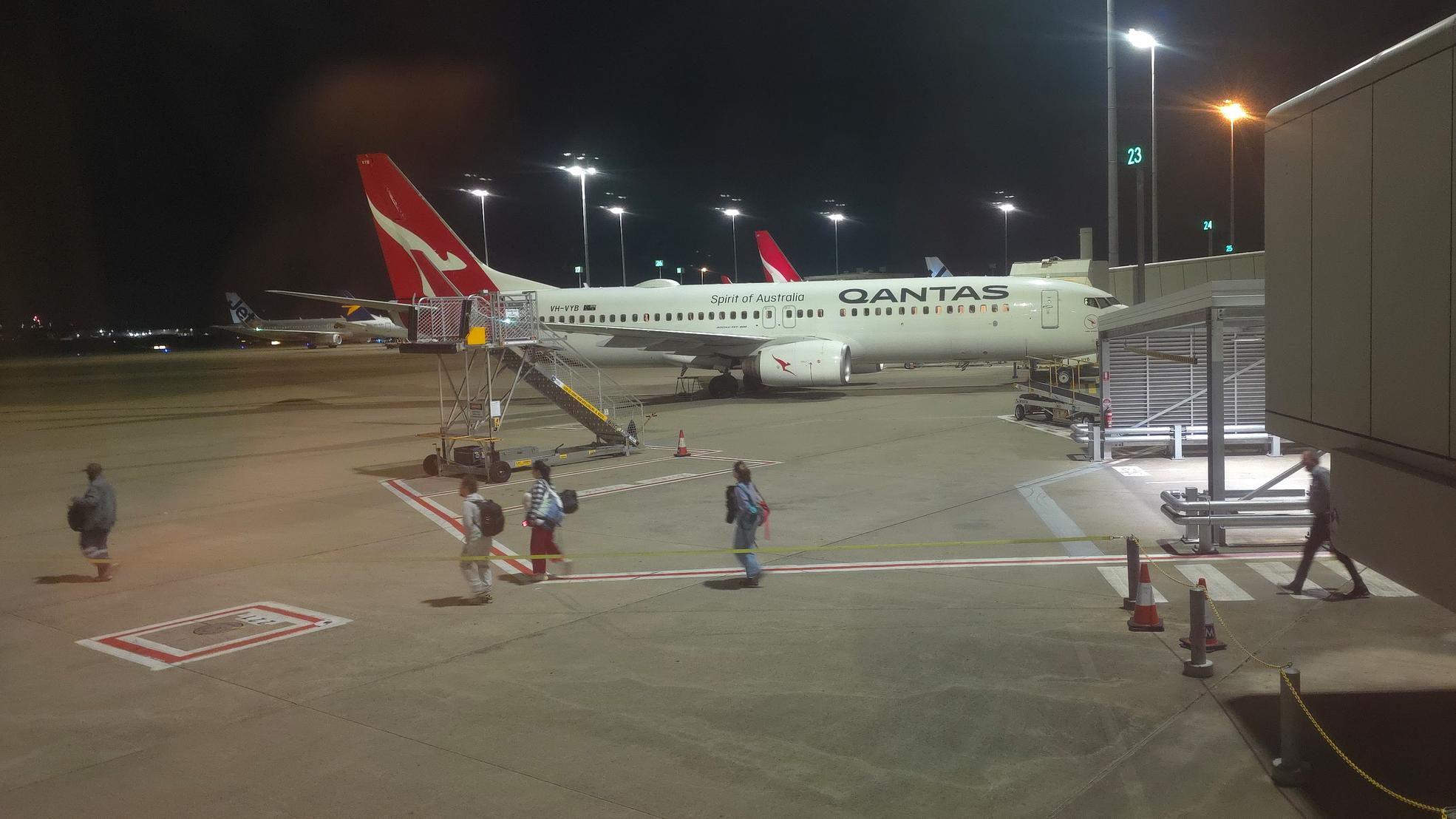
Boarding in Brisbane for our flight to Darwin. We used the airbridge to board but the passengers at the rear of the plane had to walk to the back of the plane.
Darwin
21st July
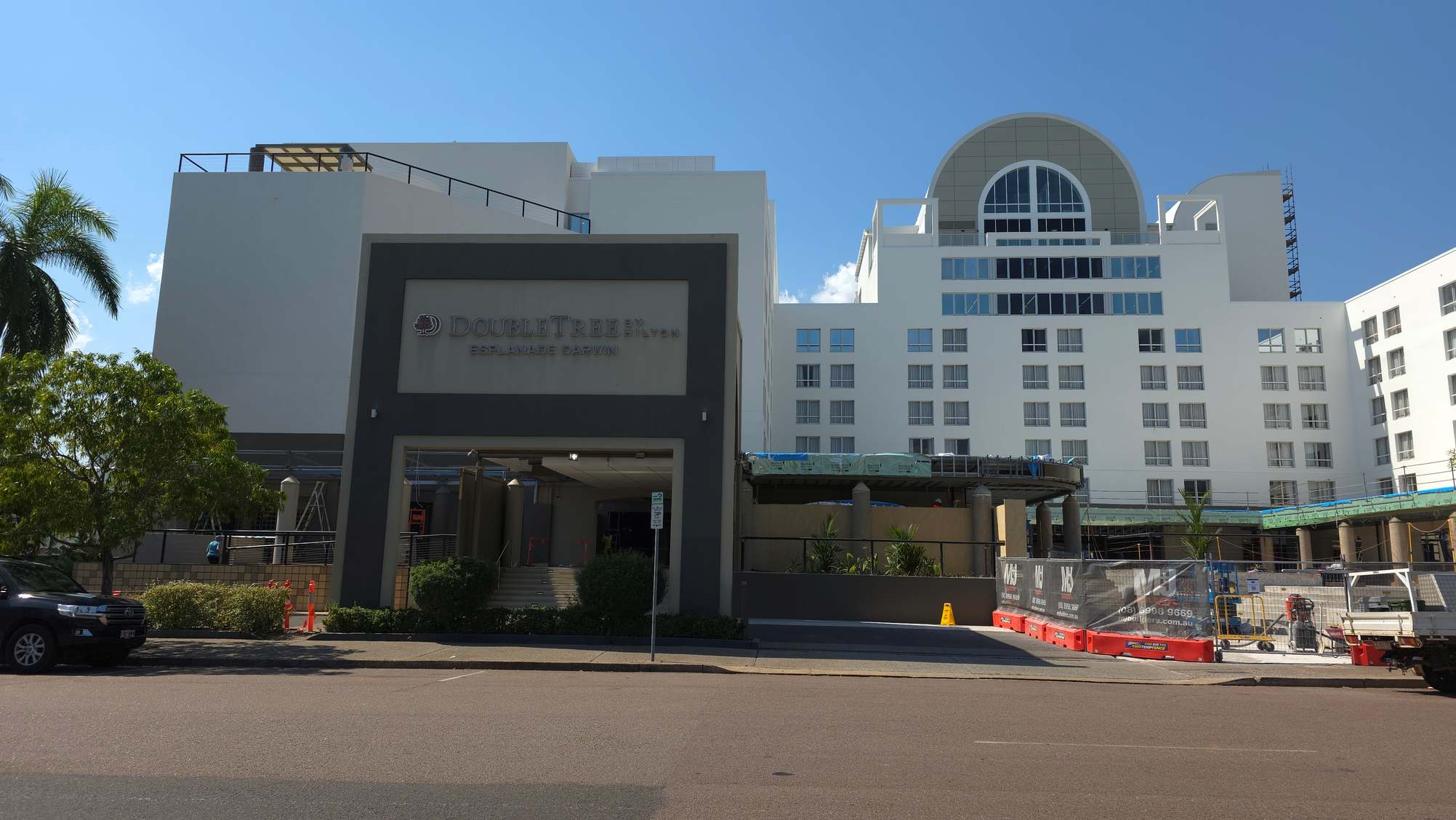
Our hotel.
Renovation are going on on the right hand side. Our room was on the left.
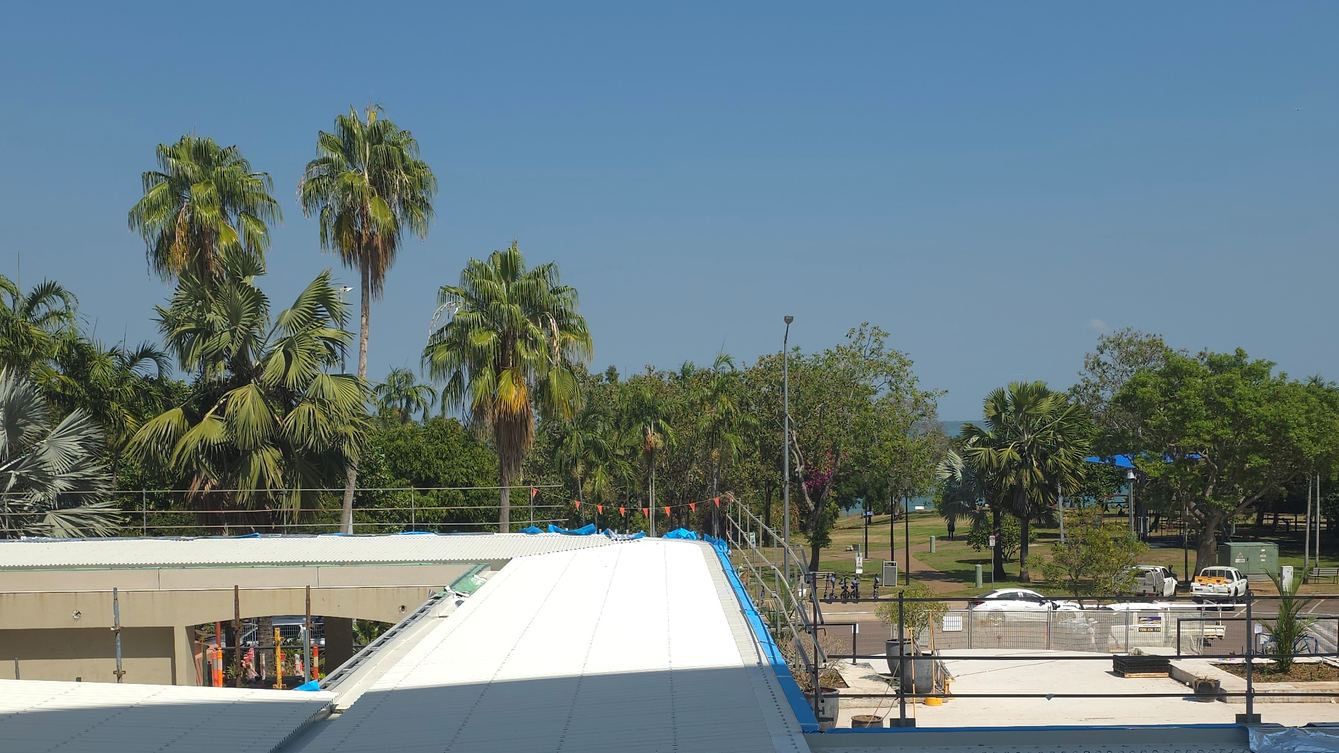
The view from our room across Bicentenial Park. The sea is visible through the trees.
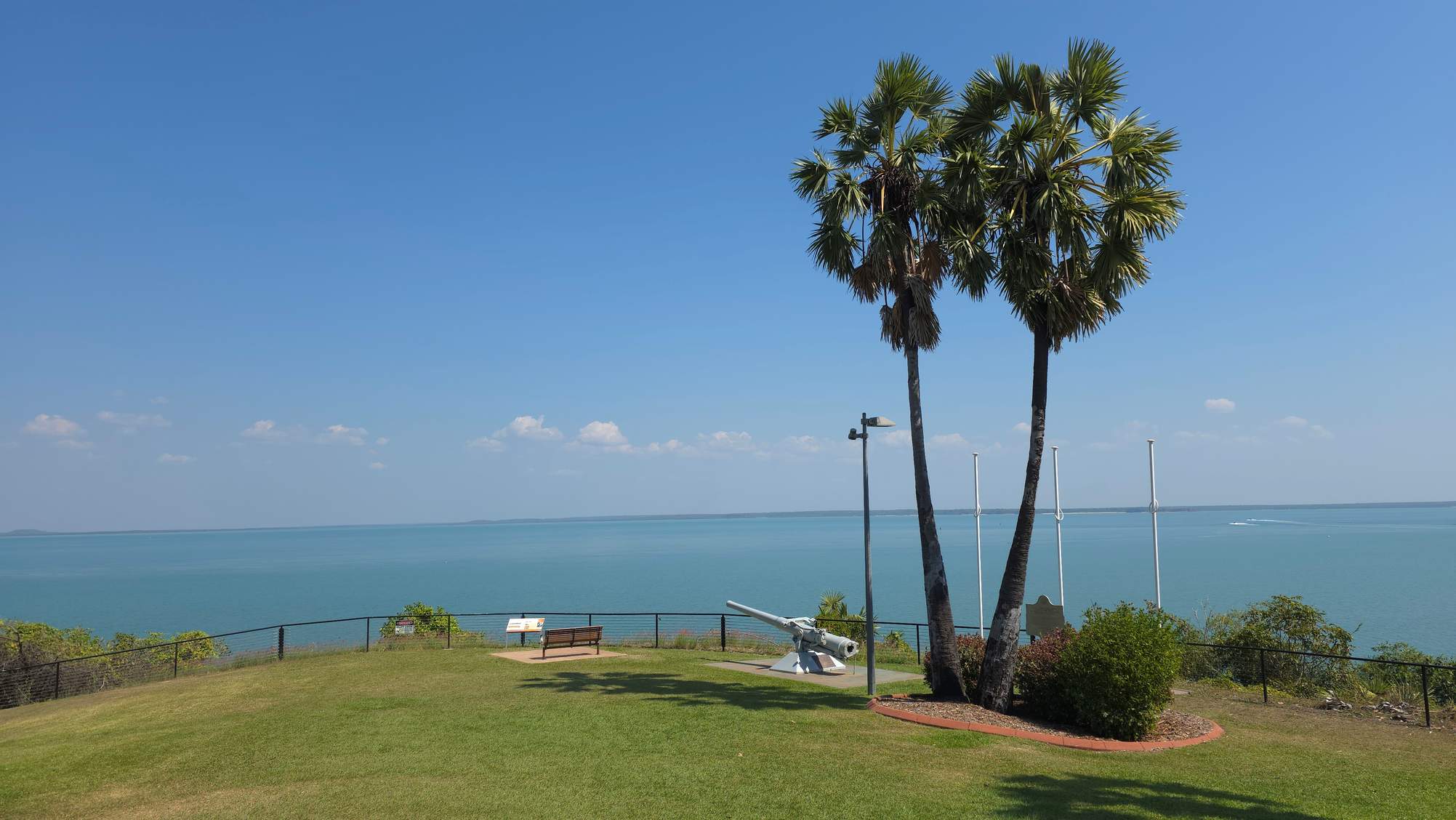
USS Peary Memorial.
In honour of 91 crew killed when their ship sank after Japanese bombing of Darwin.
The sign can be just seen from our room window.
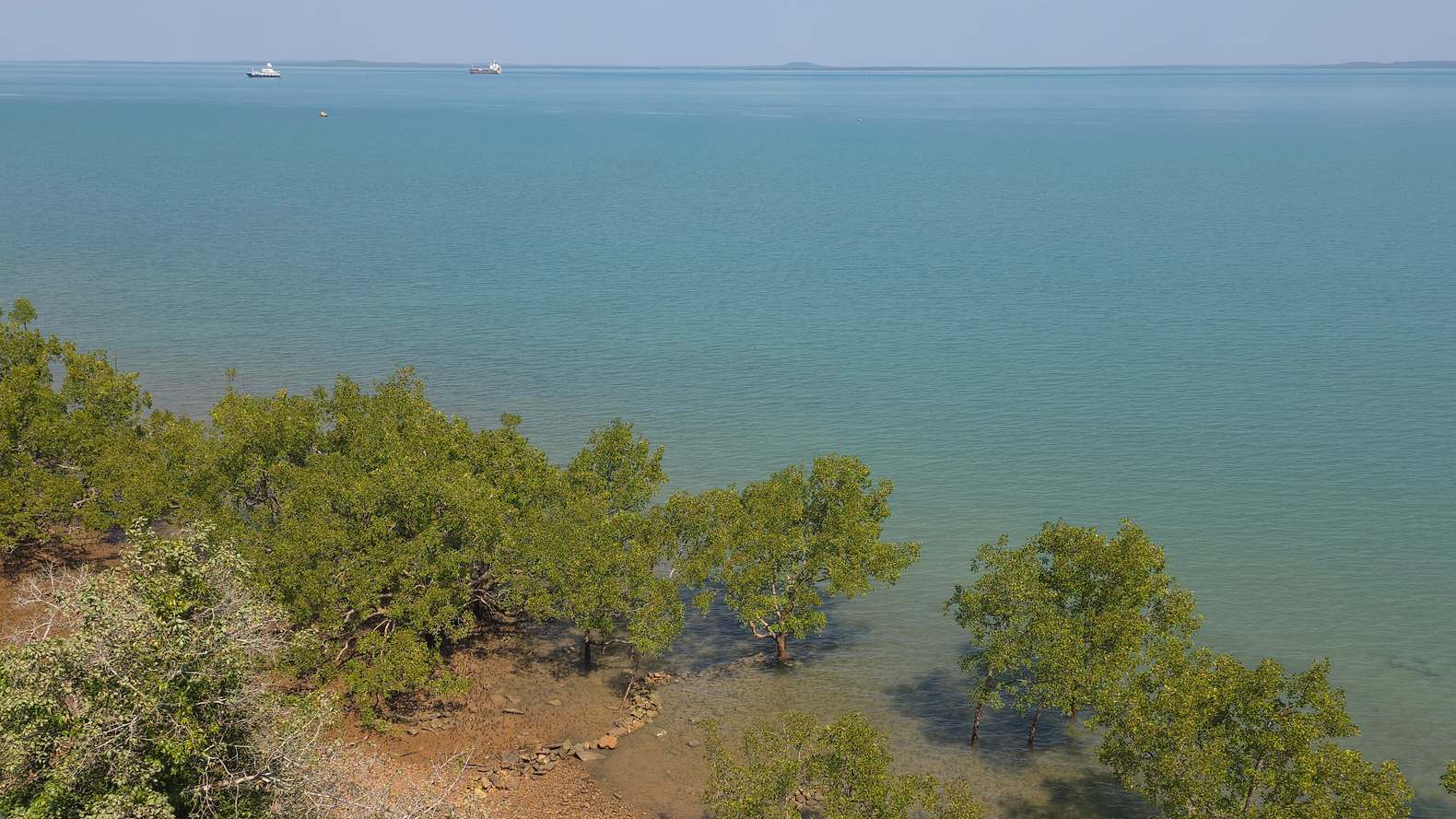
Darwin harbour from the park lookout.
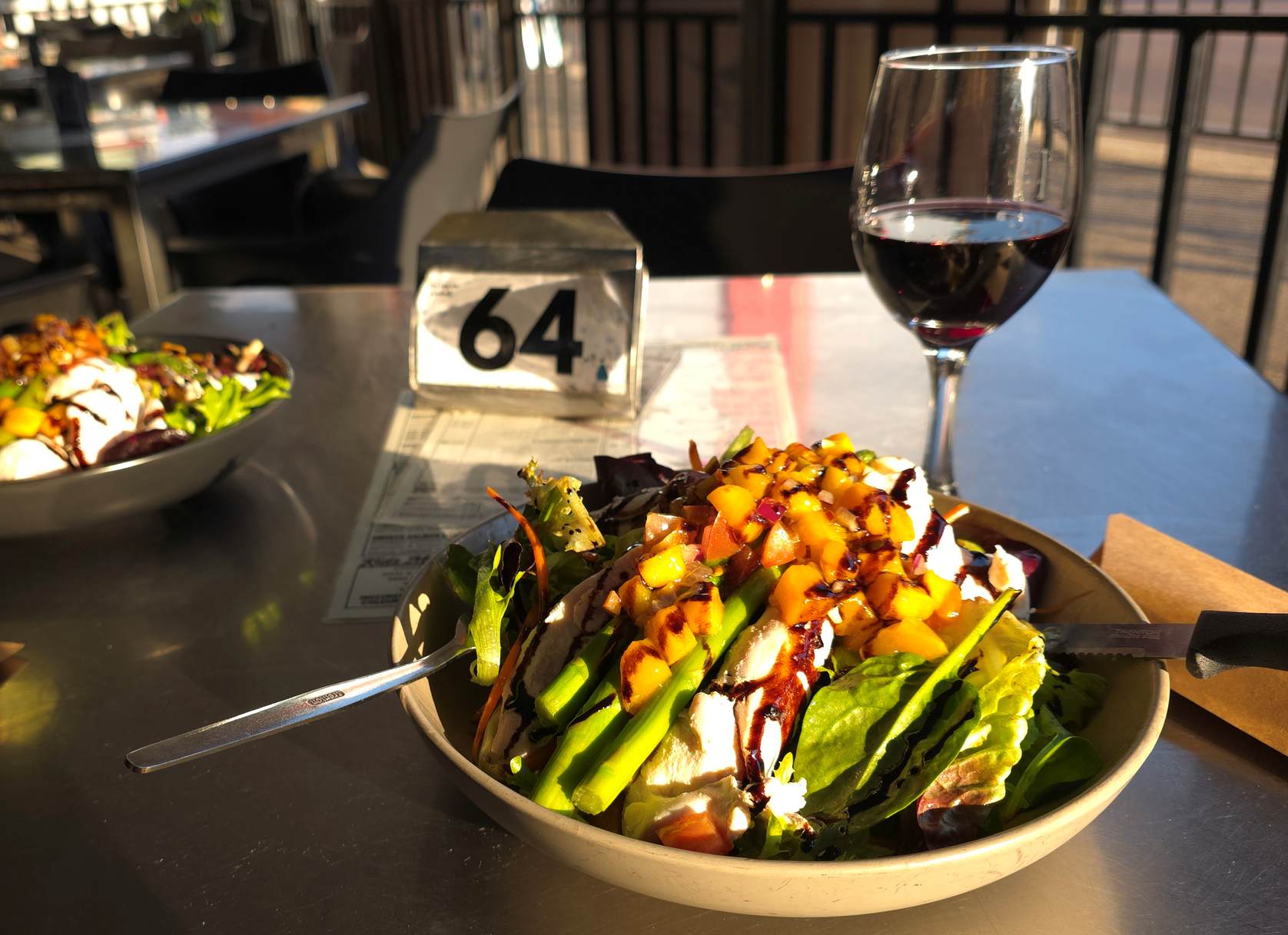
We went to a bar for a light evening meal. We should have ordered one between the two of us. Poached chicken salad.
Darwin to Katherine
22nd July
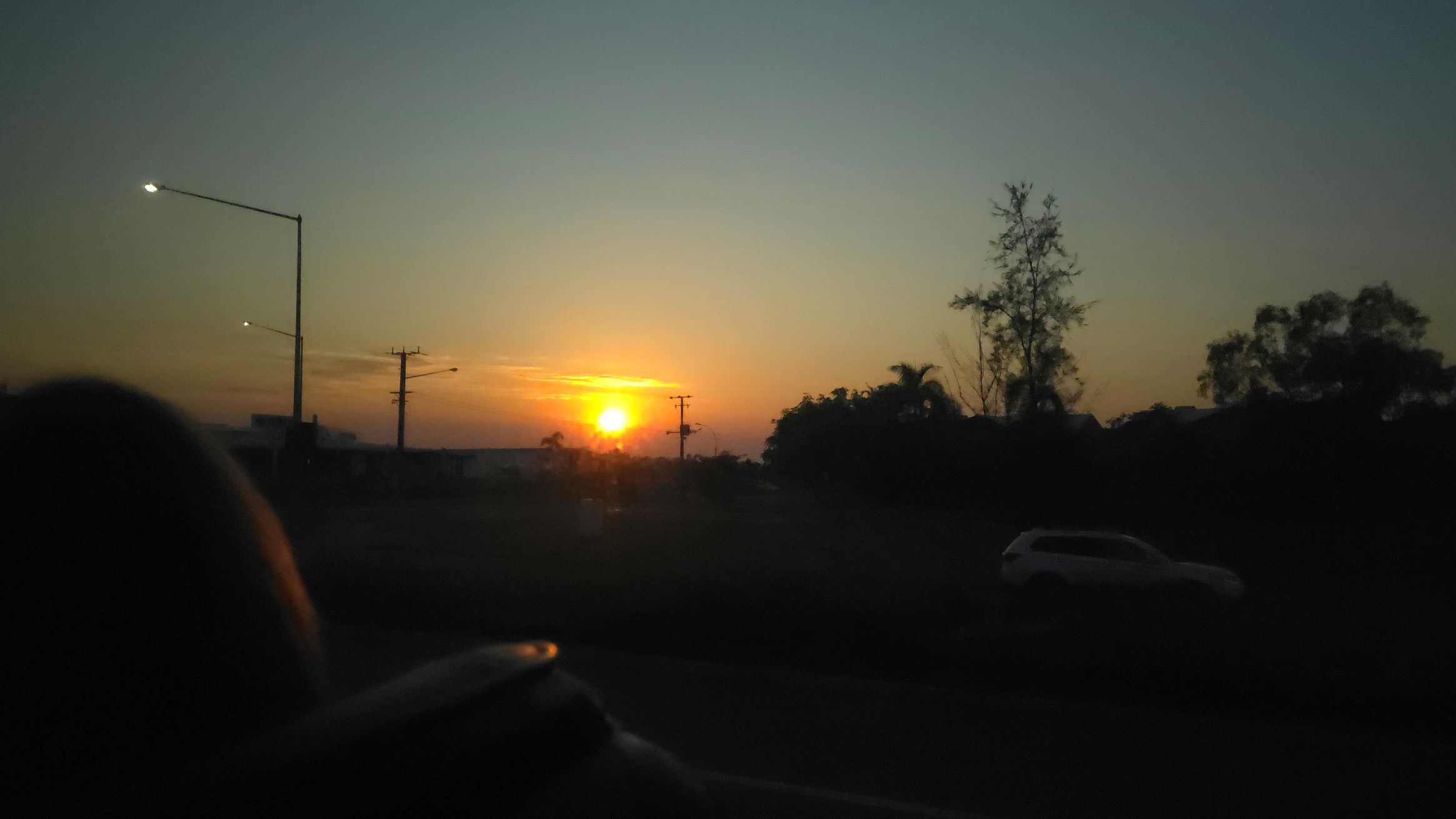
Sunrise from our coach on the 20 minute ride to the station.
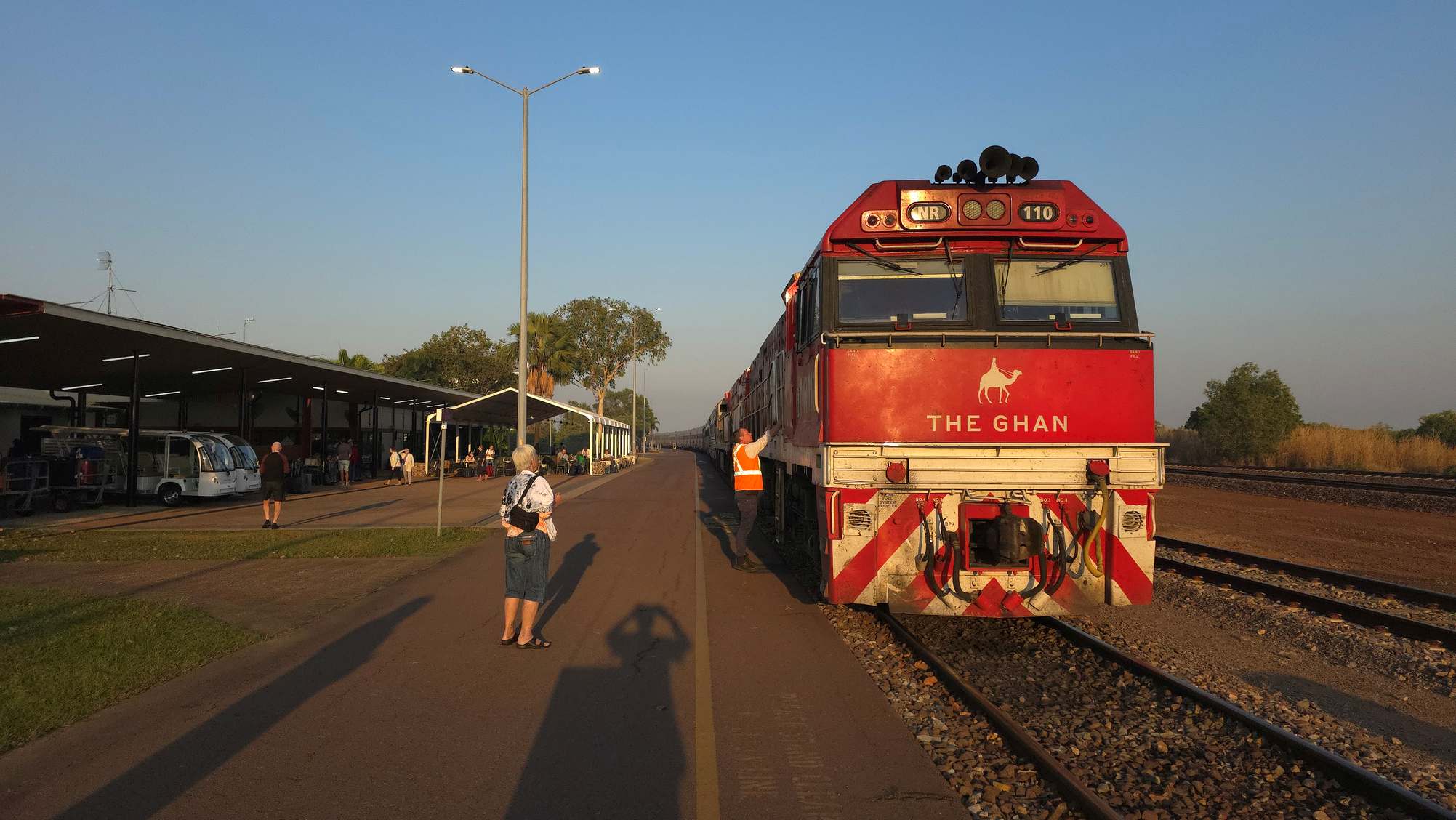
As soon as we had checked in I went to take a photo of the train in the early morning light.
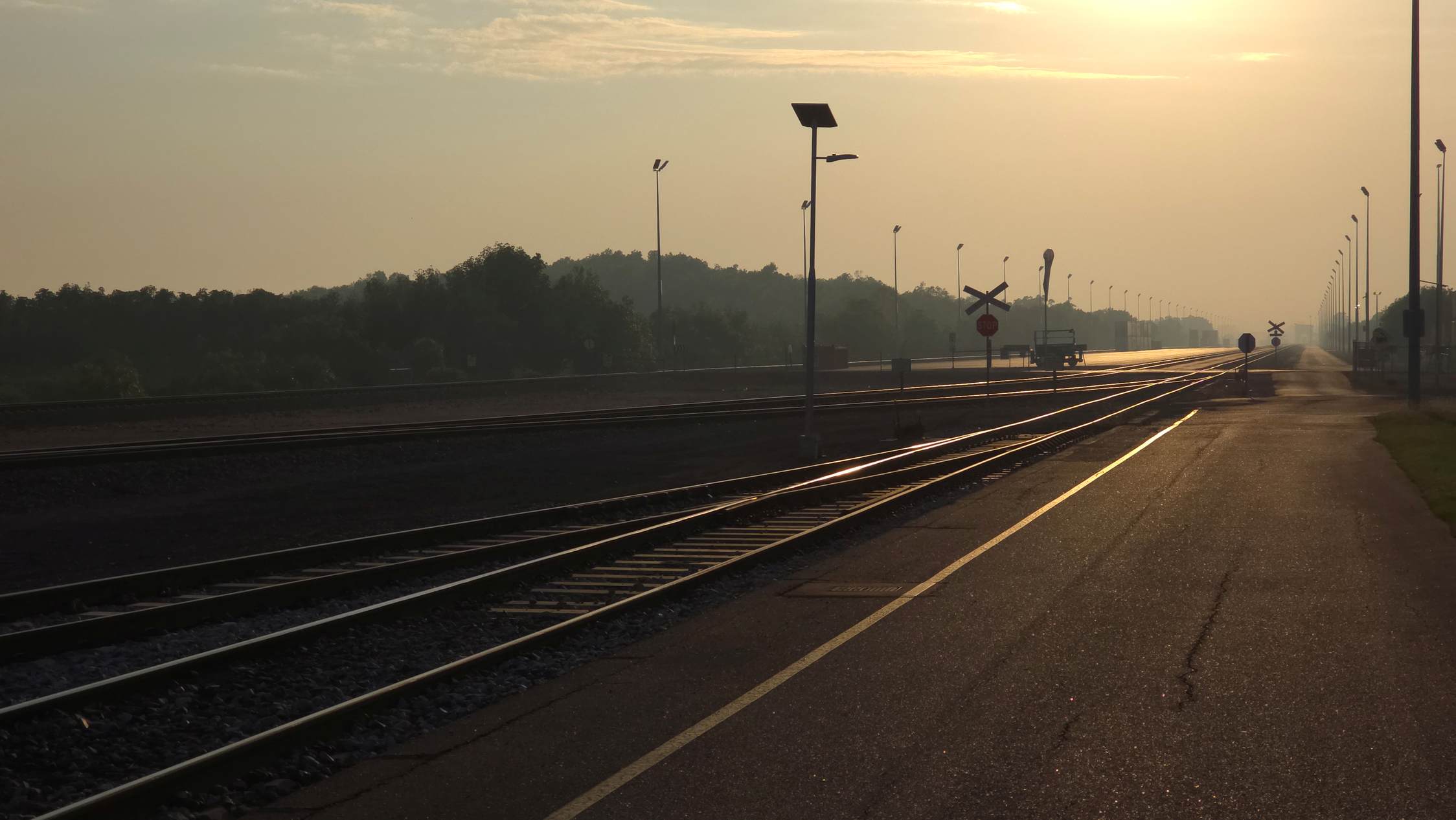
Looking down the track to Katherine.
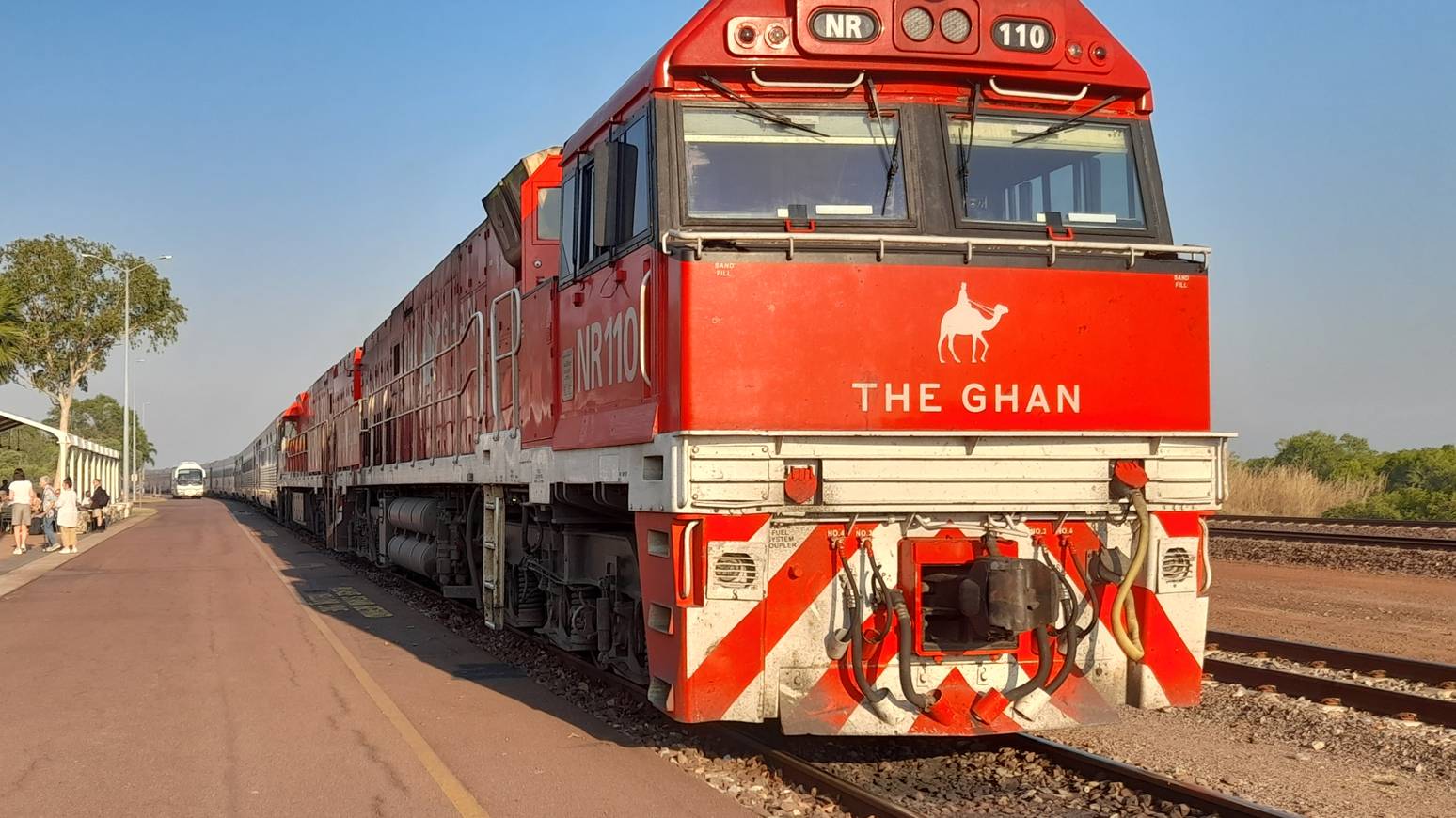
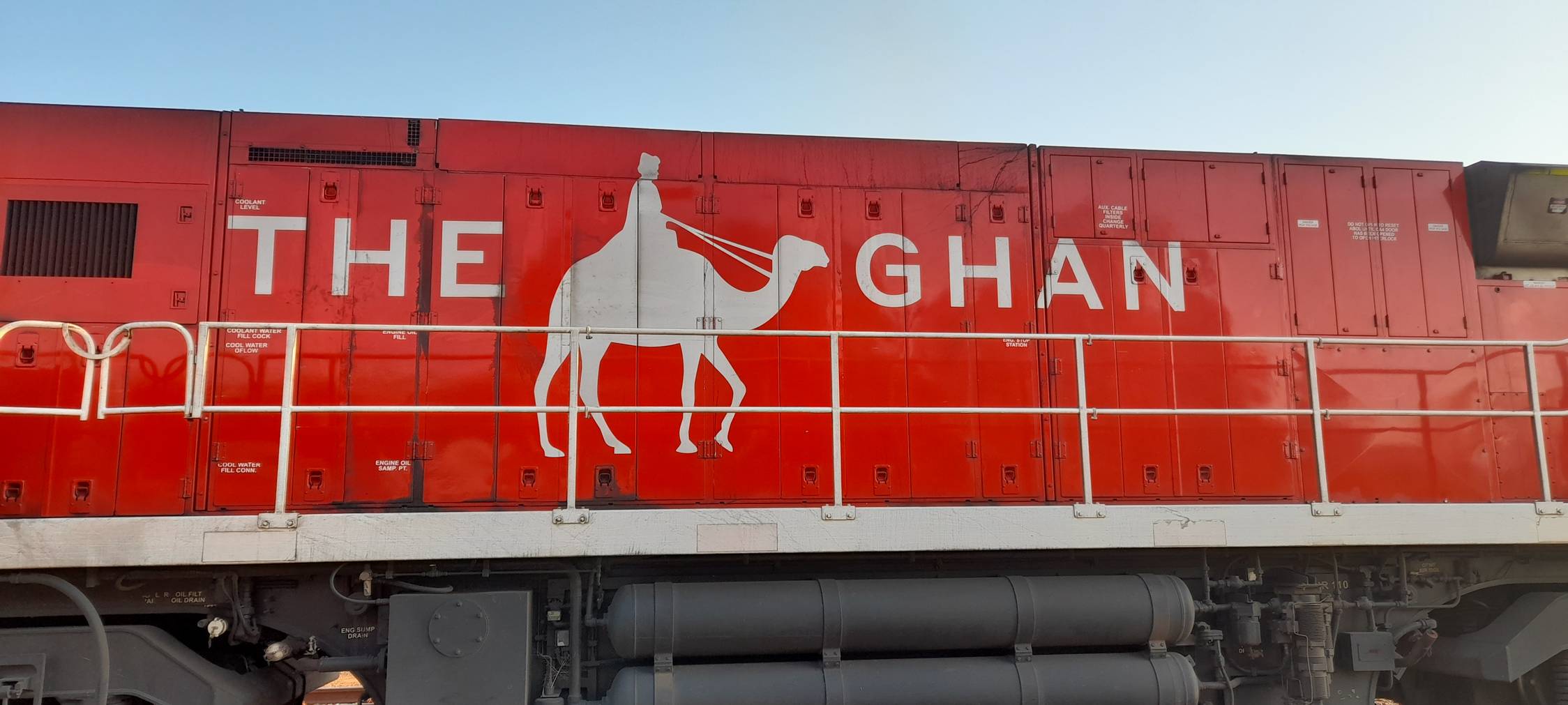
Later on Colleen took some photos after the sun had risen.
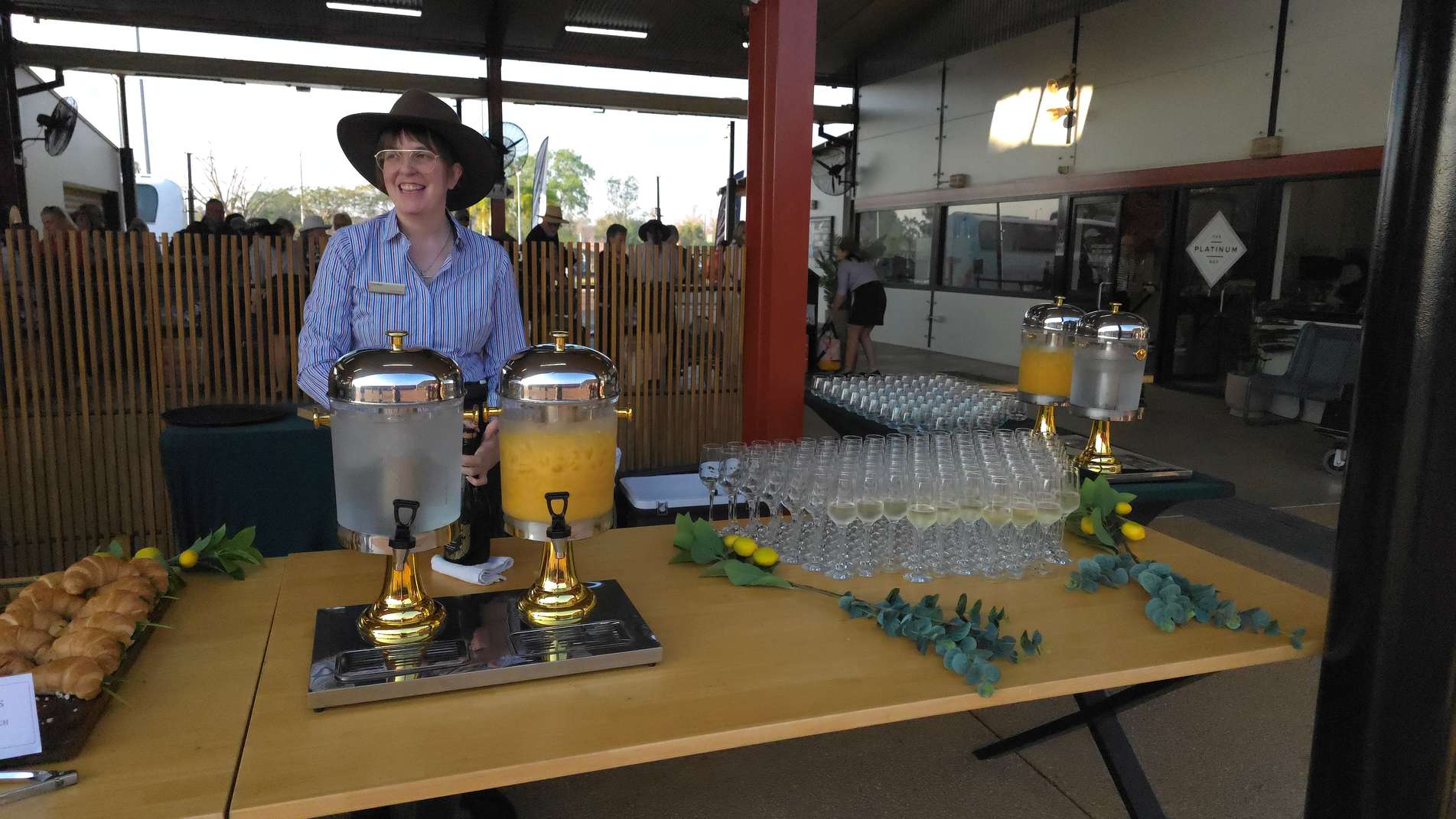
Breakfast. Water, Orange juice and Champagne.
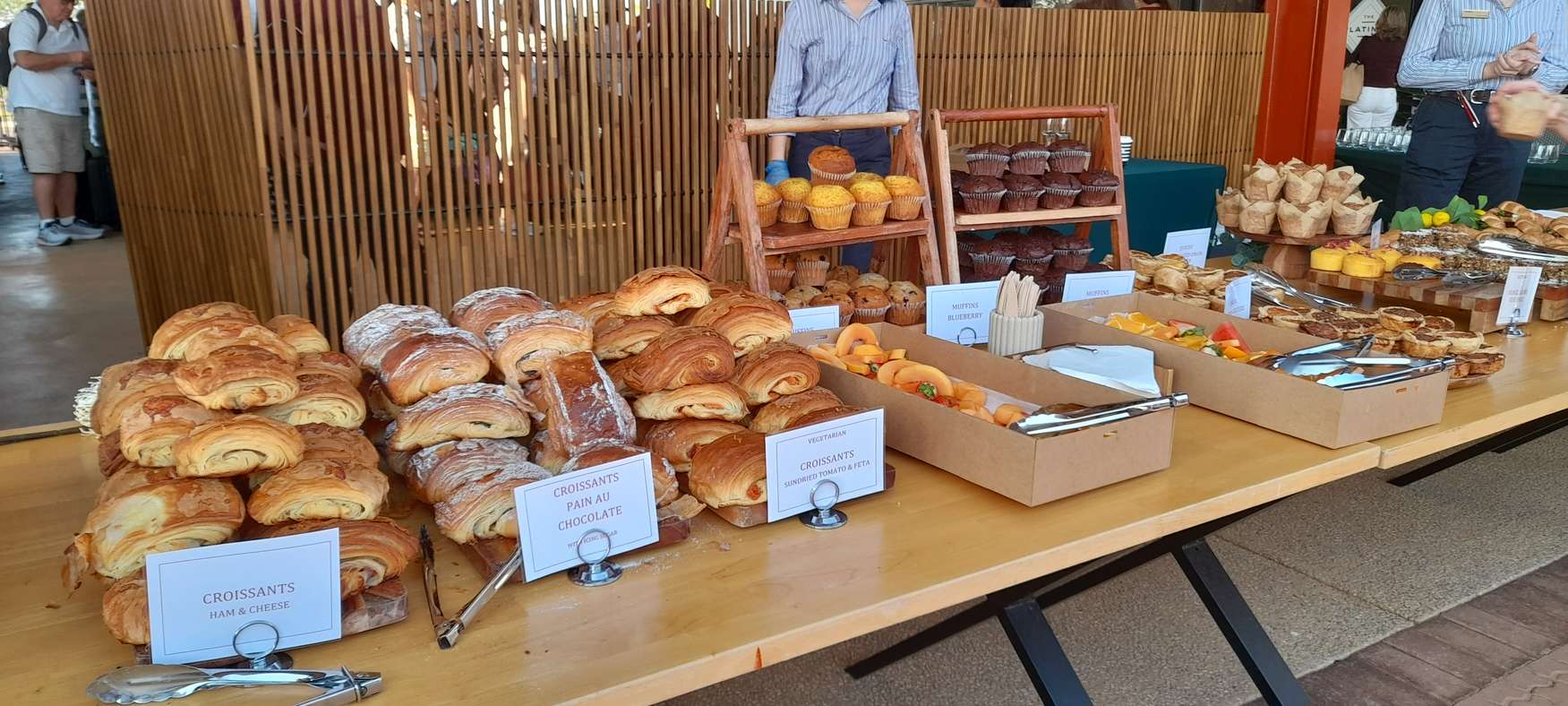
Breakfast.
(Photographer Colleen)
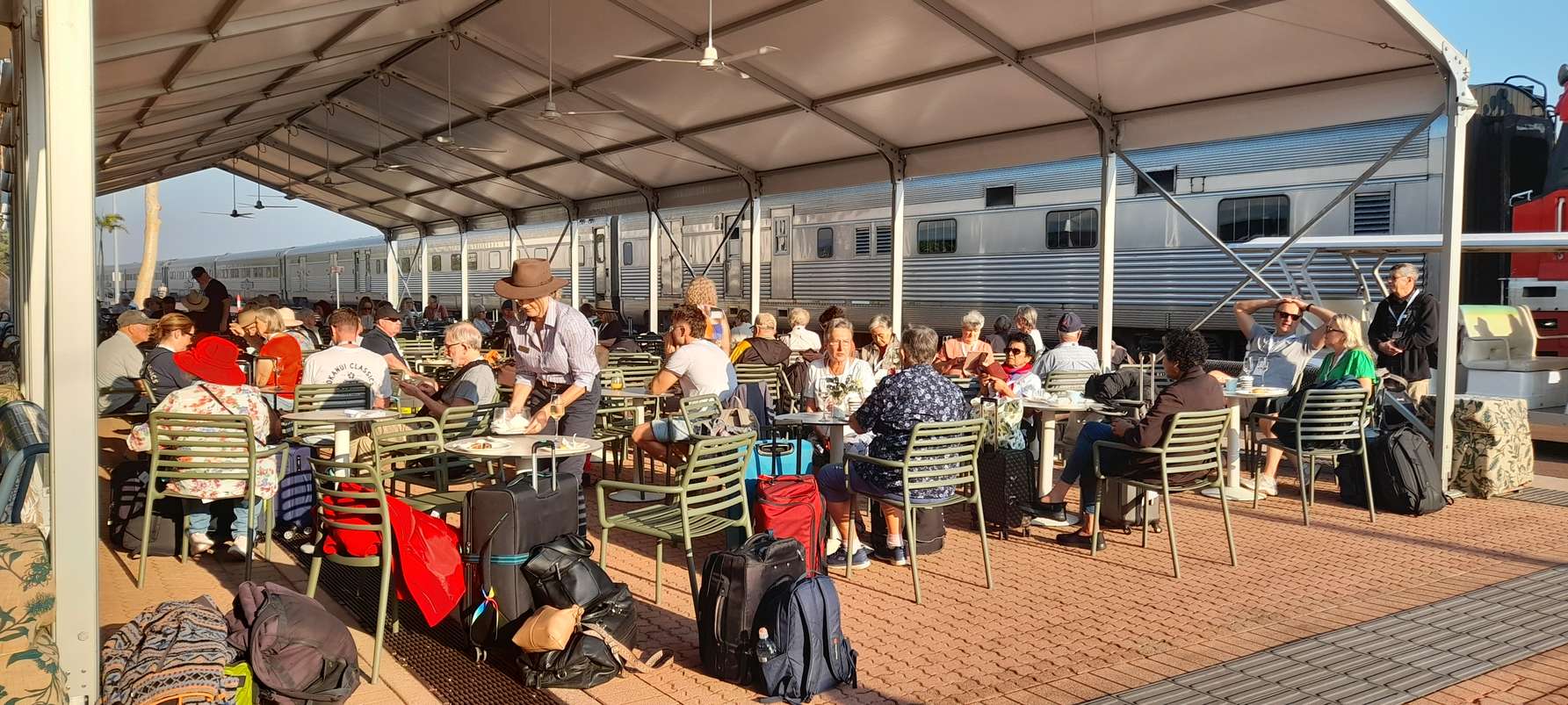
Passengers having breakfast.
That is Neil on the left of the Ghan crew member in the hat clearing the table.
(Photographer Colleen)
Dave spry entertained us while the train was prepared.
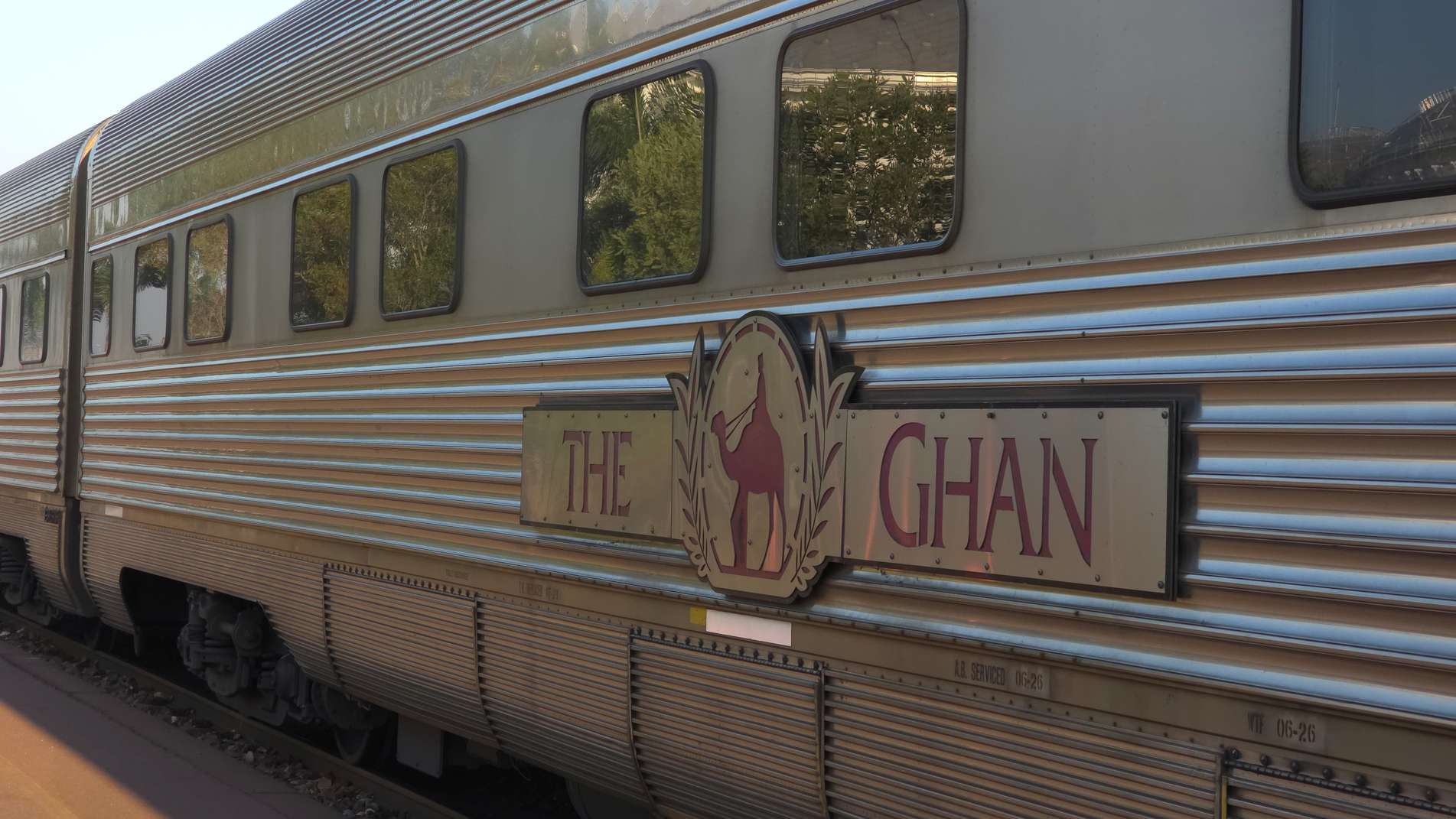
Time to board.
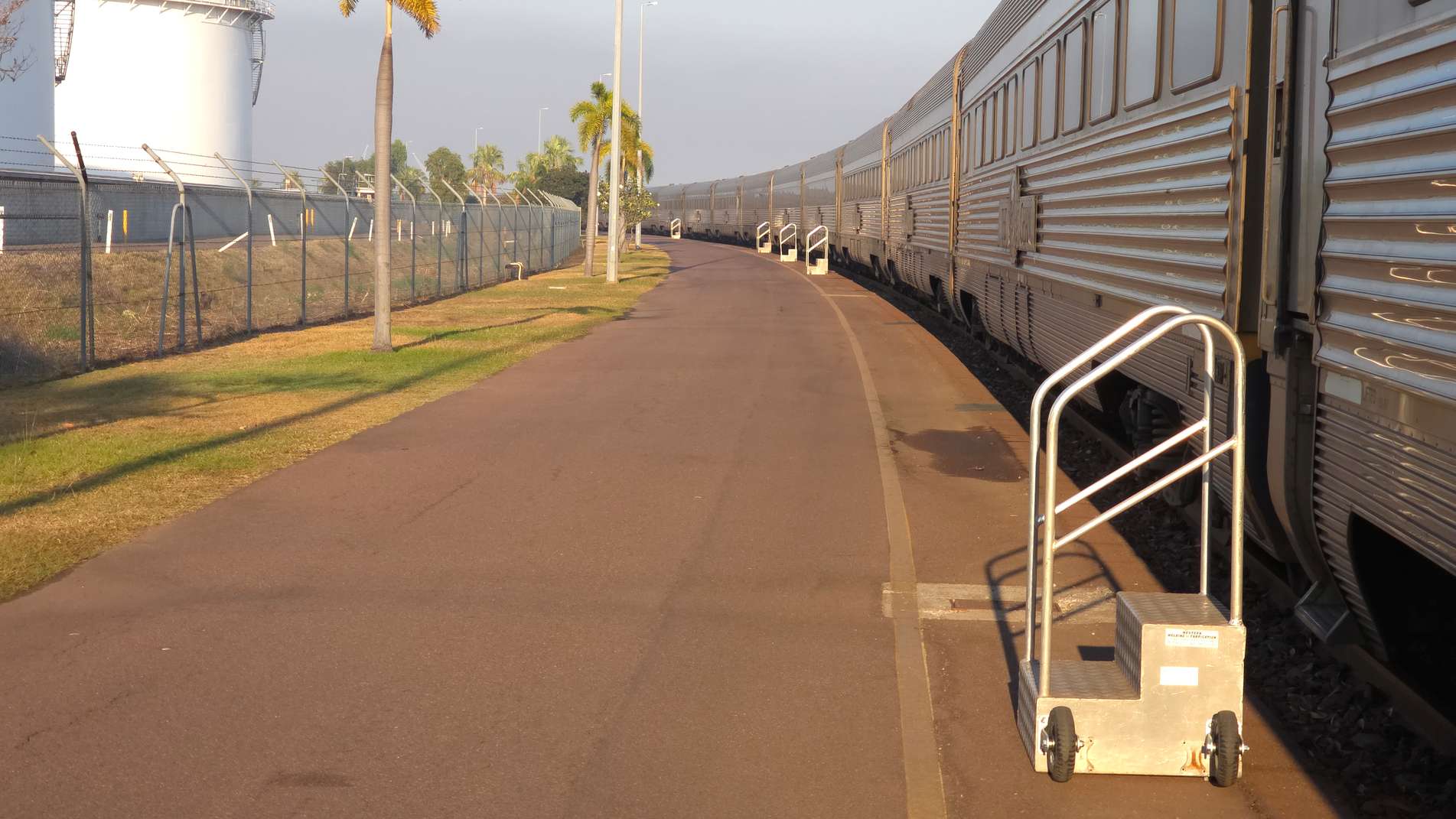
Steps at the passenger car doors.
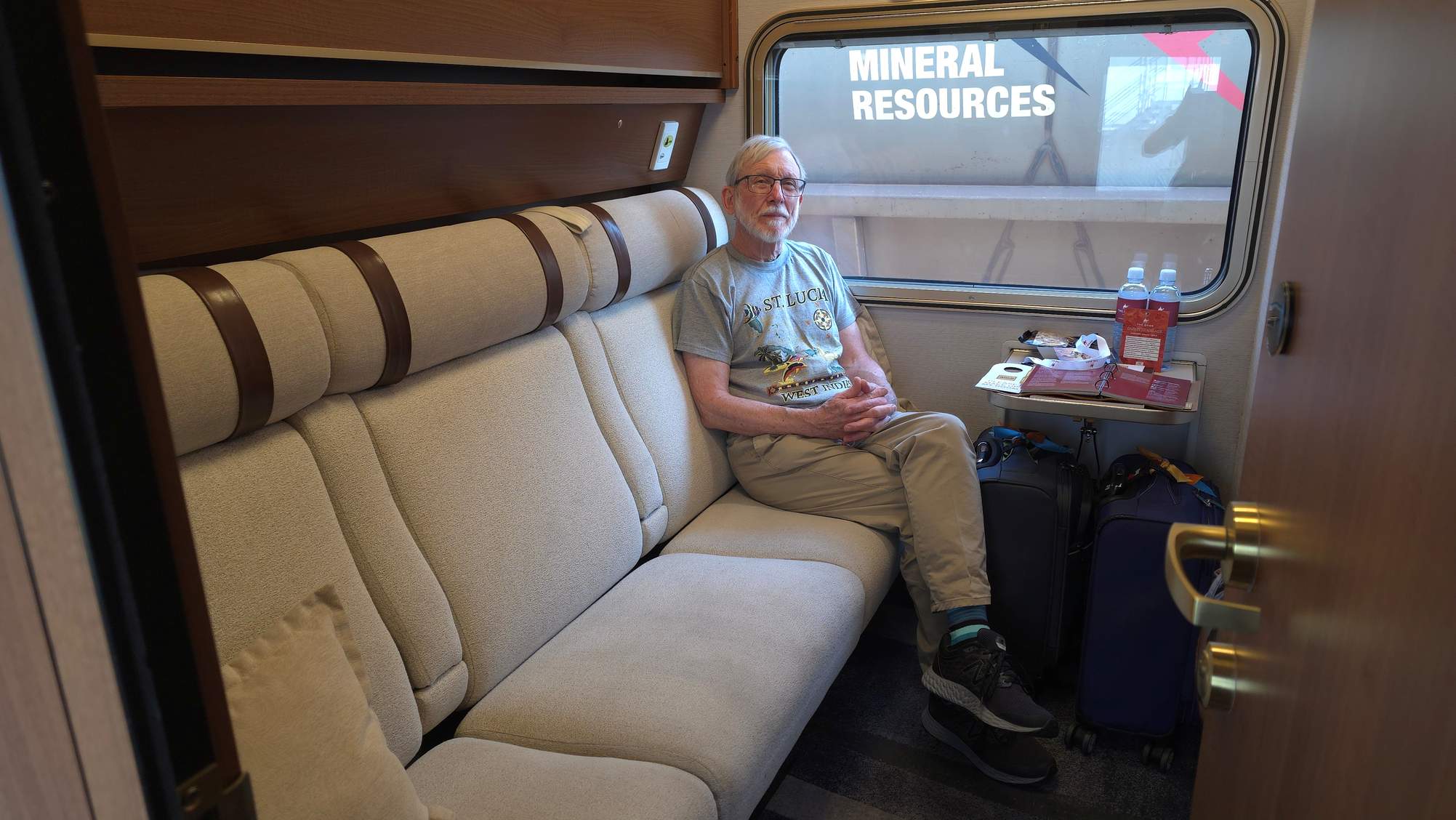
Inside our cabin.
Unfortunately for the photo there was a freight train on the line next to us.
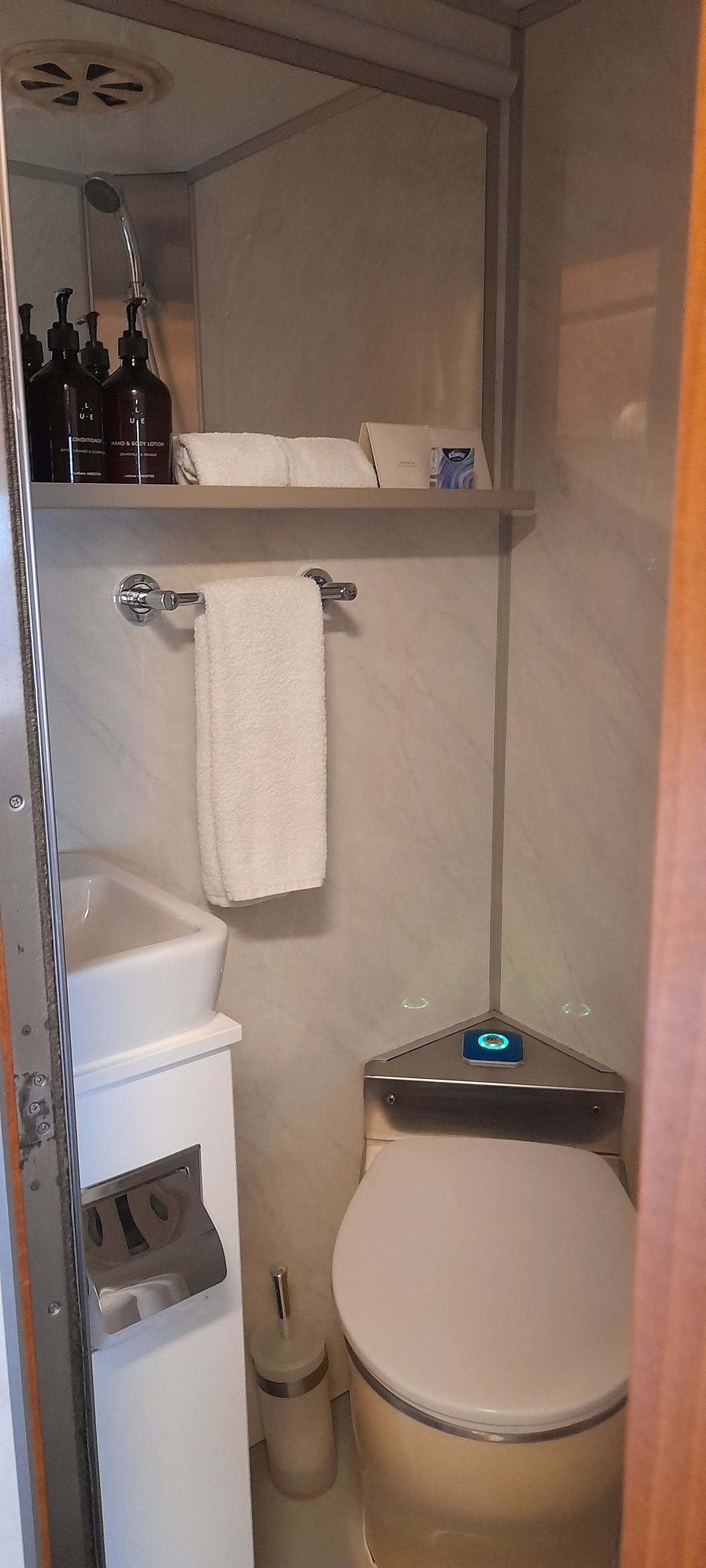
Looking into the bathroom.
(Photographer Colleen)
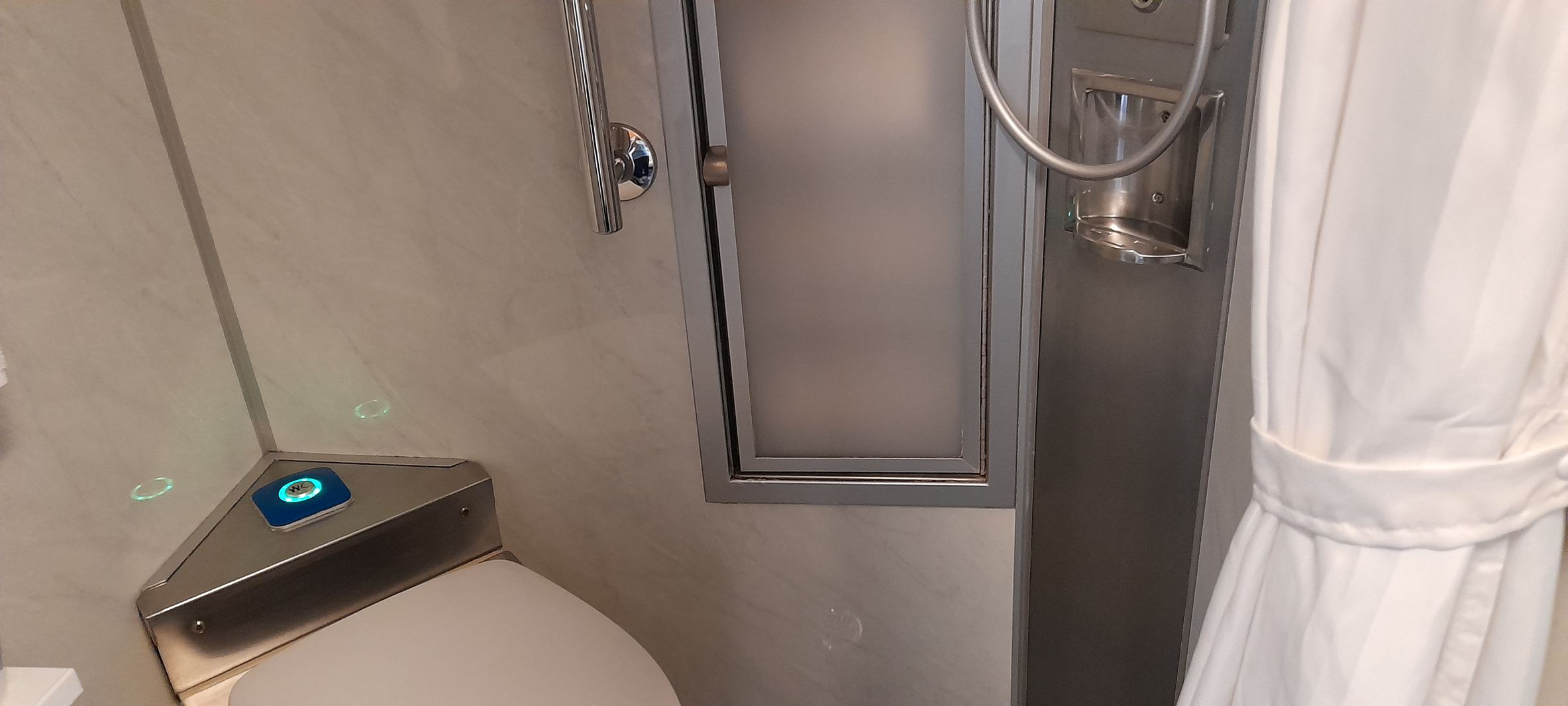
The shower on the right.
The shower curtain goes all the way round and shields the toilet from the shower.
(Photographer Colleen)
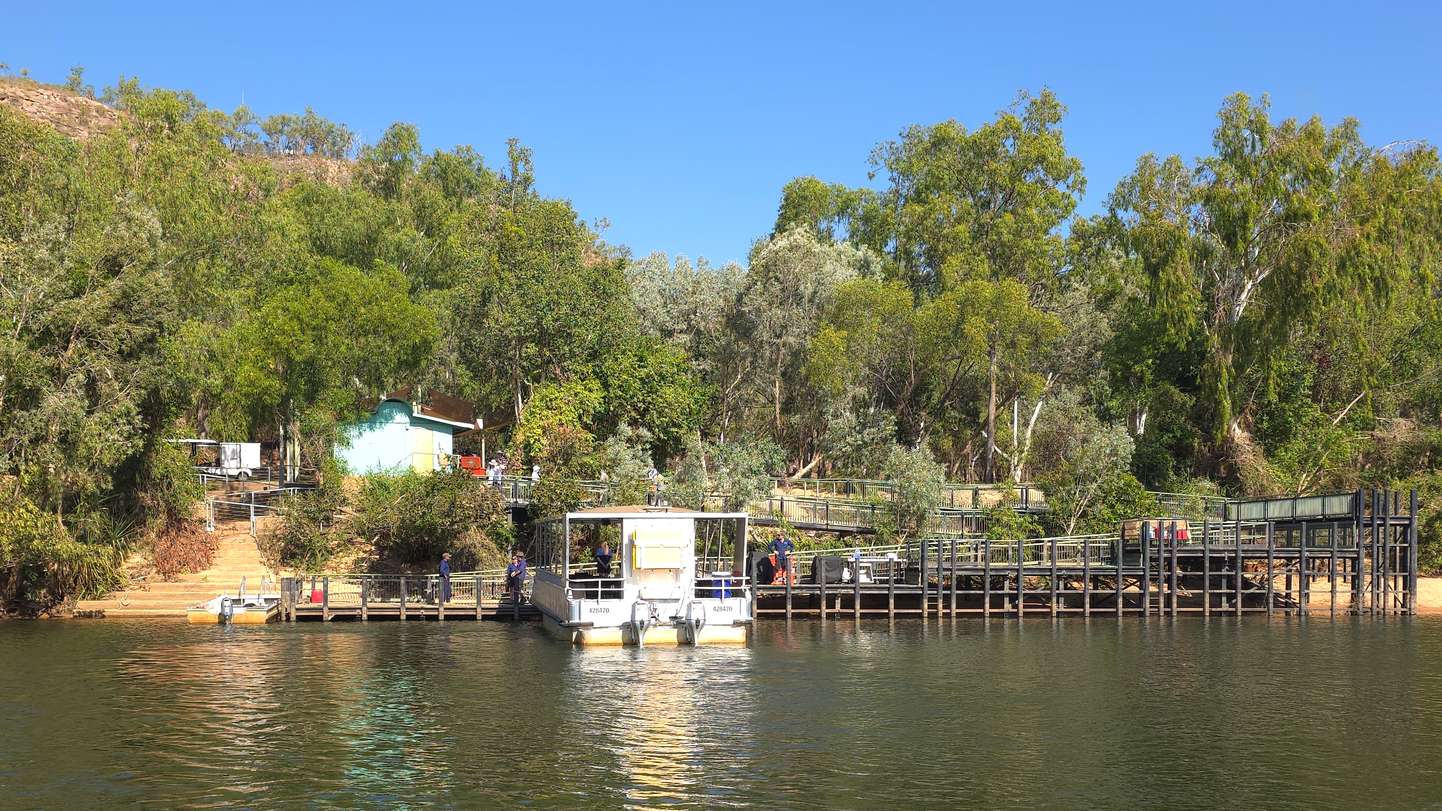
Our off train experience in the afternoon was the Nitmiluk Gorge Cruise on the Katherine river.
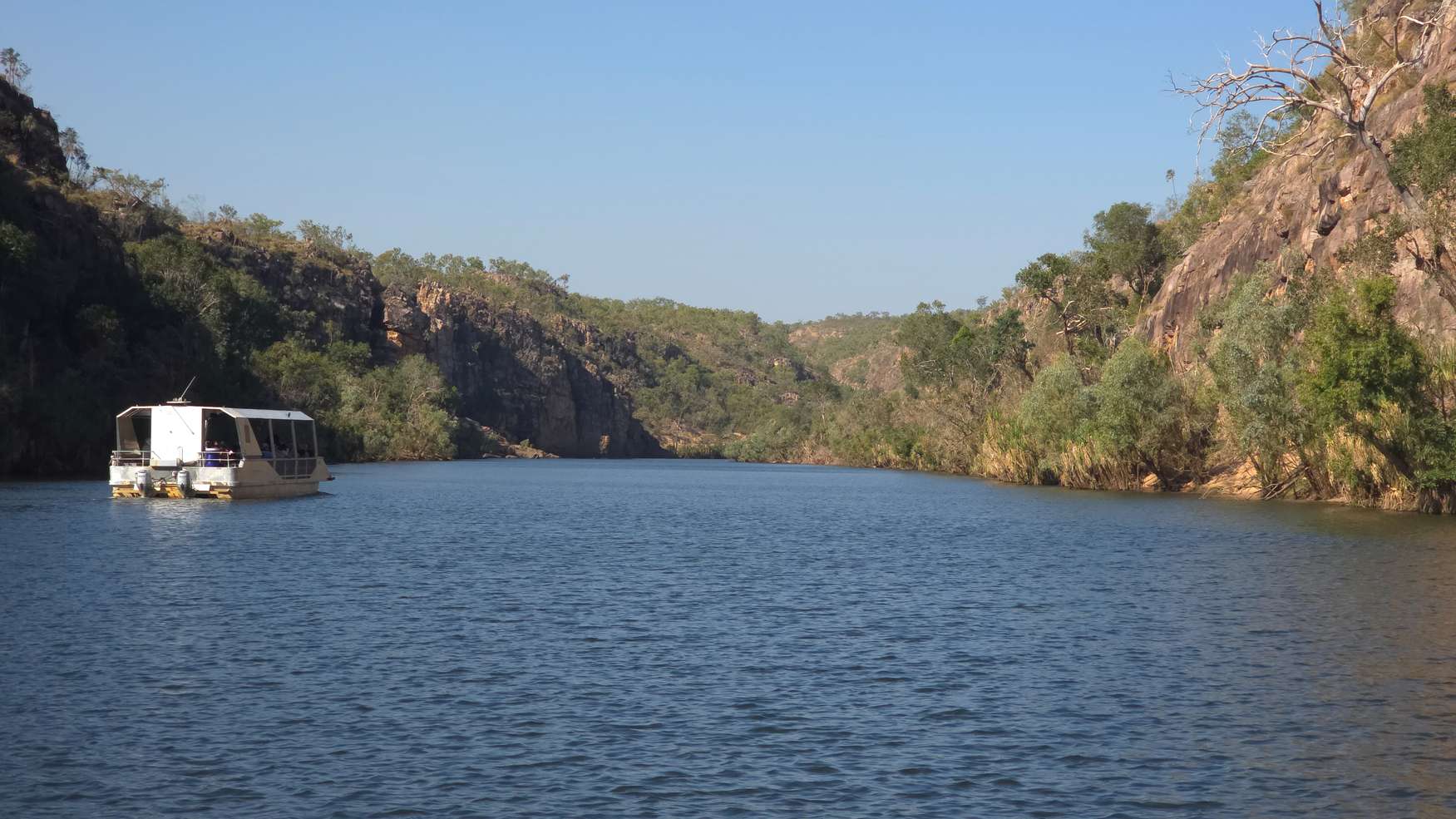
The gorge is made up of thirteen gorges. We were only able to see one as it is the dry season and water level is low preventing the boats to travel between gorges.
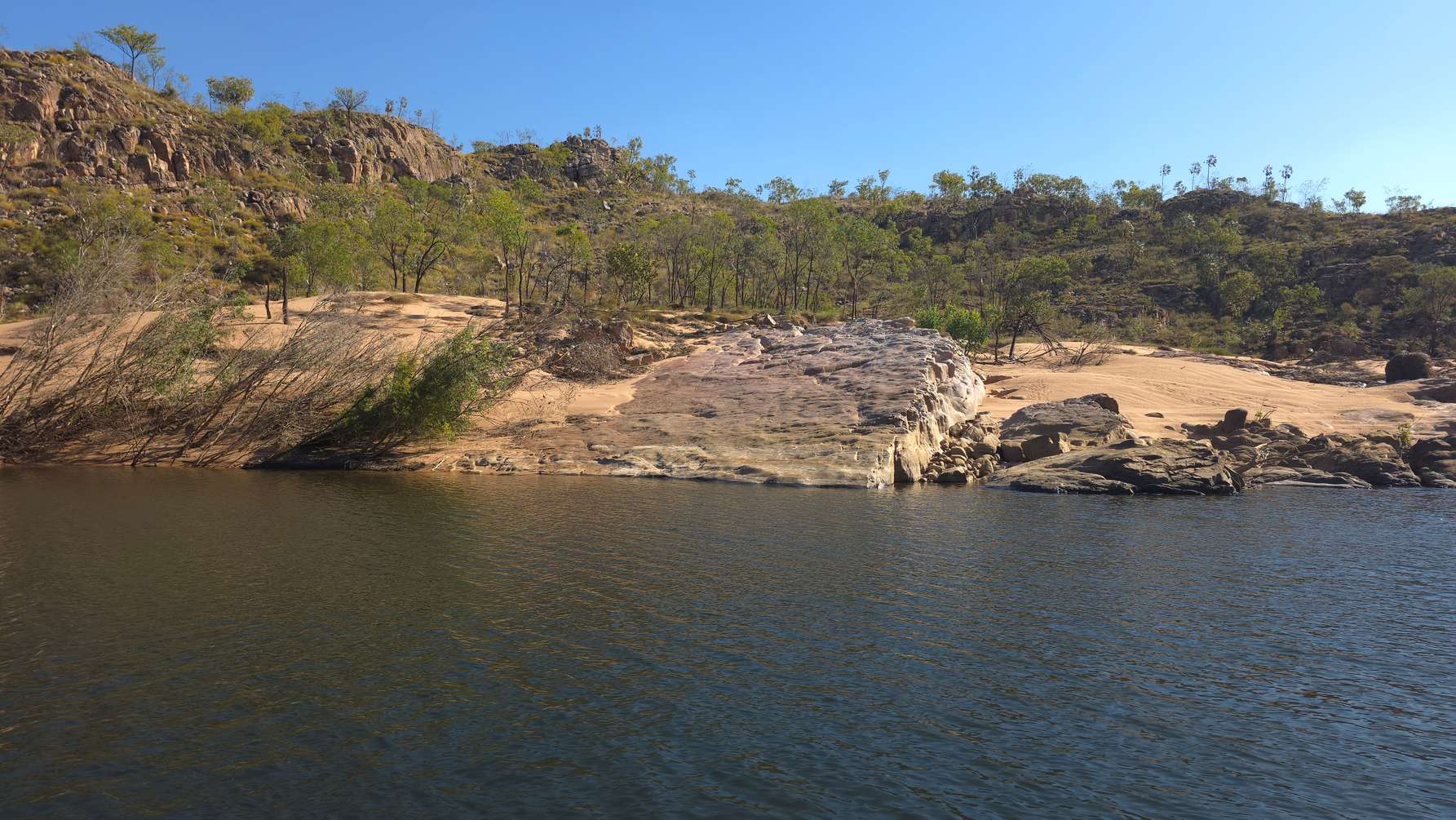
During the dry season the Nitmiluk waters are placid and ideal for swimming and canoeing.
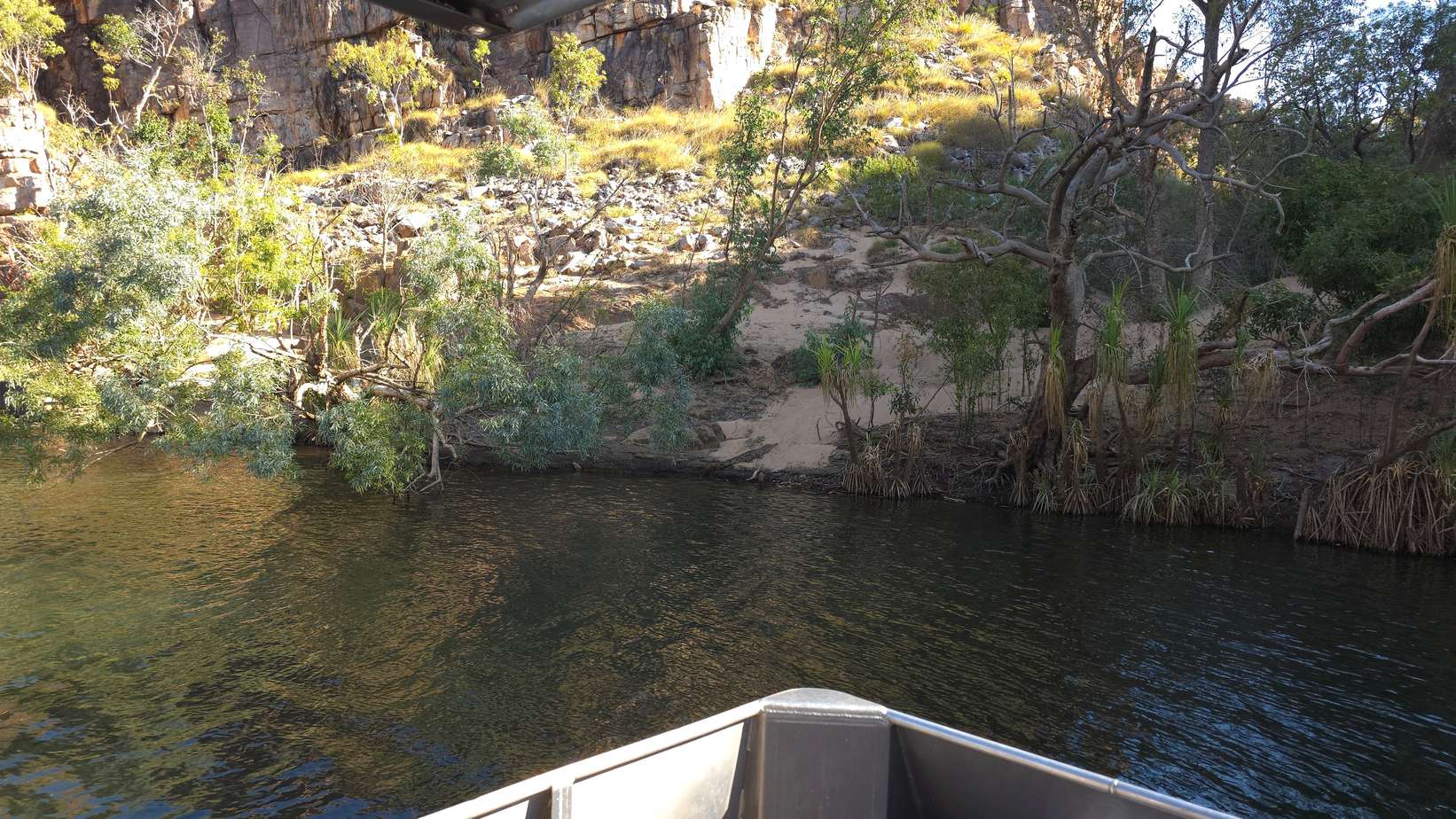
Fresh water crocodile, also called Freshie.
The crocodiles nest along the river but they are harmless to humans.
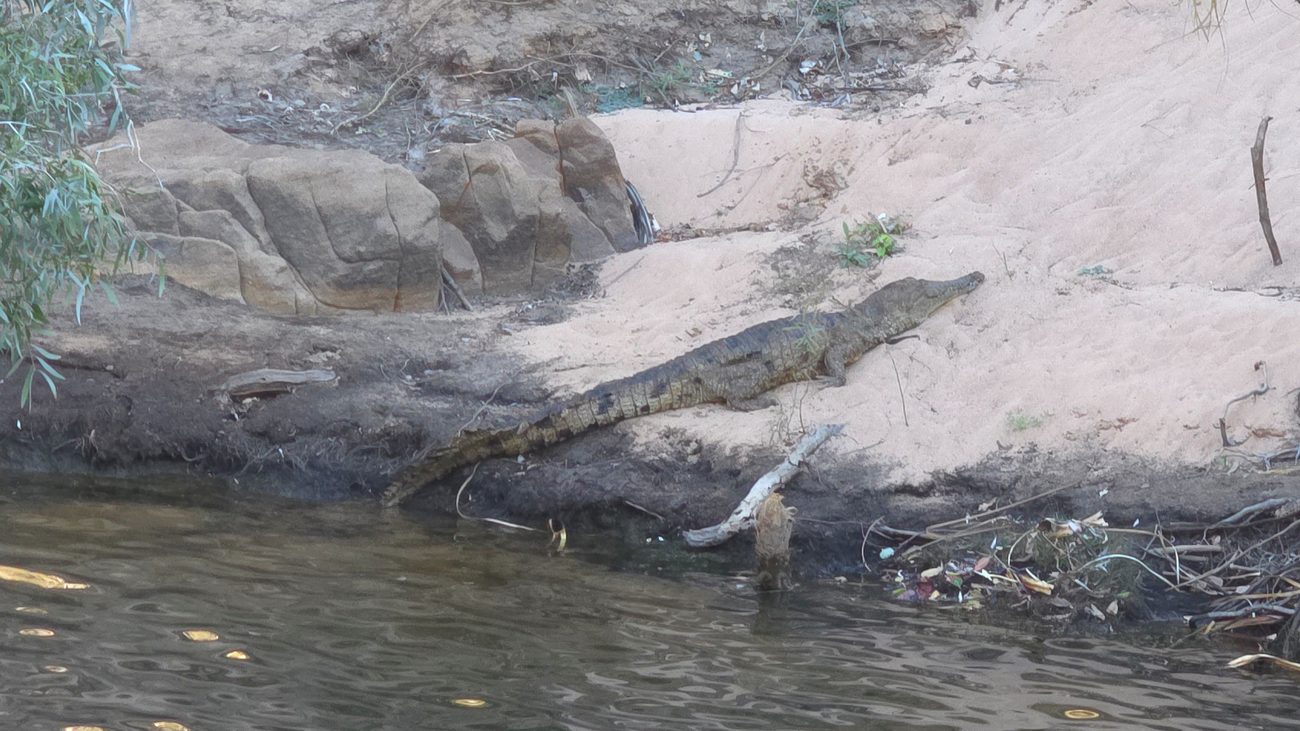
The Freshie.
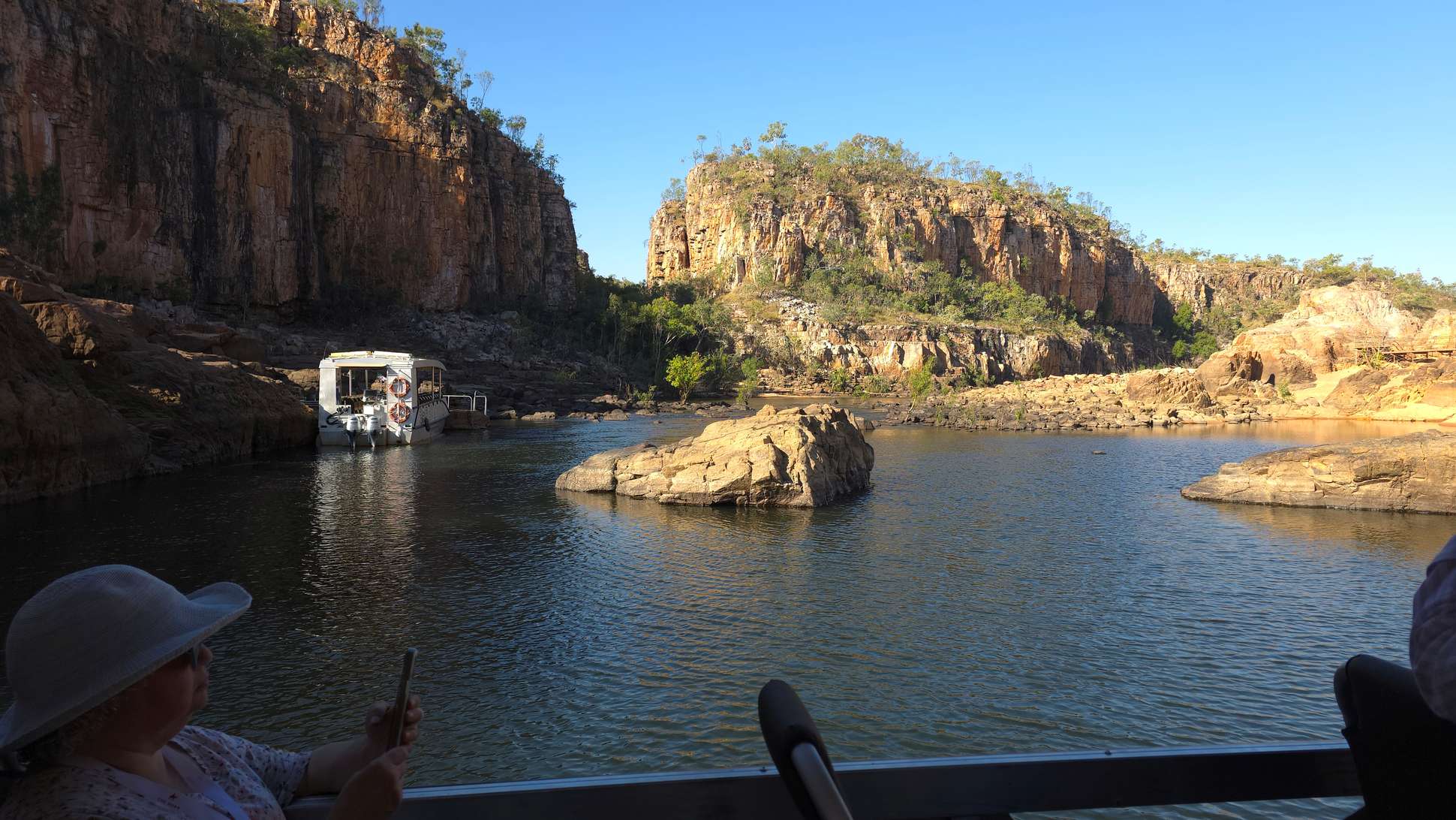
The end of our gorge. You can see the exposed rocks blocking the way.
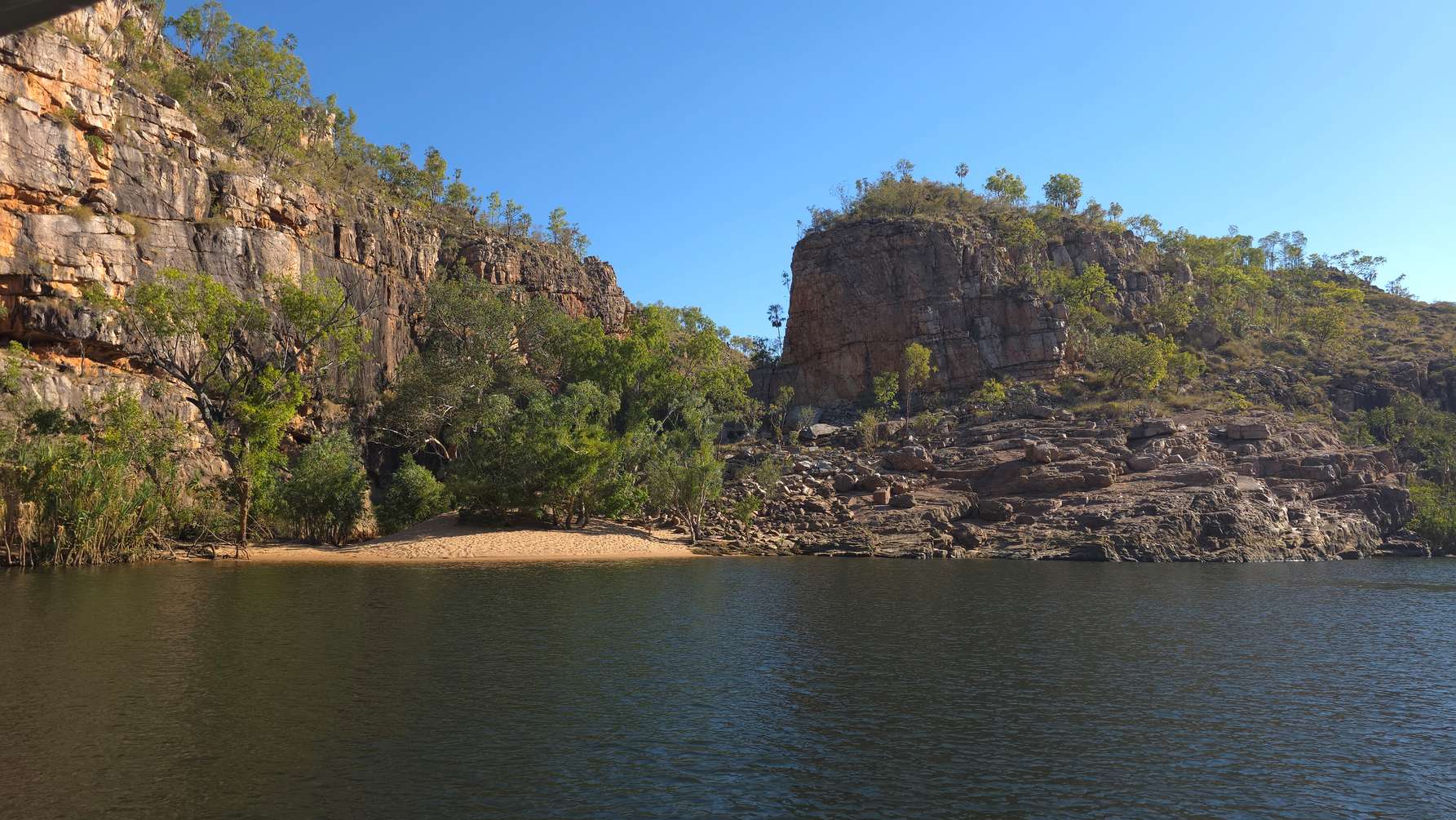
On our way back.
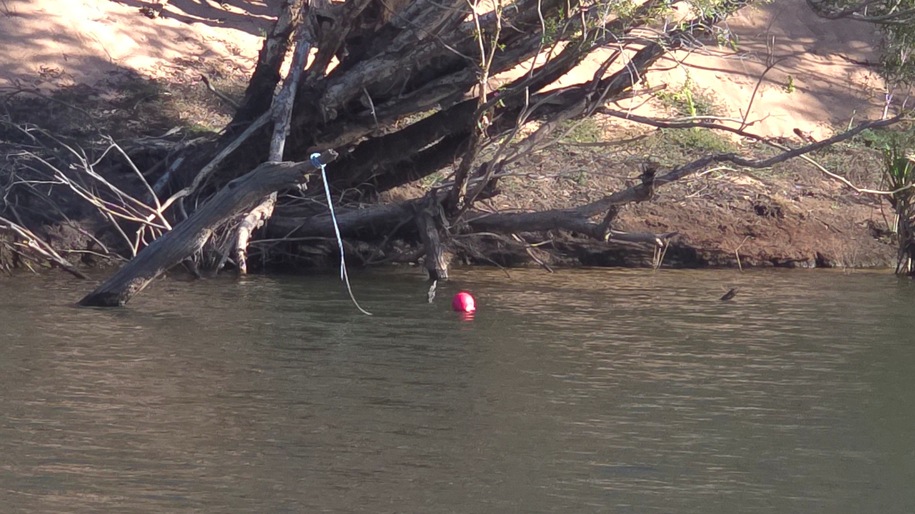
These red balls are are used to monitor for saltwater crocodiles.
Bite marks in the buoys can identify if a saltwater crocodile is in the gorge.
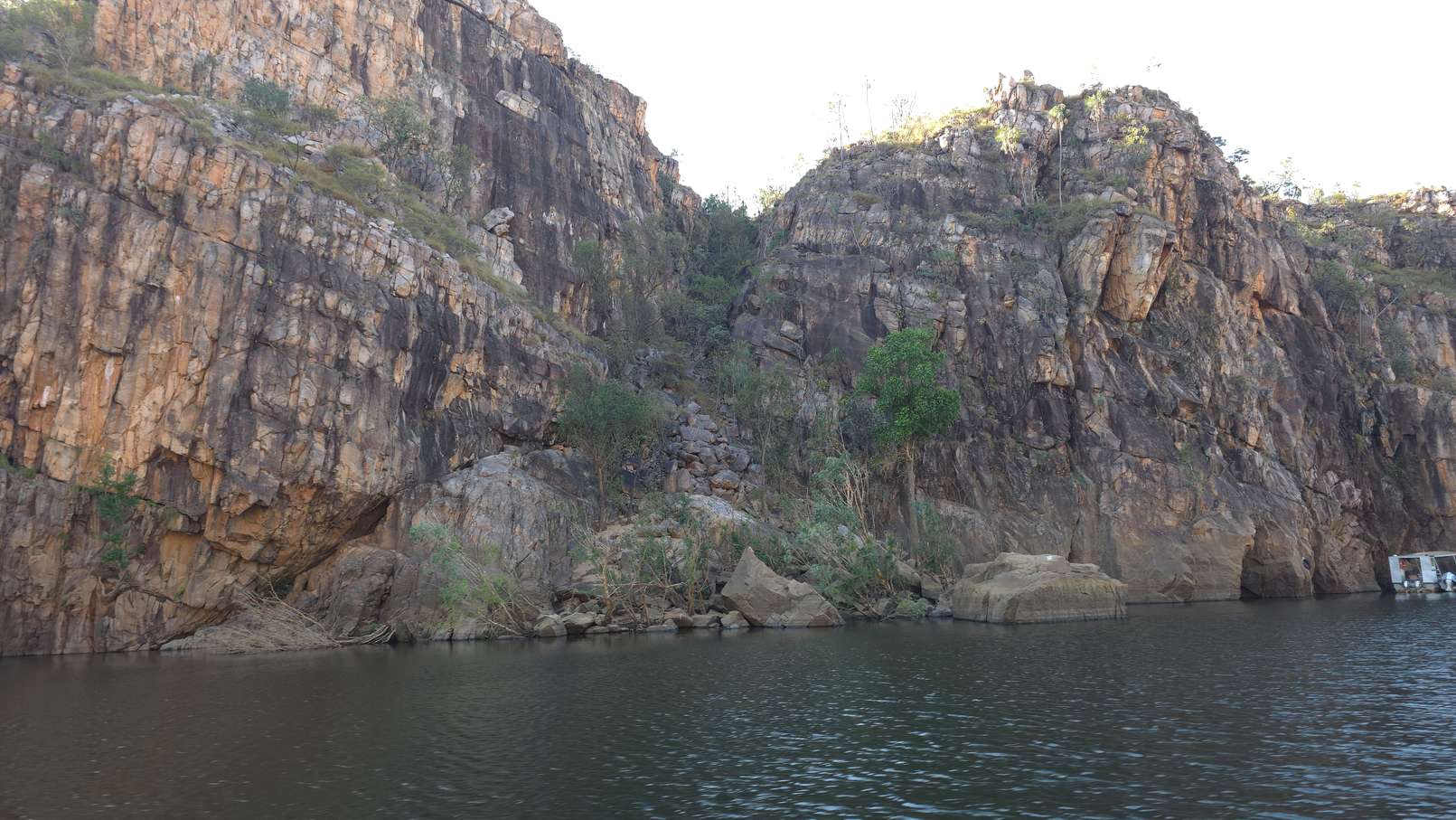
This is the other side of the Nitmiluk Gorge.
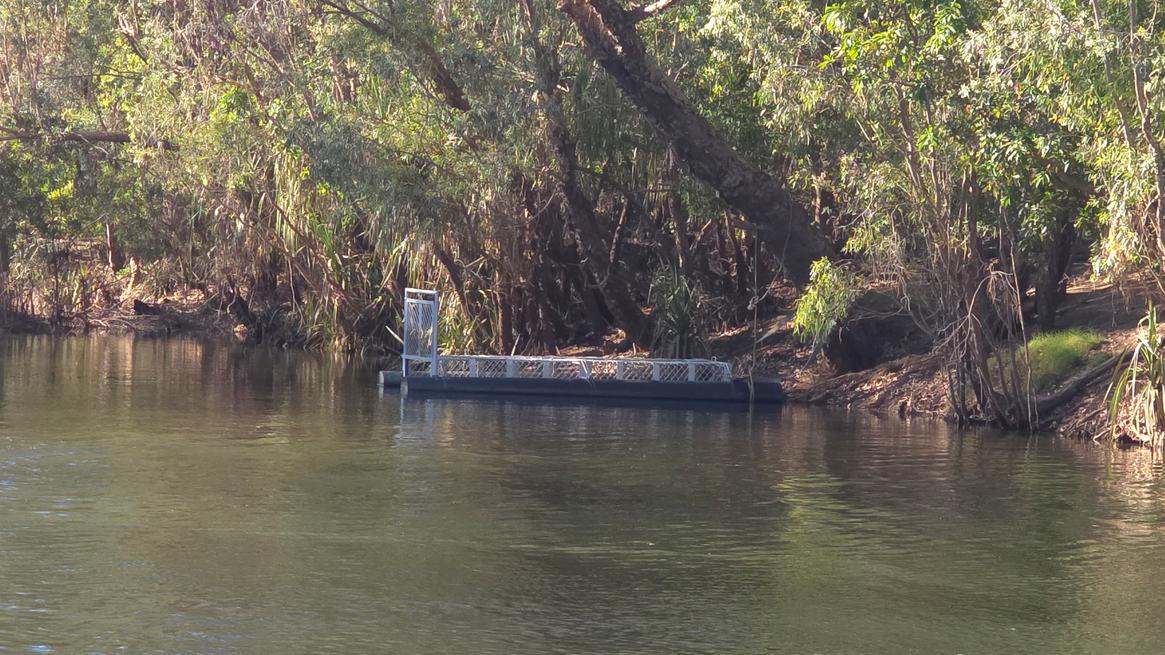
A saltwater crocodile trap.
During the wet season the crocodiles can swim up river into the gorges.
In the dry season the rangers trap the crocodiles and relocate them.
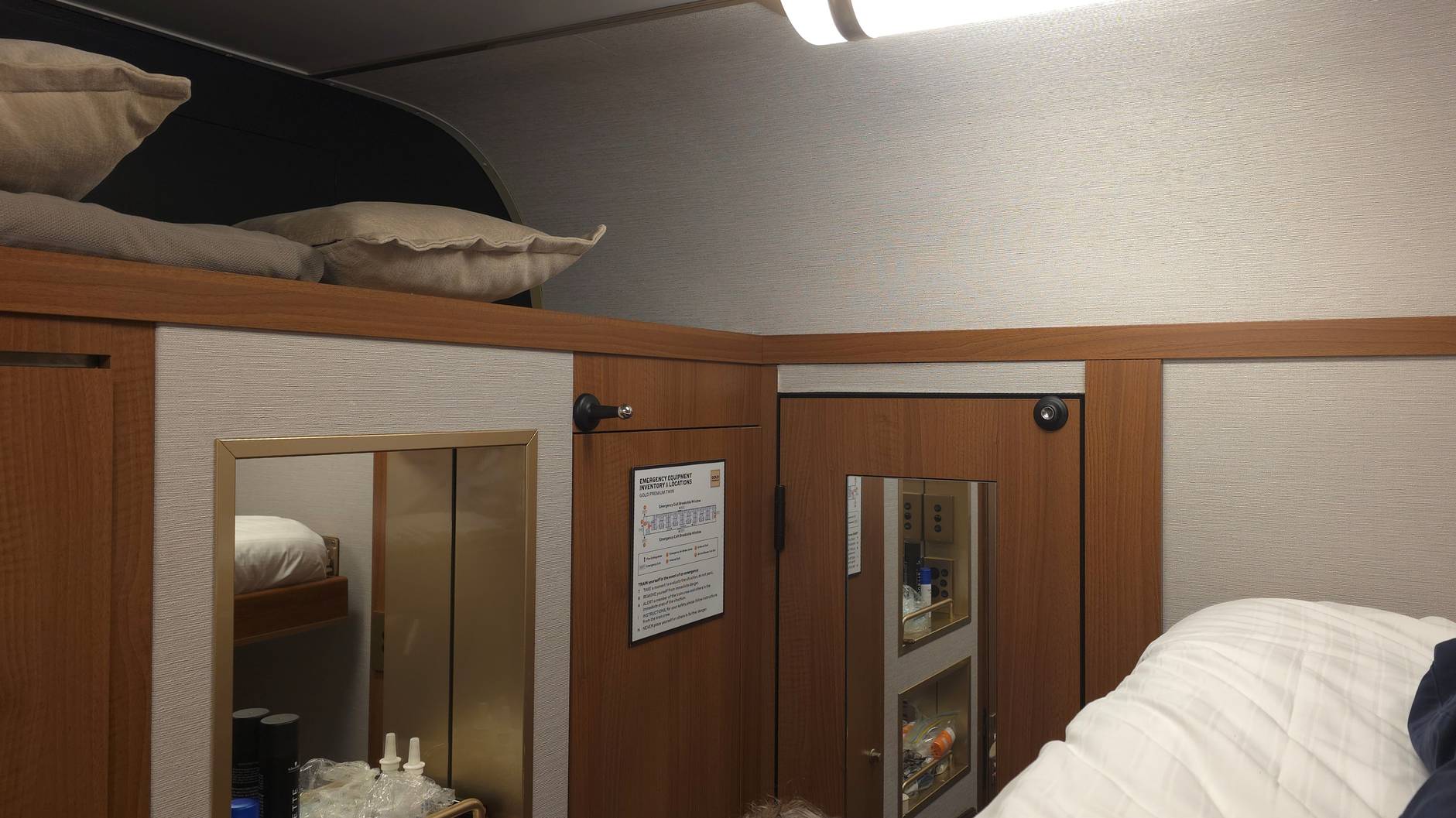
View of our cabin from the top bunk.
Alice Springs
23rd July
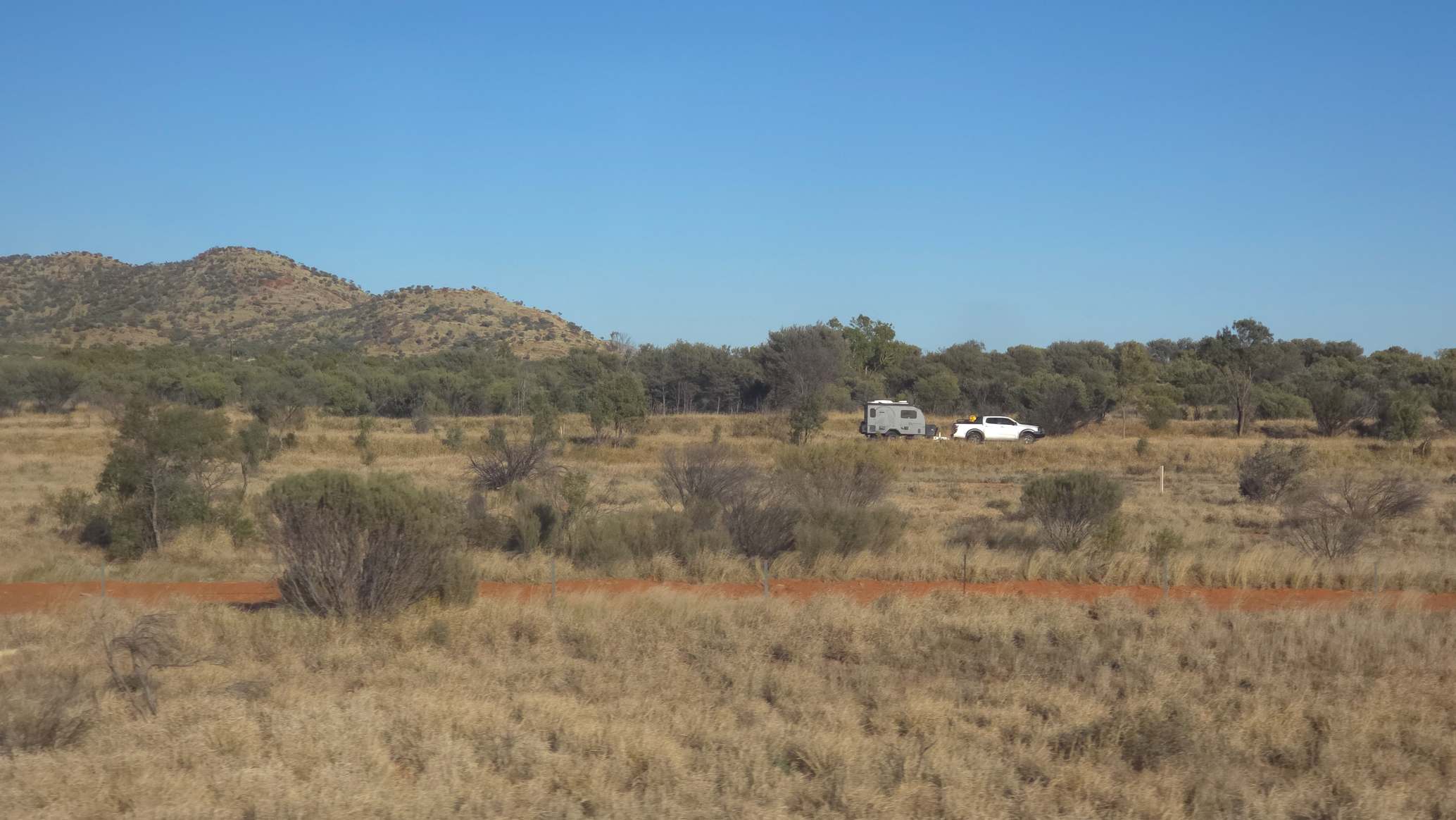
After breakfast we sat in our cabin and watched the scenery as we headed to Alice Springs.
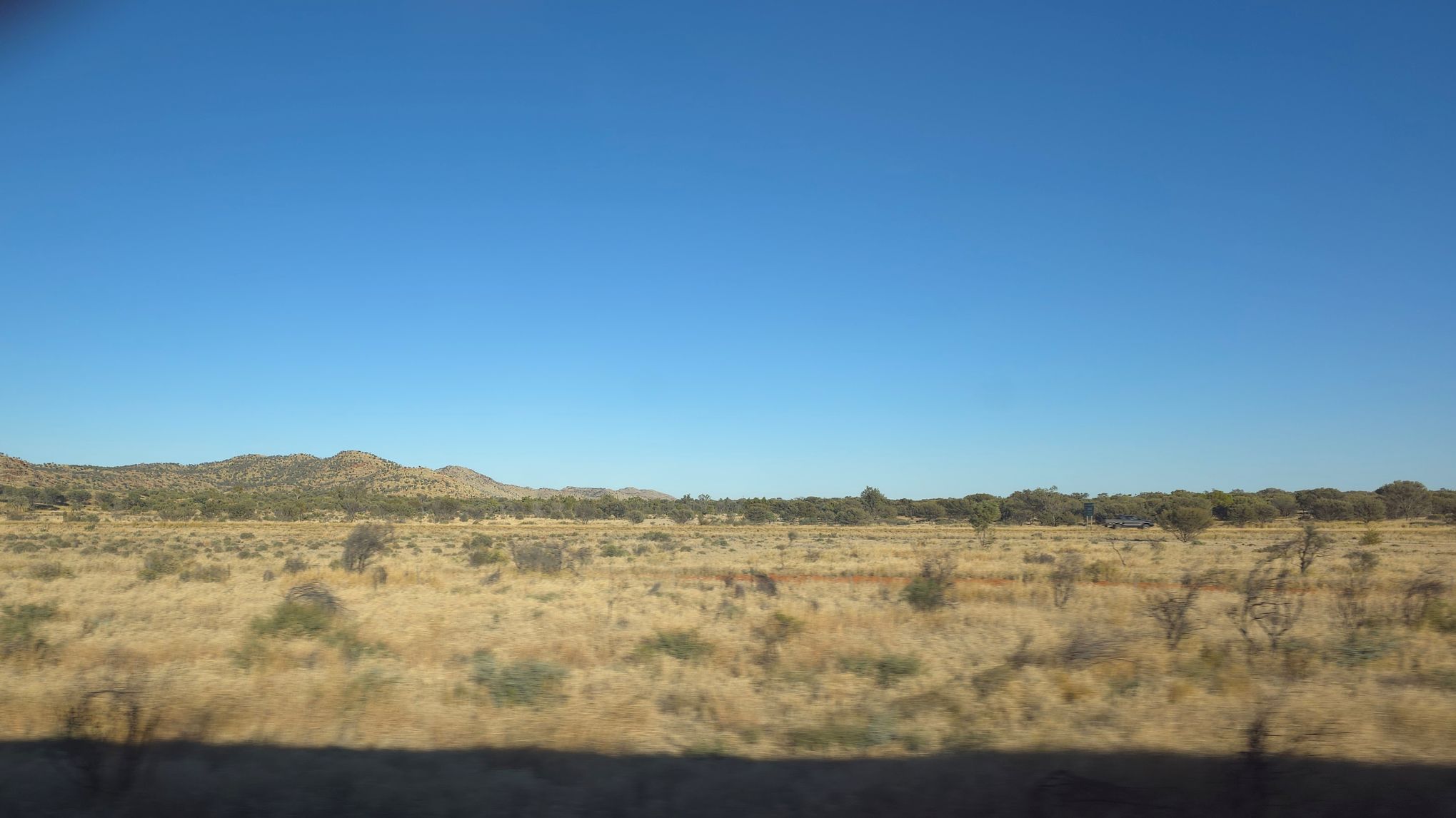
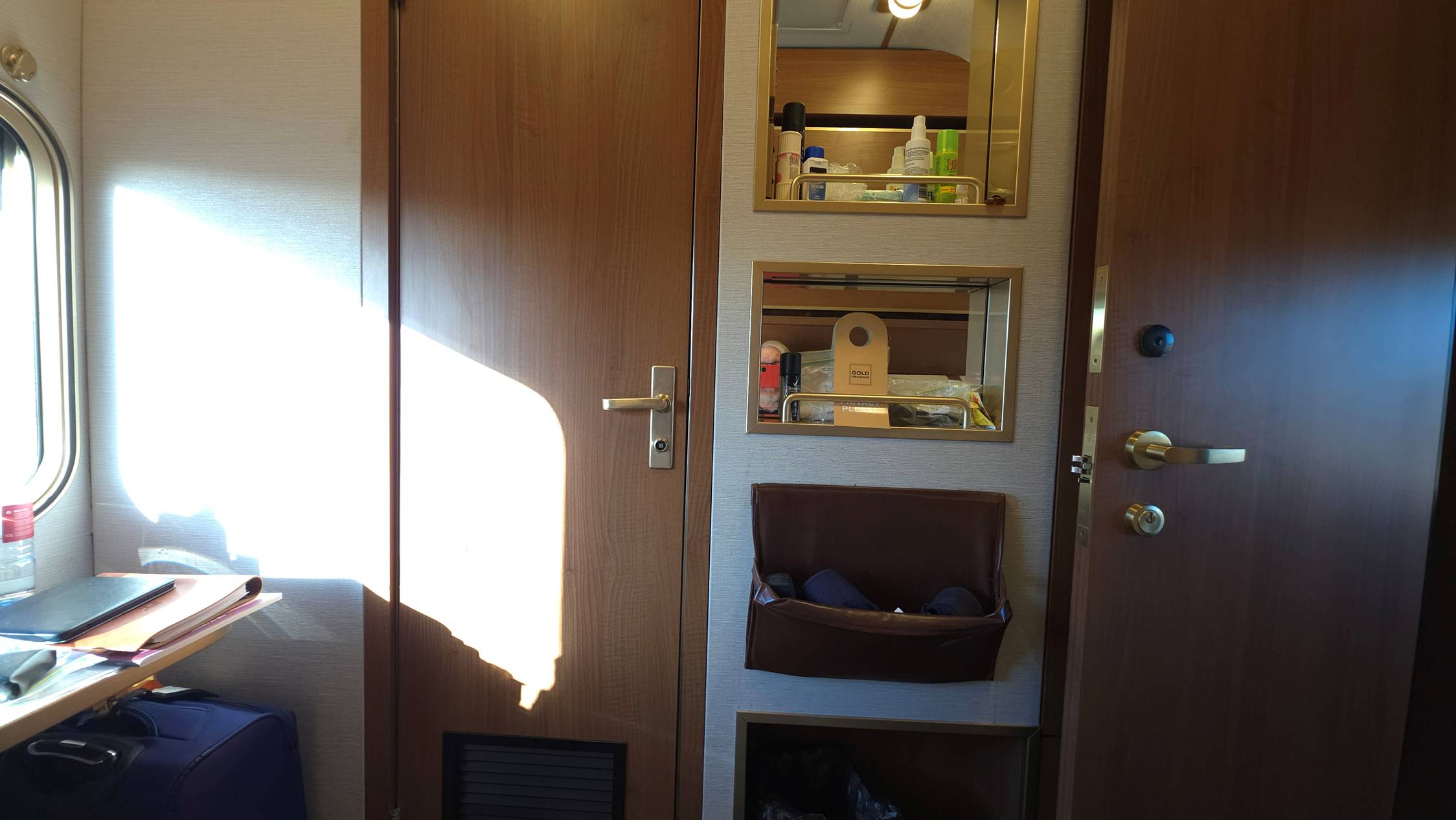
While watching the scenery I took this photo of the cabin from the seat.
You can see how compact it is.
The cabin door is open so we can see out the other side.
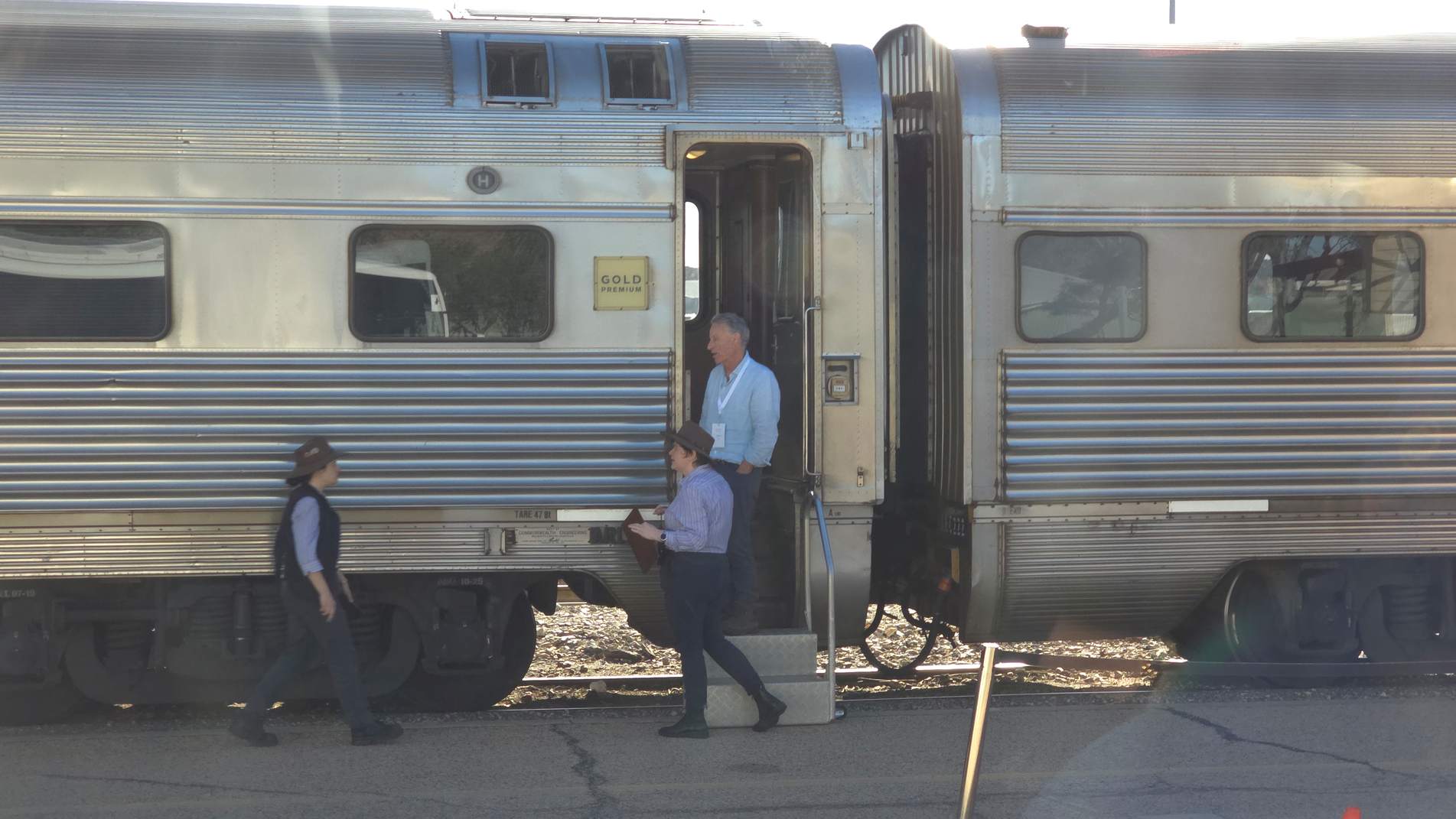
Alice Springs station.
The door used by passengers in our group of three carriages.
To the right of the door is our lounge car.
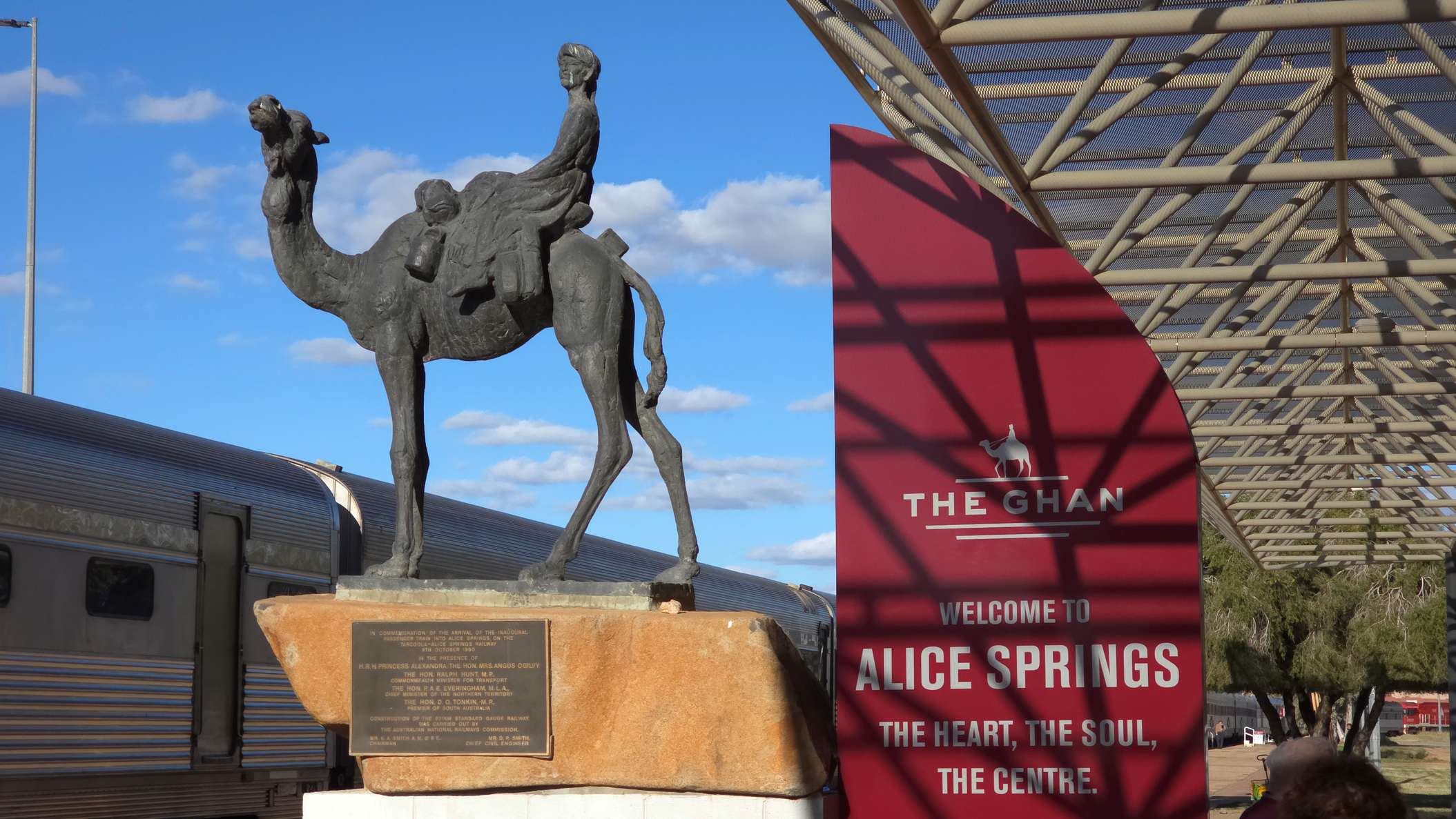
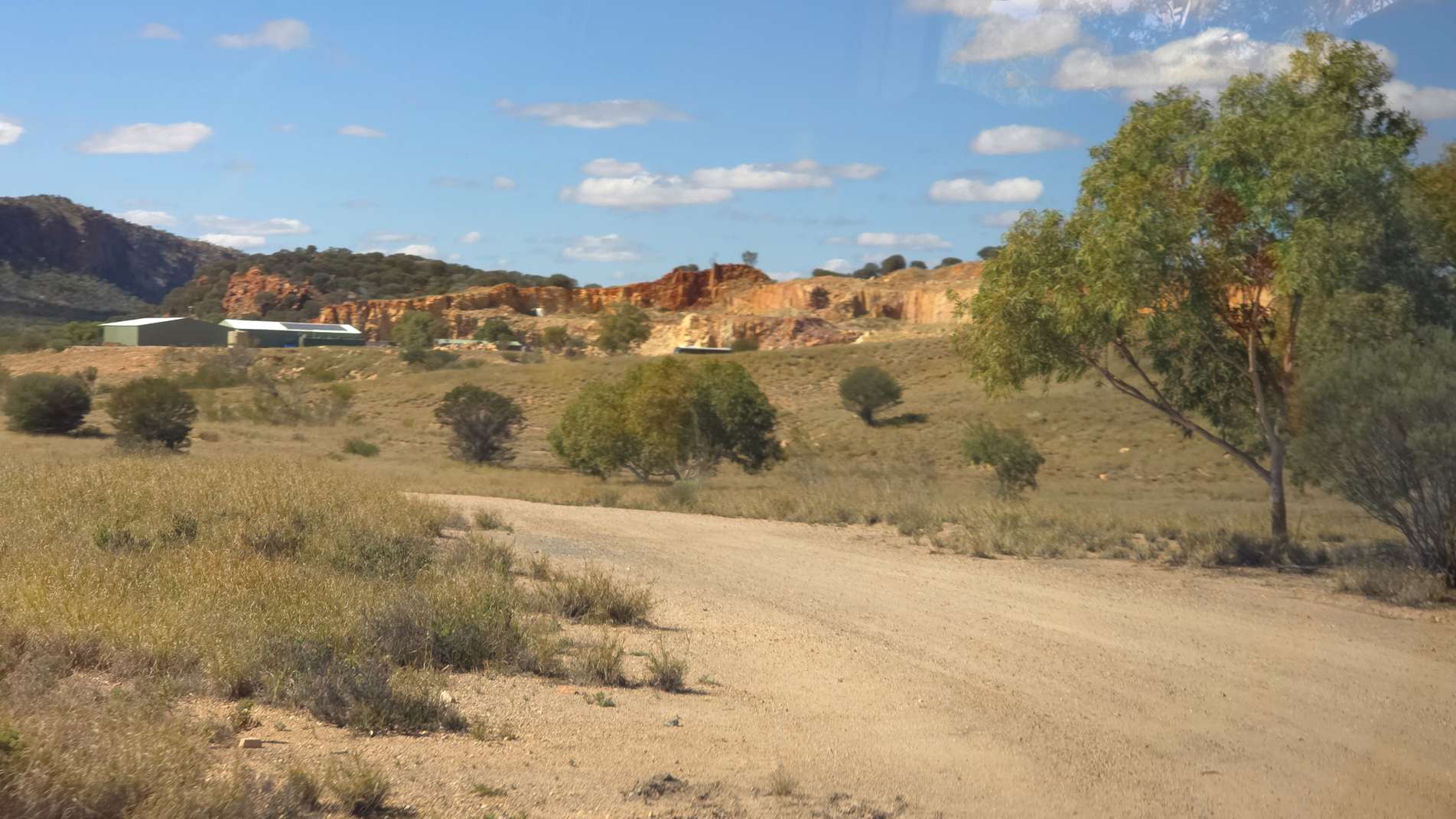
After visiting 'School on the Air', Alice Springs Reptile Centre and the 'Royal Flying Doctor' visitor centre we headed for lunch at The Quarry.
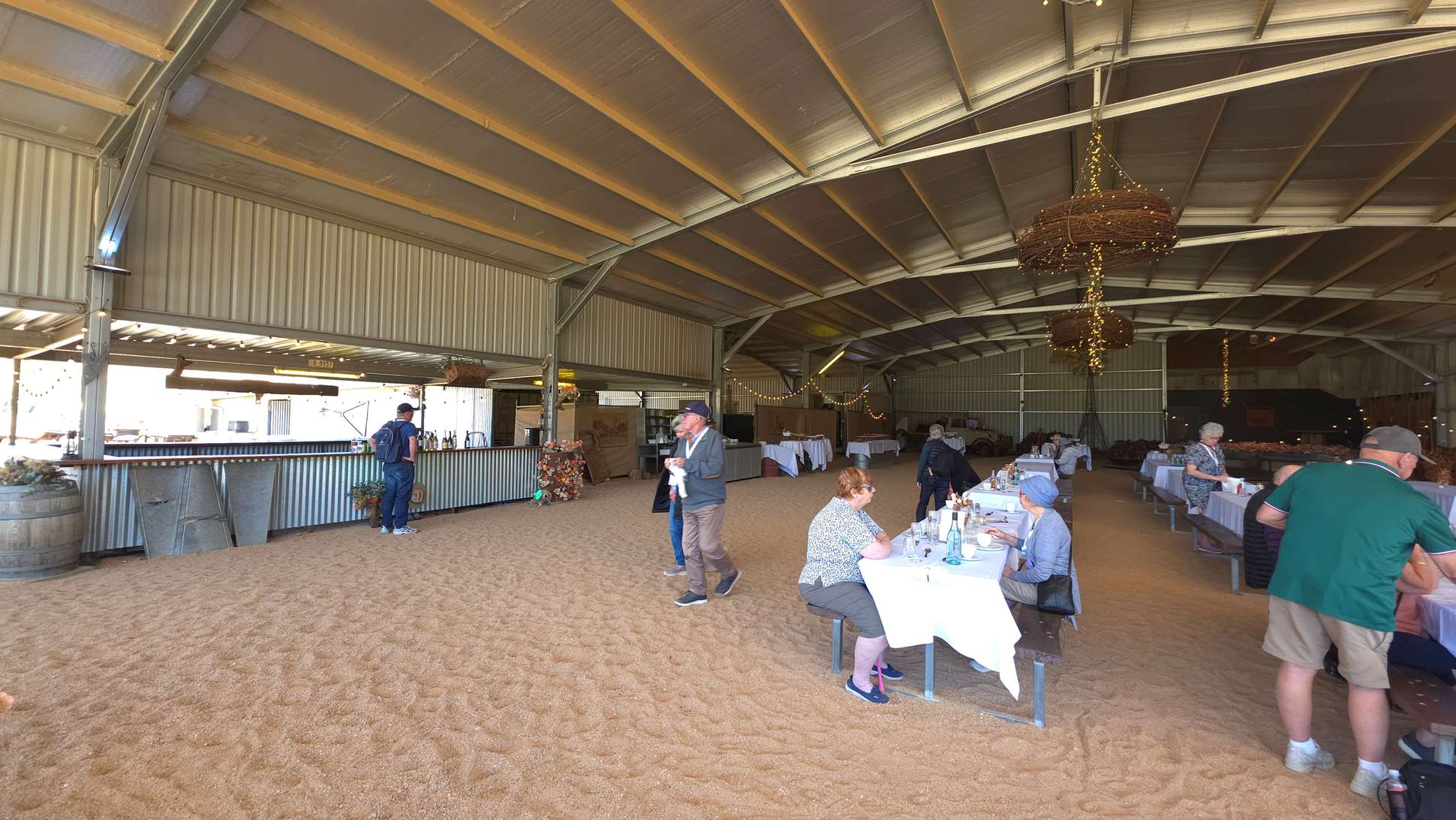
Colleen having a cup of coffee after lunch.
We were scheduled to arrive last so the earlier coaches were finishing their lunches and continuing with their tours when we arrived.
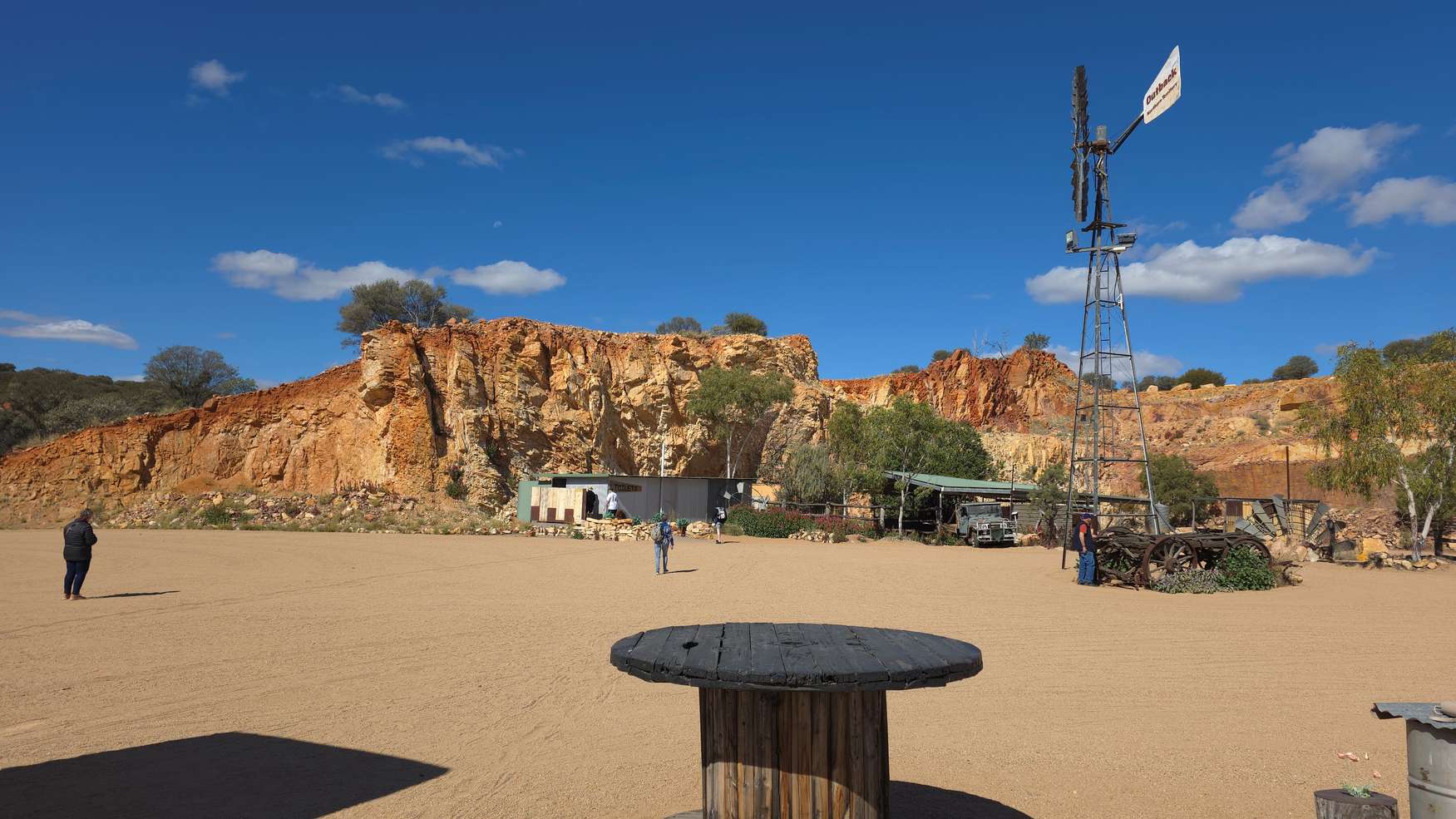
Outside the lunch shed.
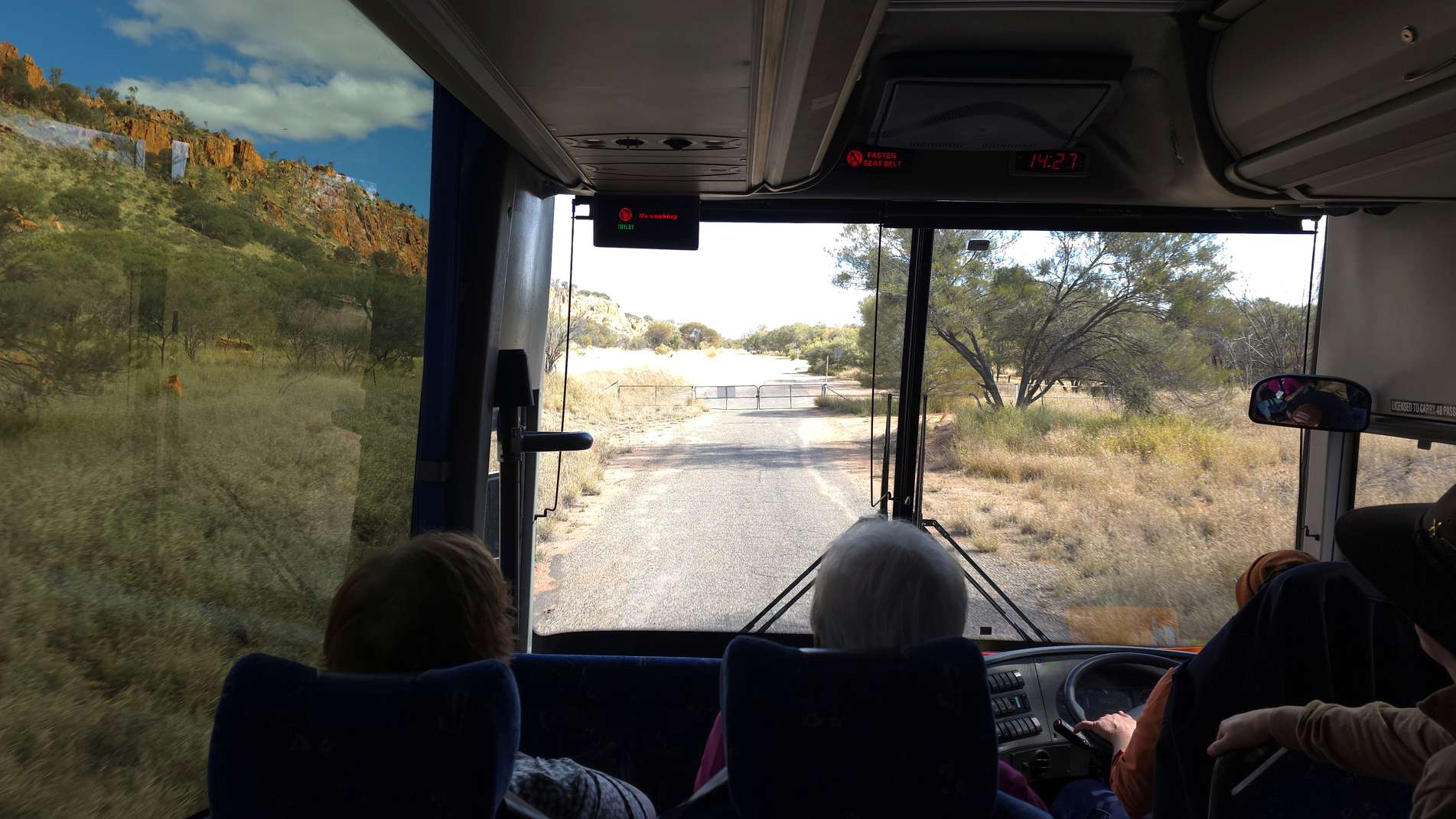
This gate had to be opened by our guide on our way in and out.
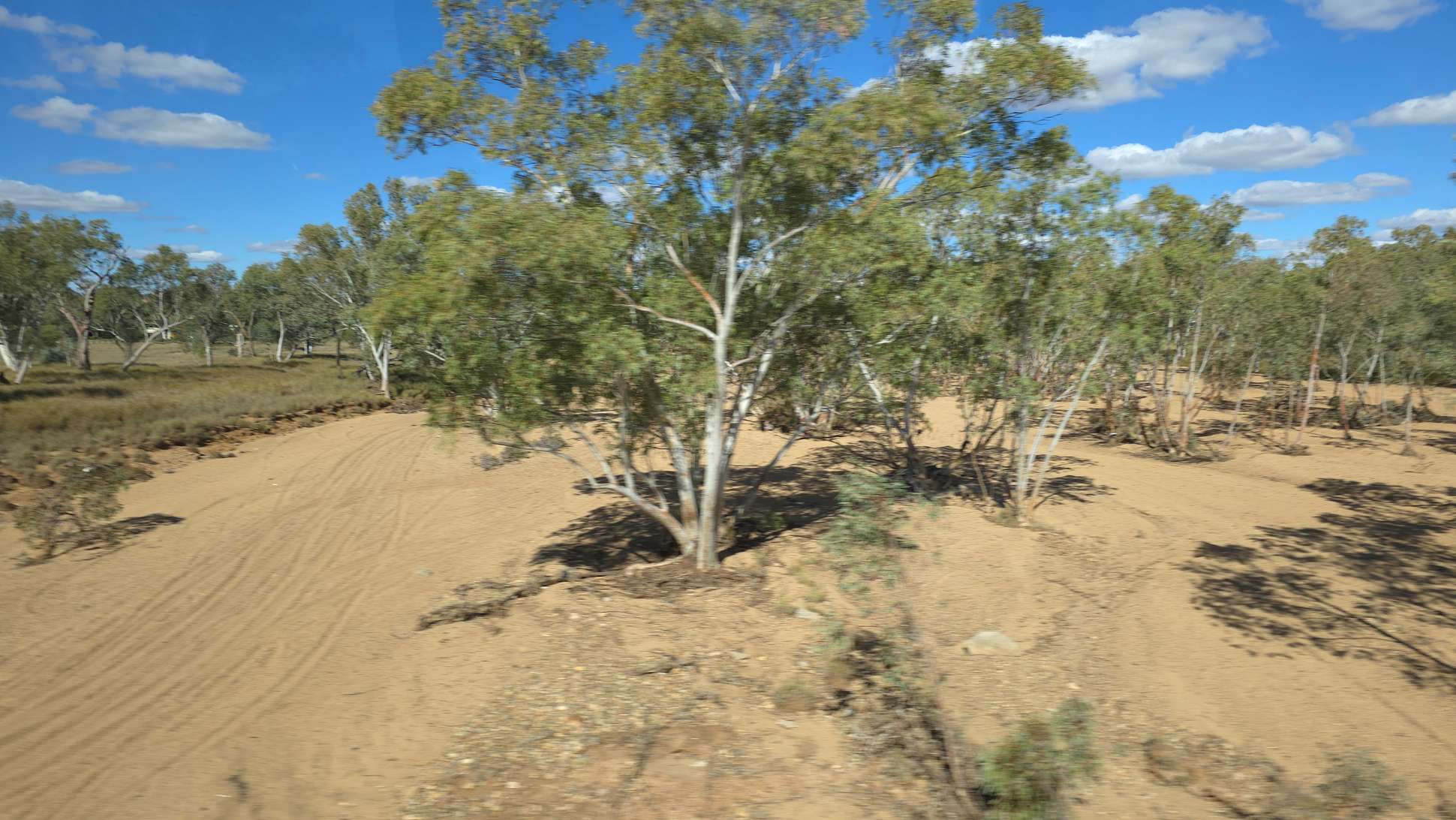
The Todd river.
Usually dry for about 95% of the year.
Following an unusally wet start to this year the river flowed four times.
Due to the wet start to the year the 'Red Centre' looked greener.
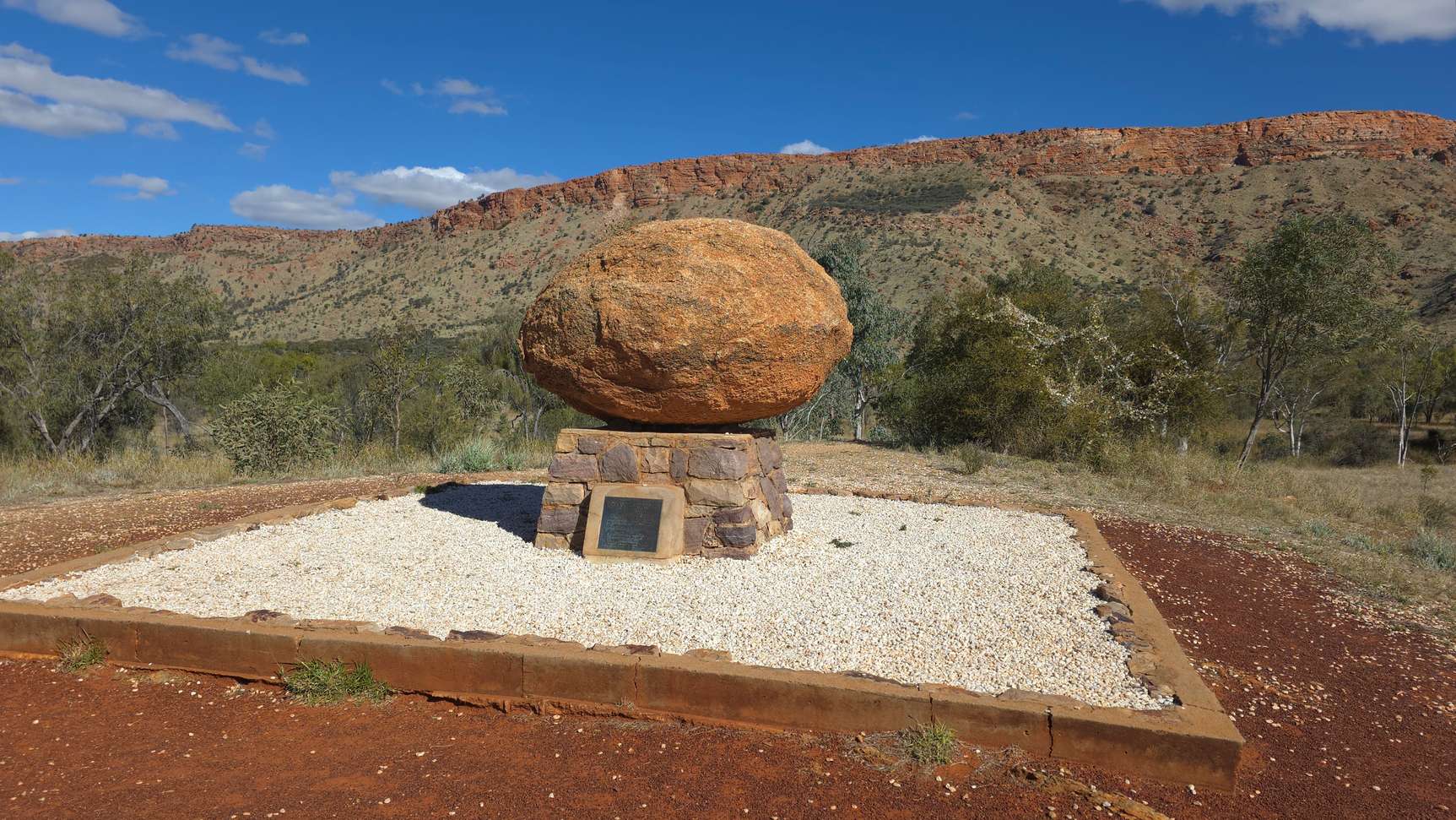
The Reverend John Flynn's grave.
The founder of the "Flying Doctor Service".
ANZAC Hill offers panoramic views of Alice Springs.
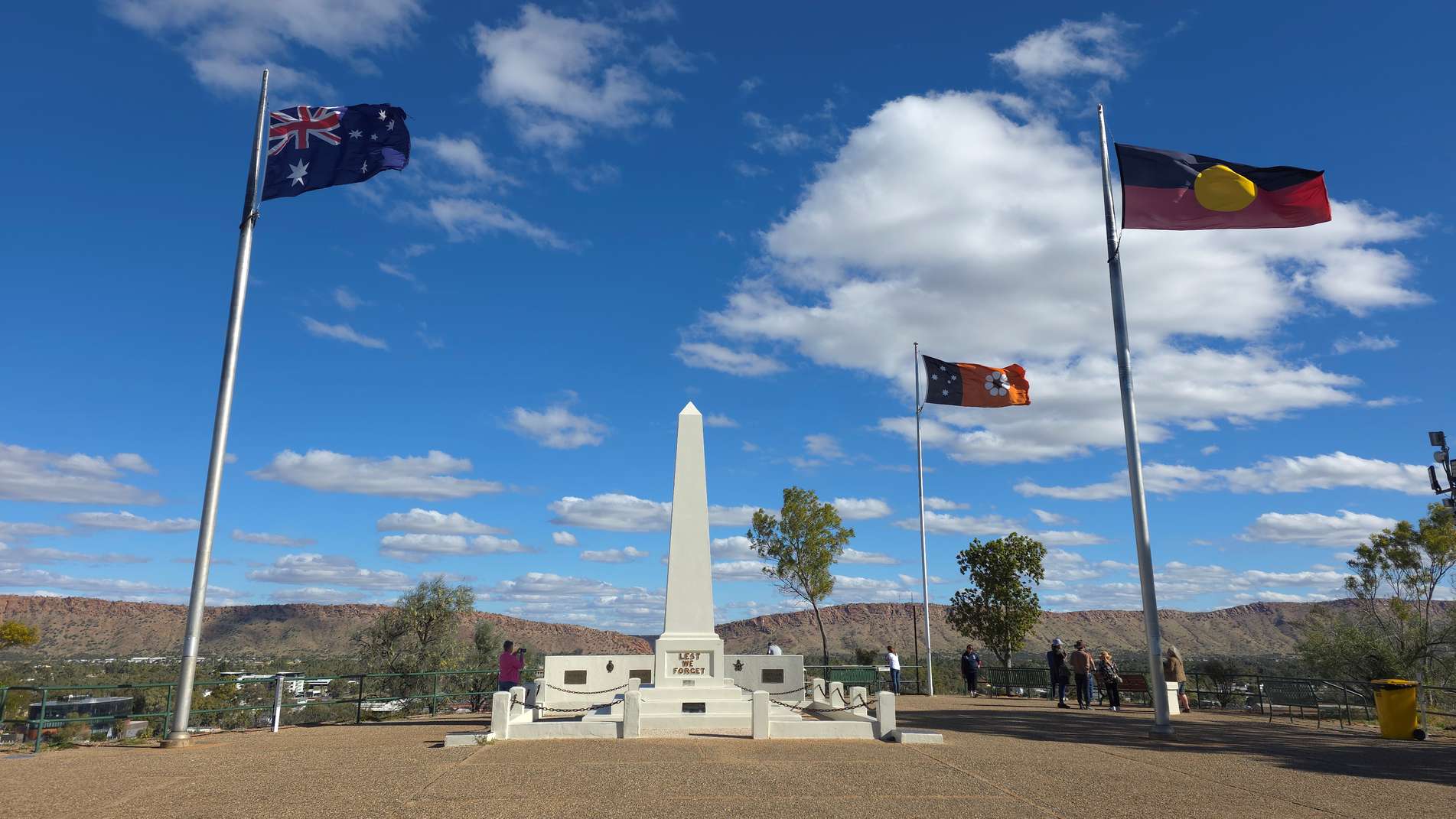
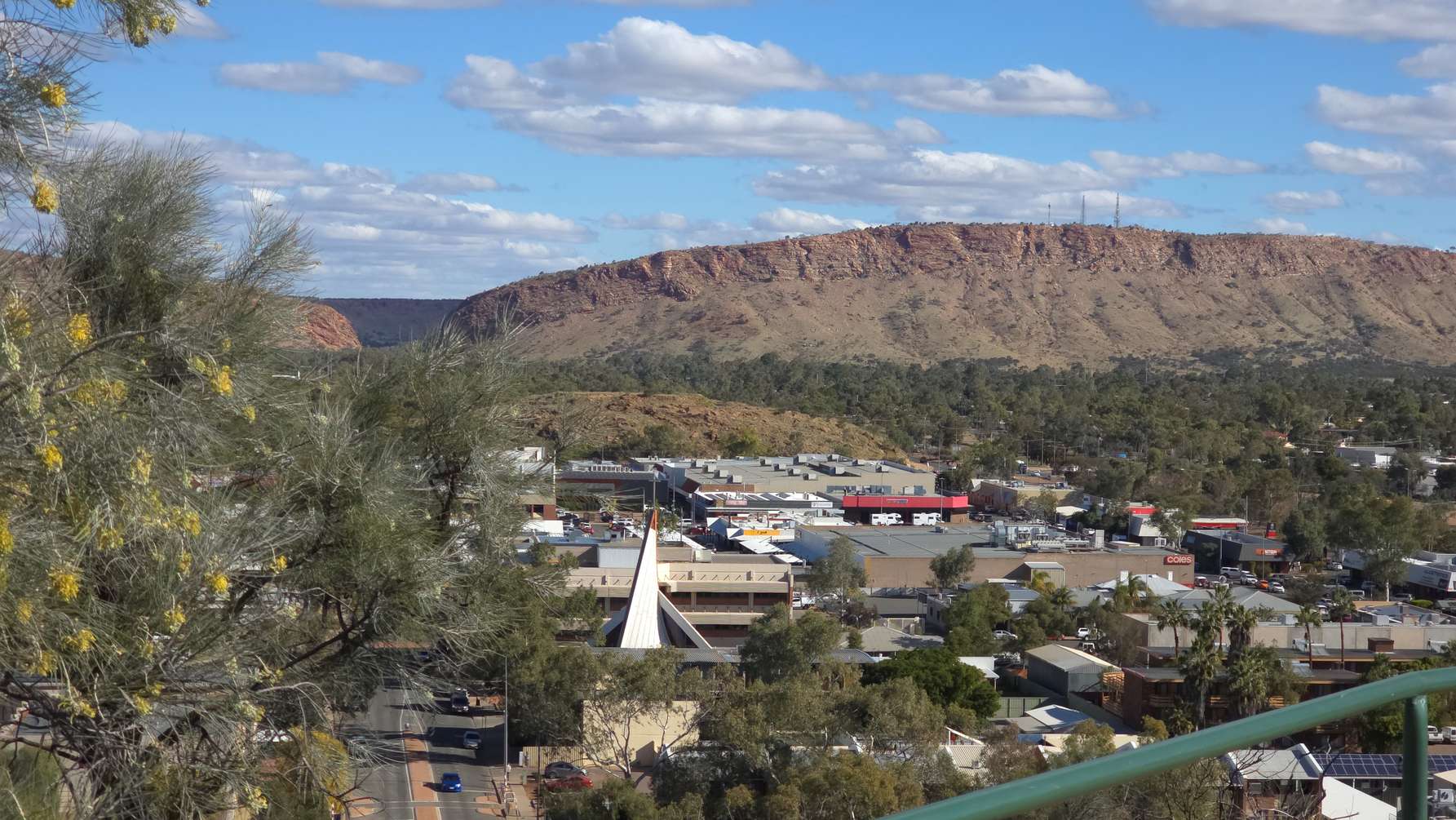
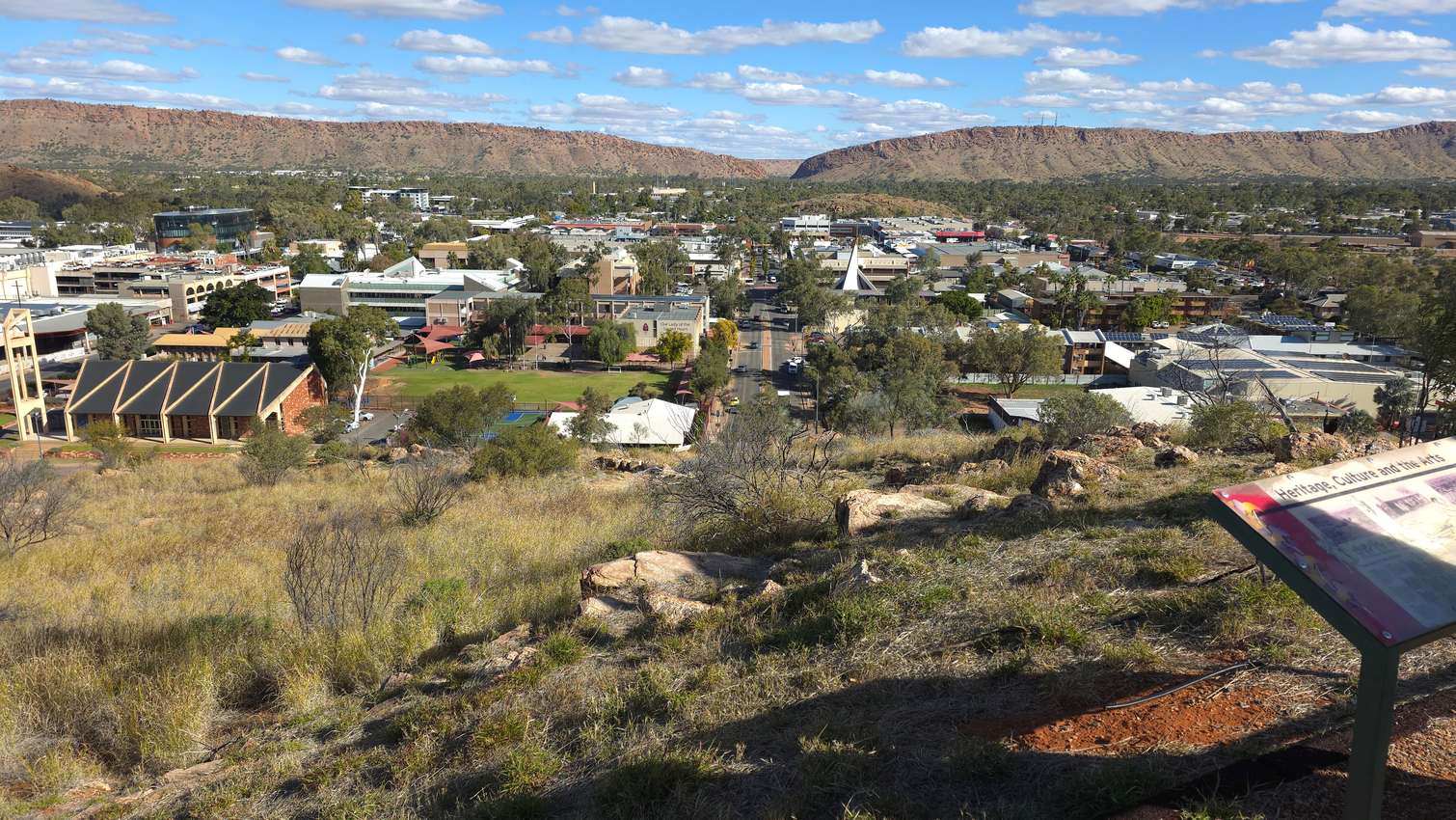
Telegraph Station
Dinner Under The Stars
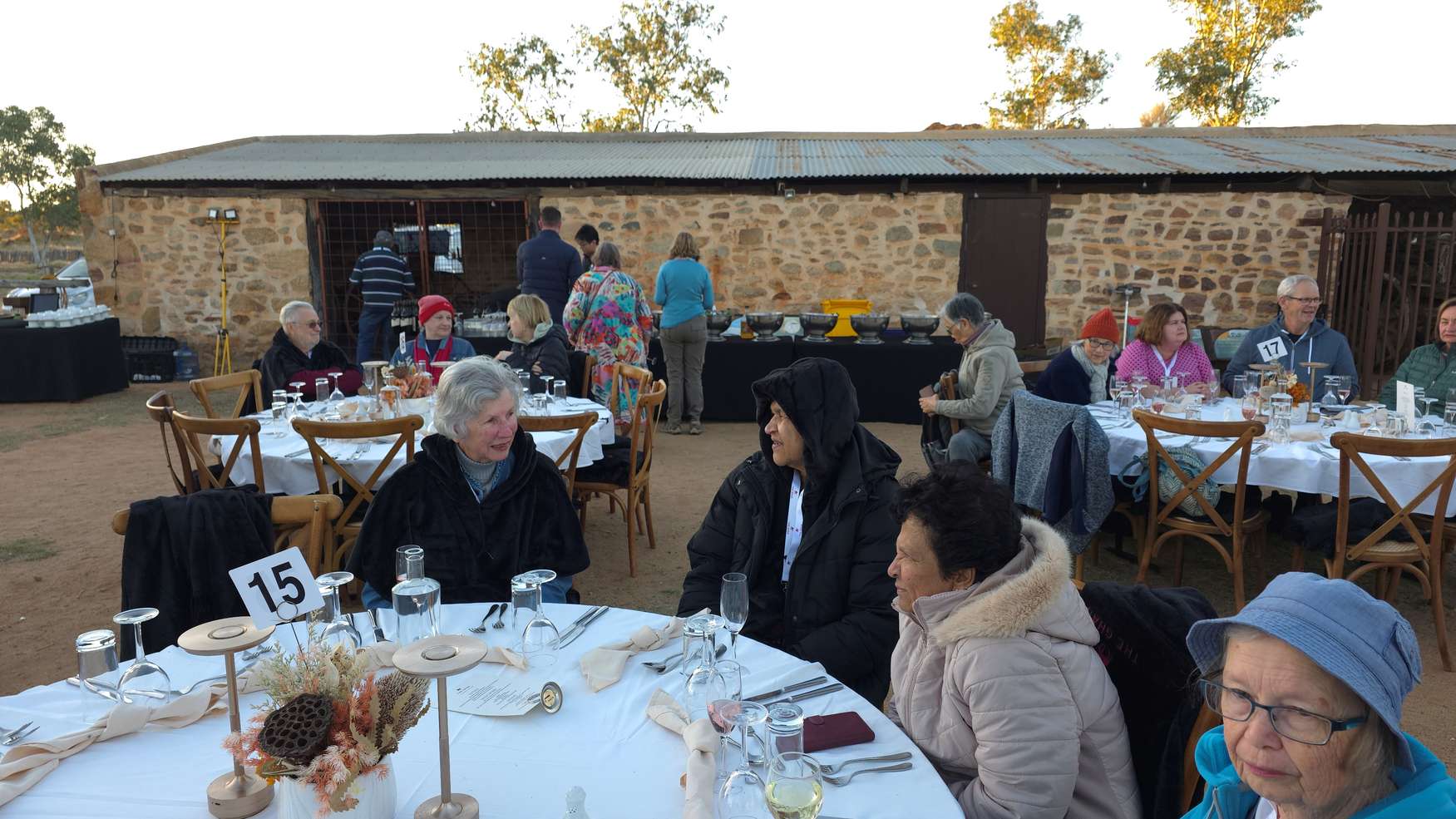
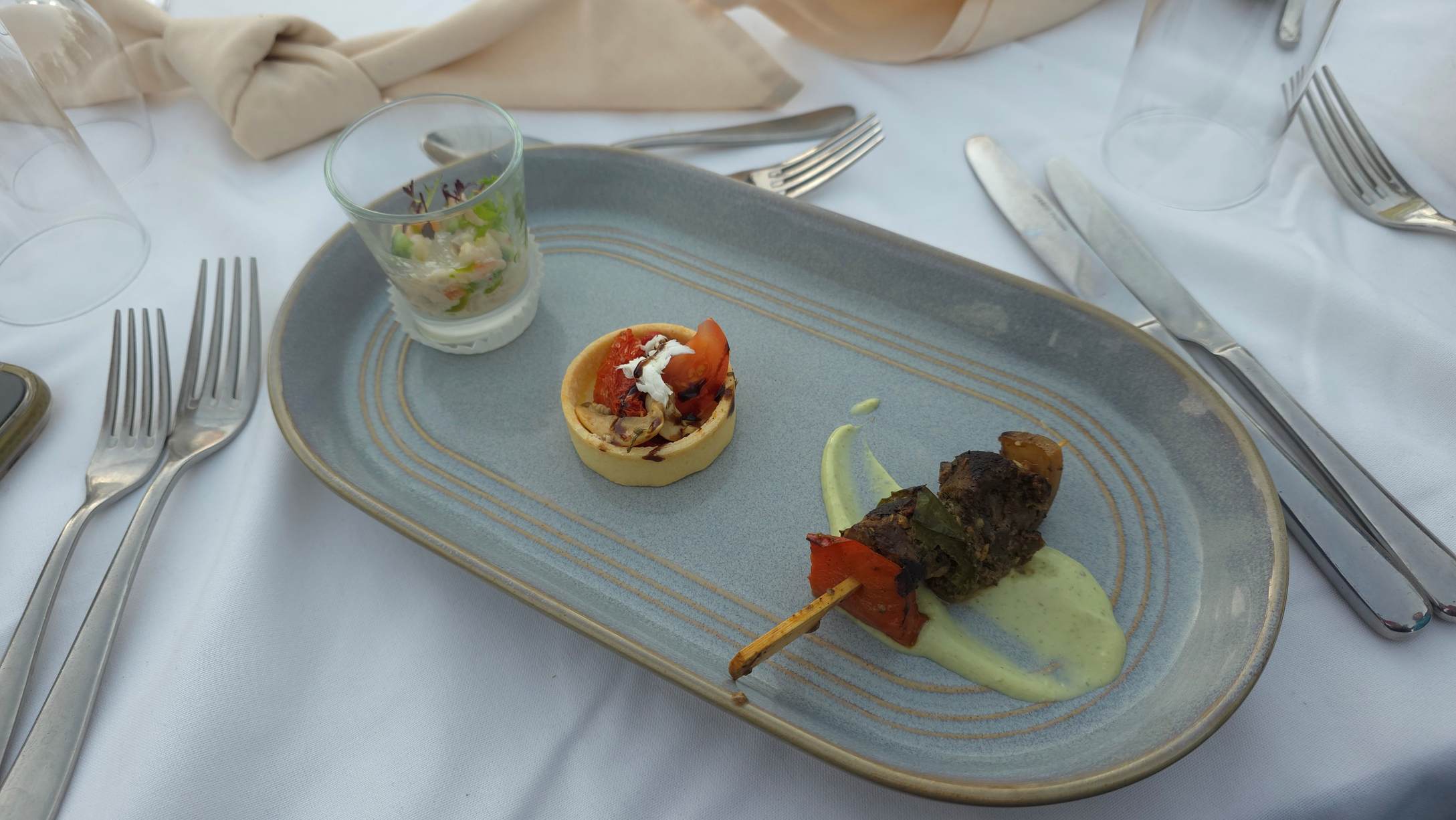
Entree.
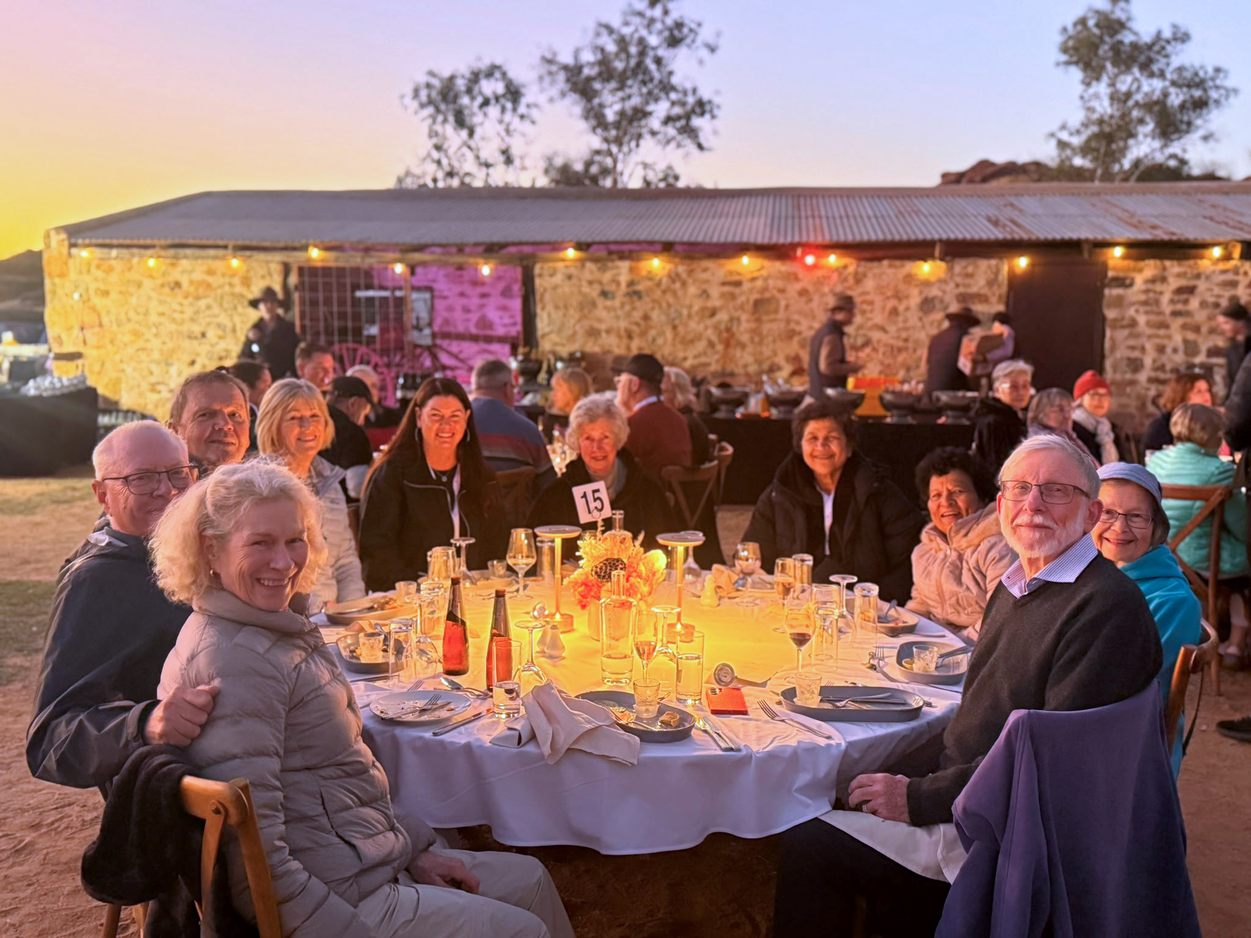
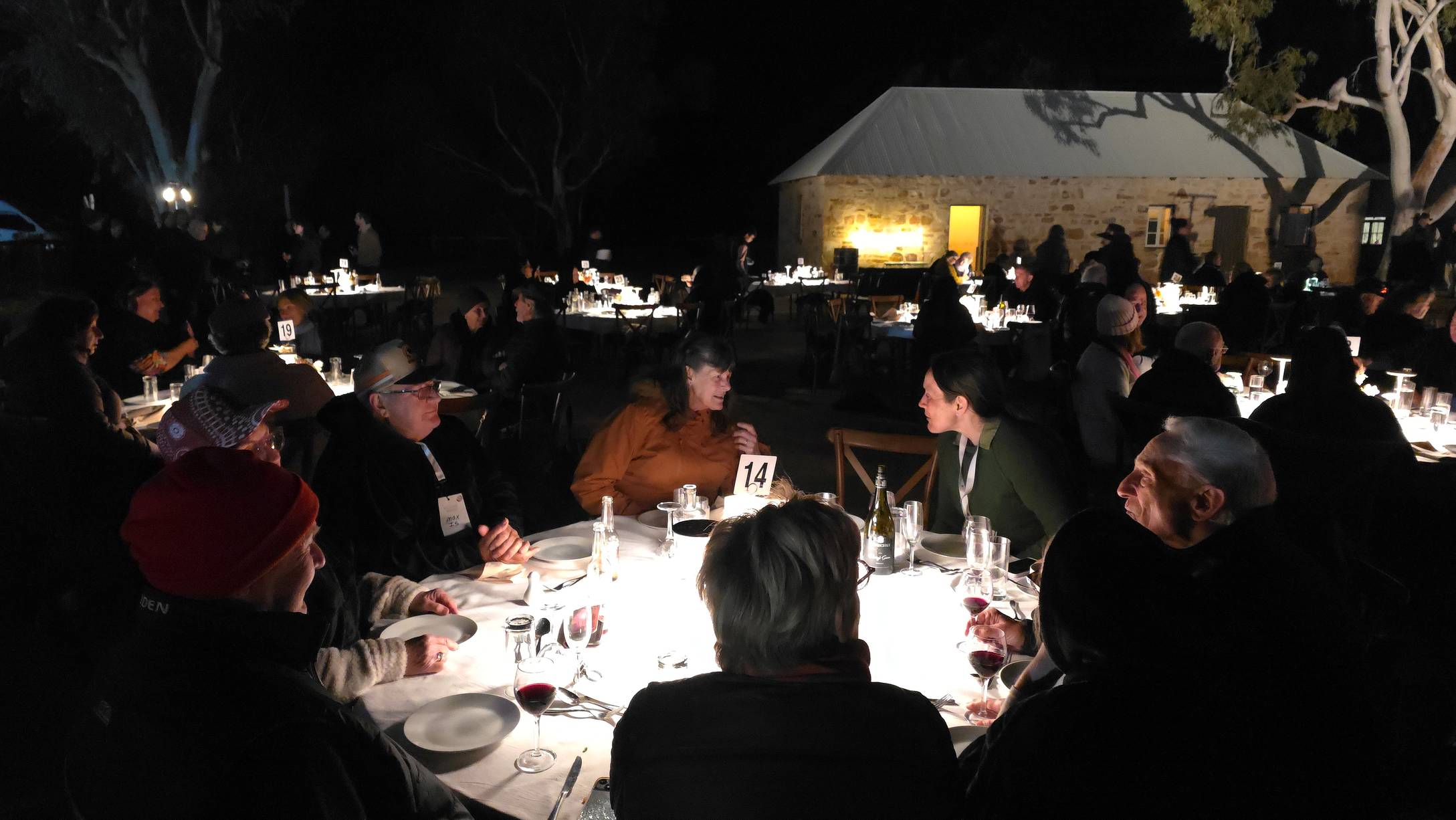
These are the people we shared the table with.
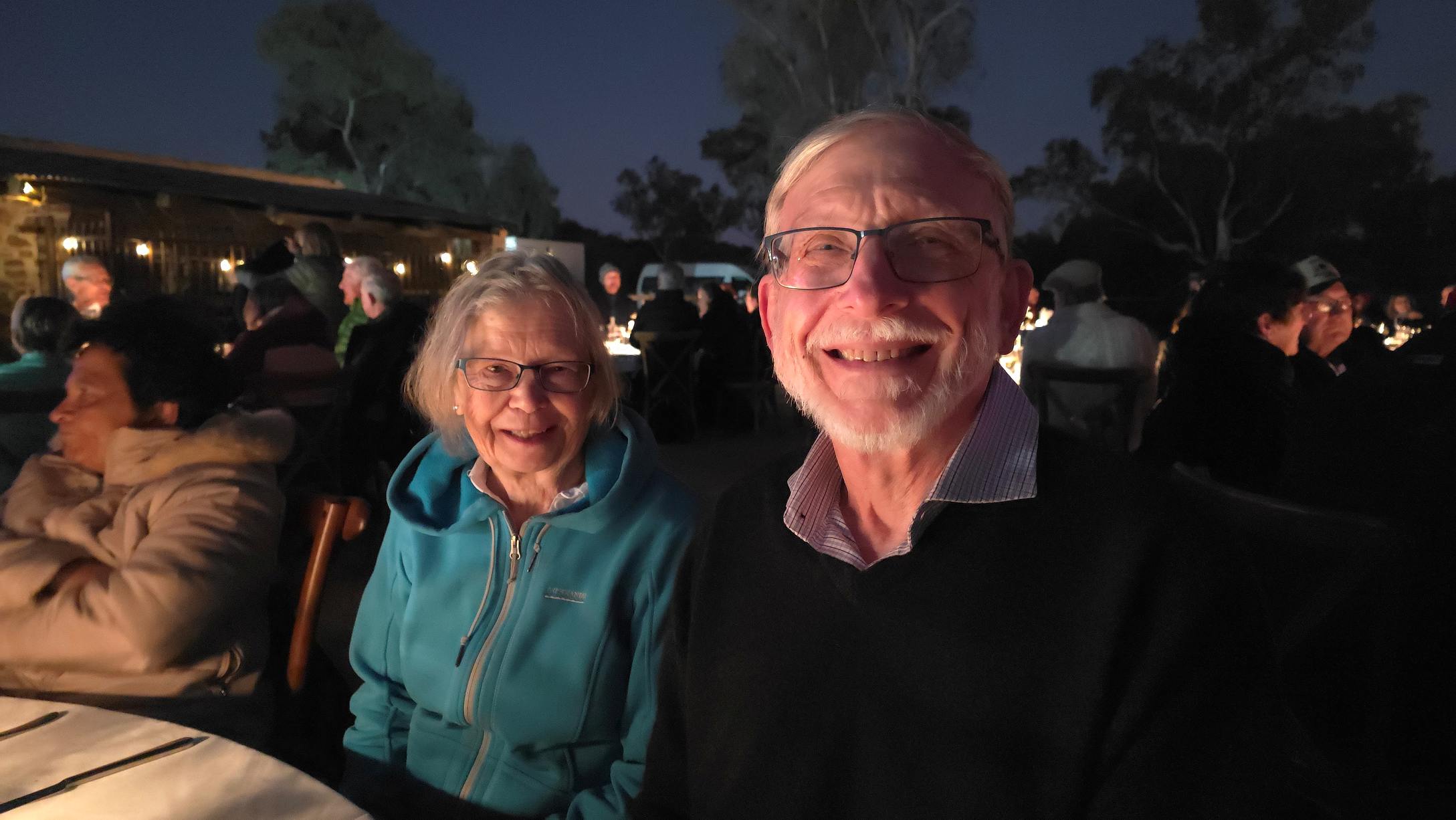
Colleen and Neil.
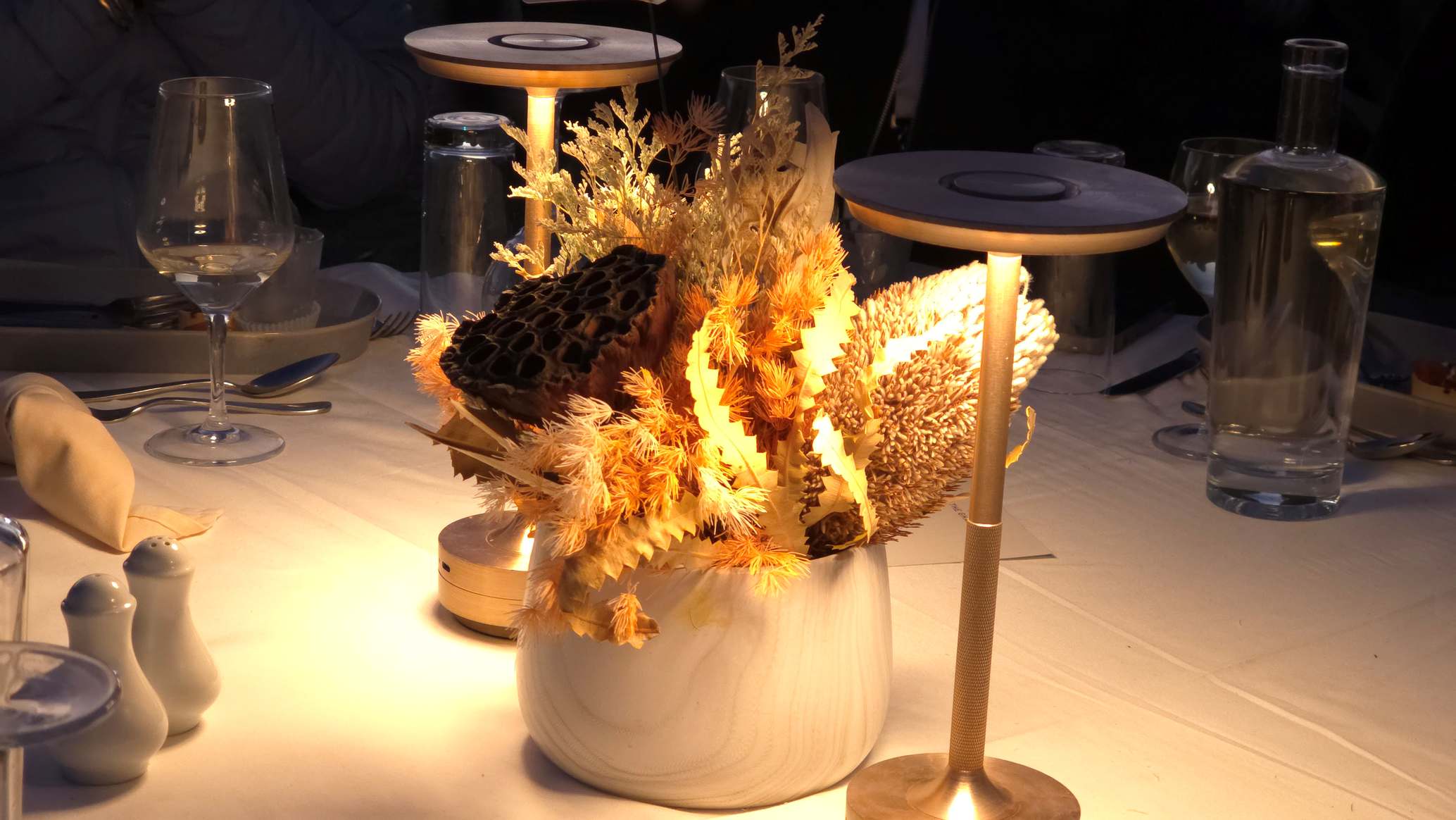
Table centre display.
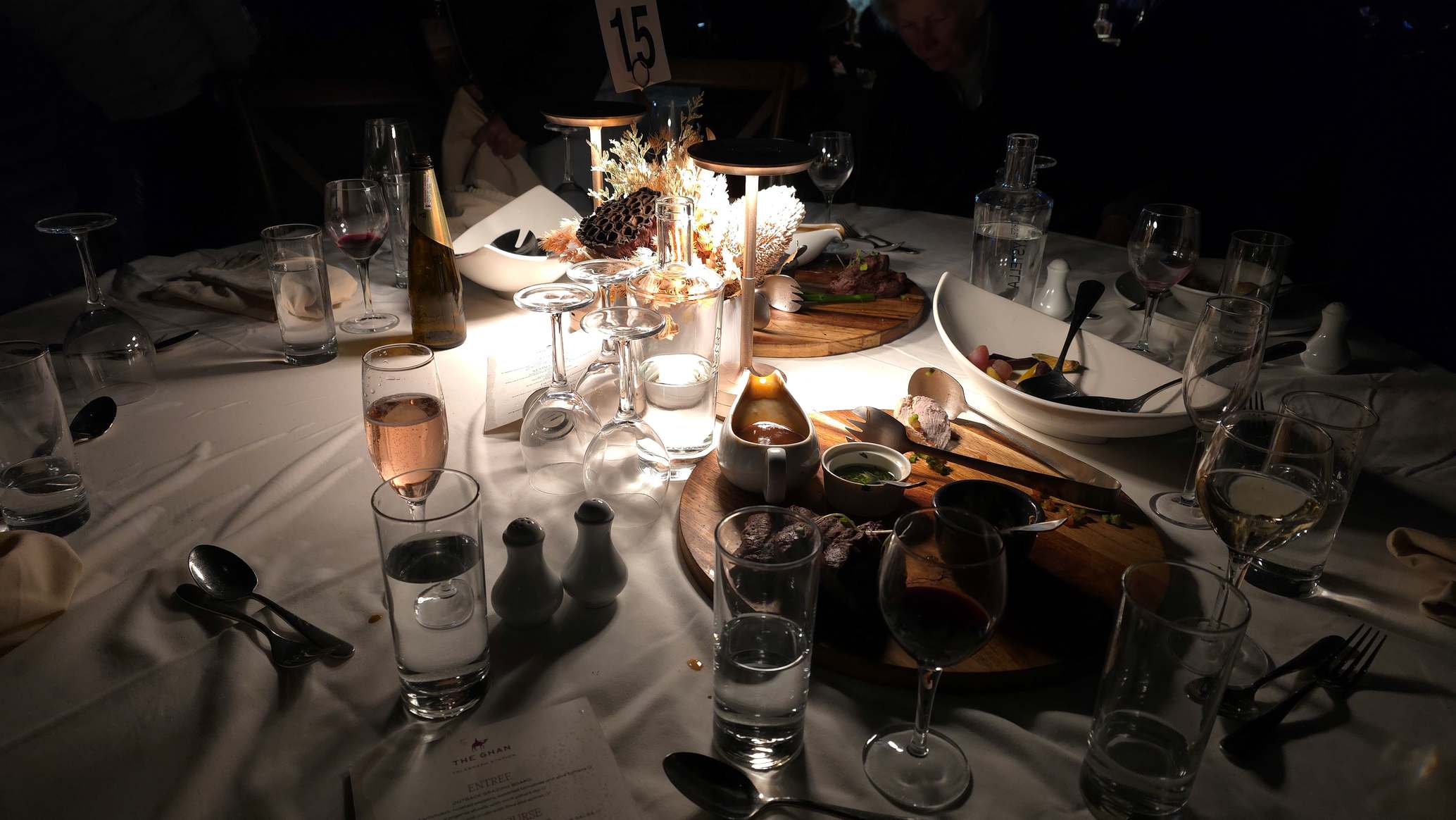
The remains of the main course.
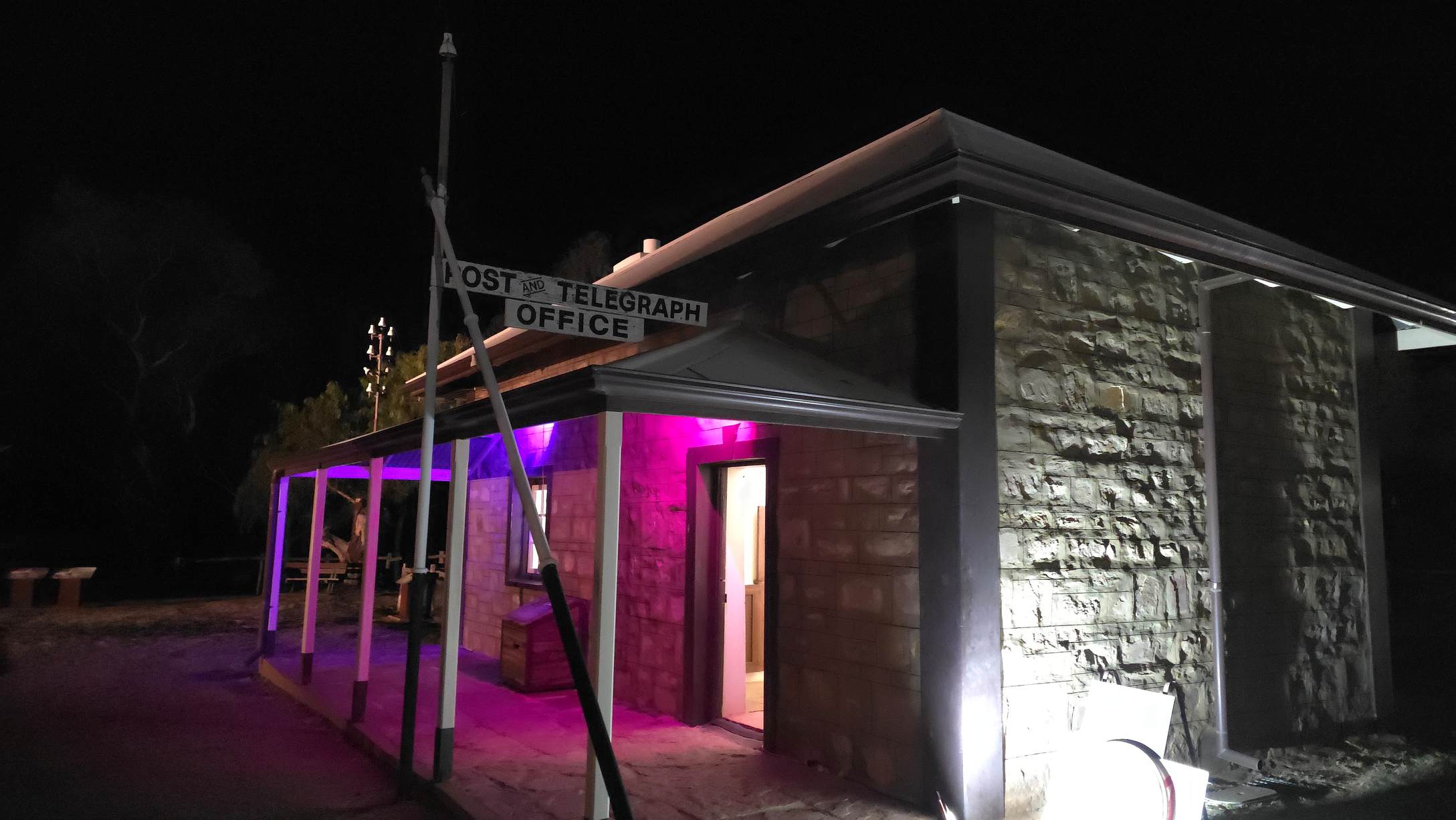
A few photos taken at Telegraph Station.
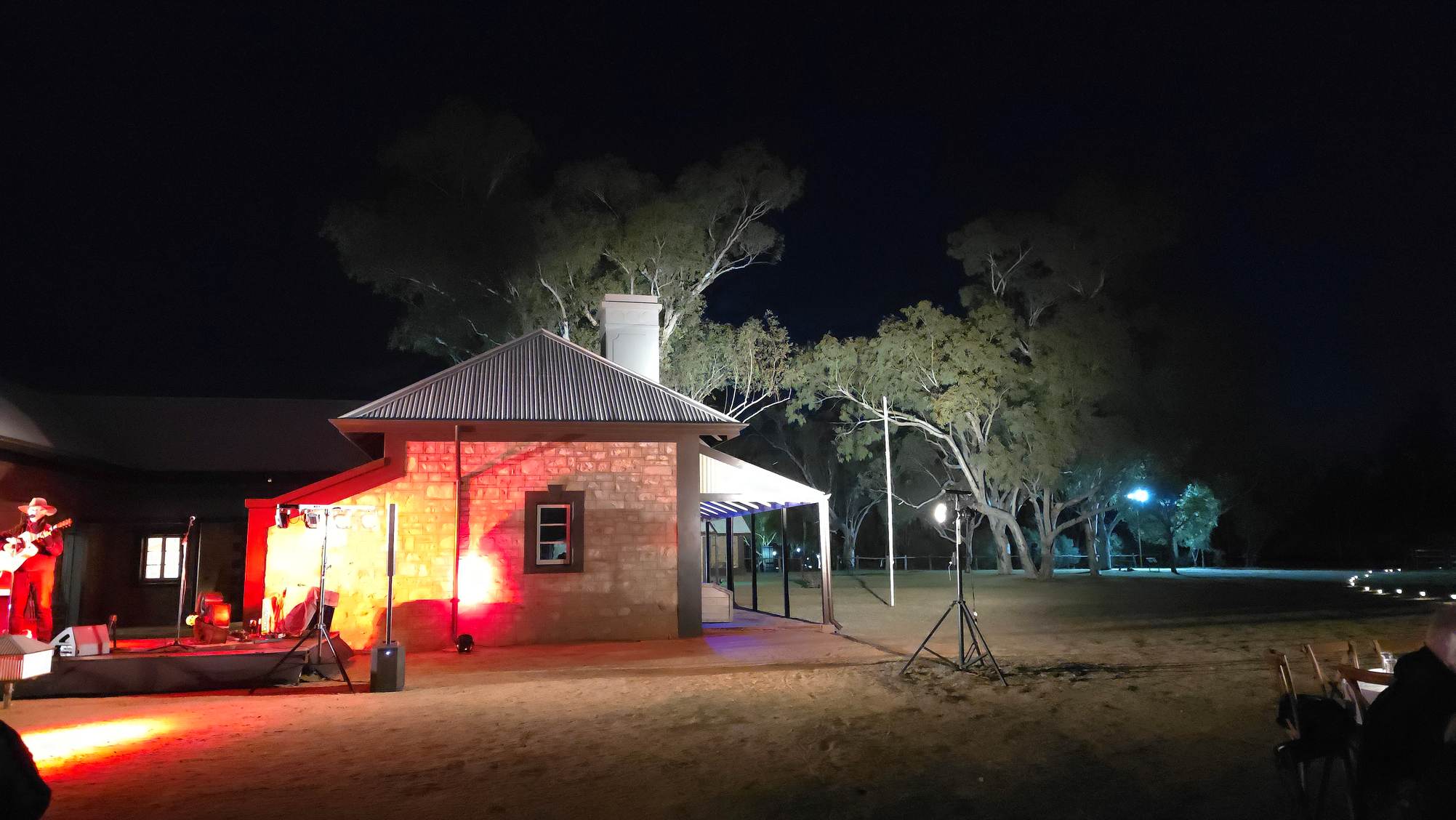
(Photographer Colleen)
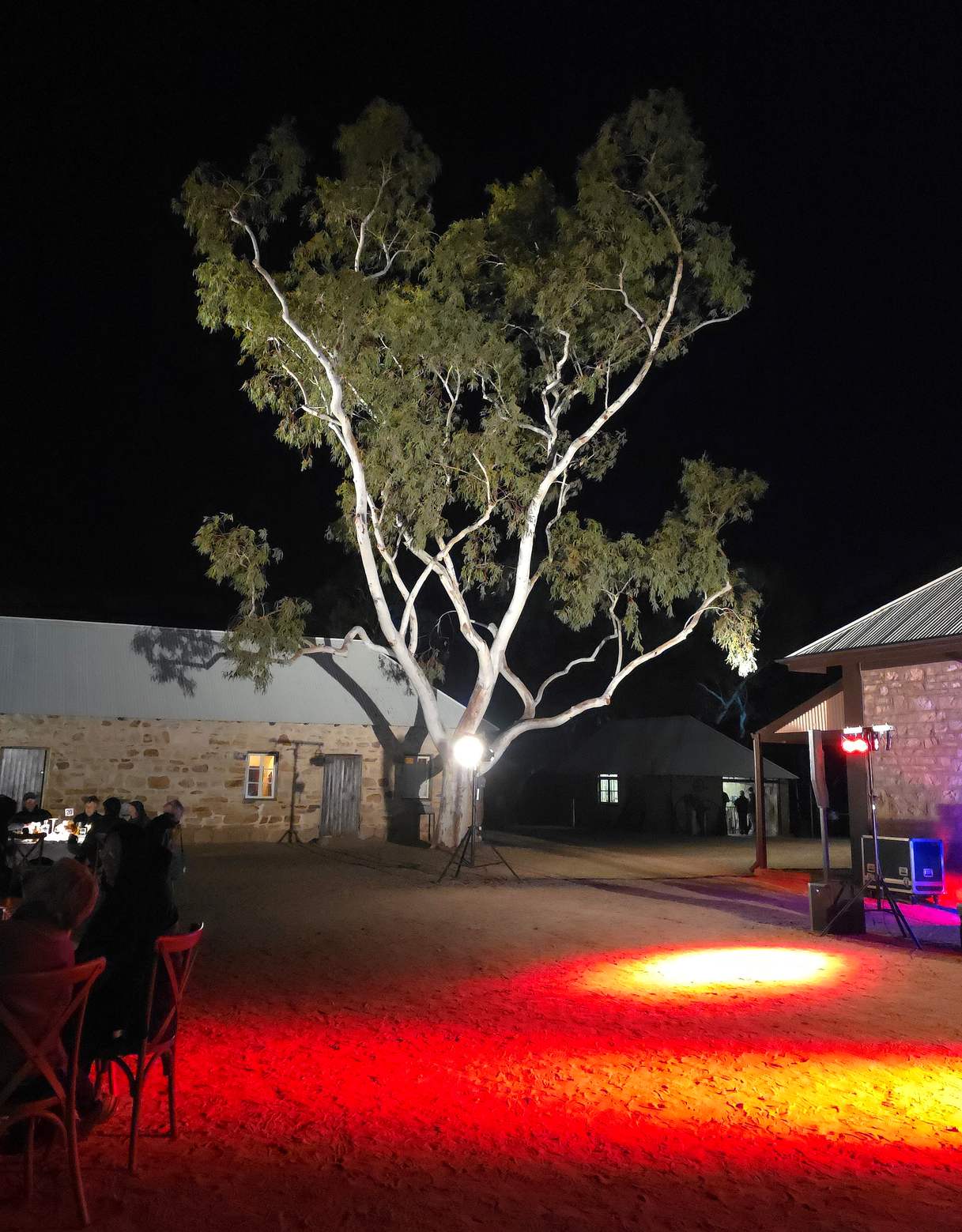
(Photographer Colleen)
Coober Pedy
24th July
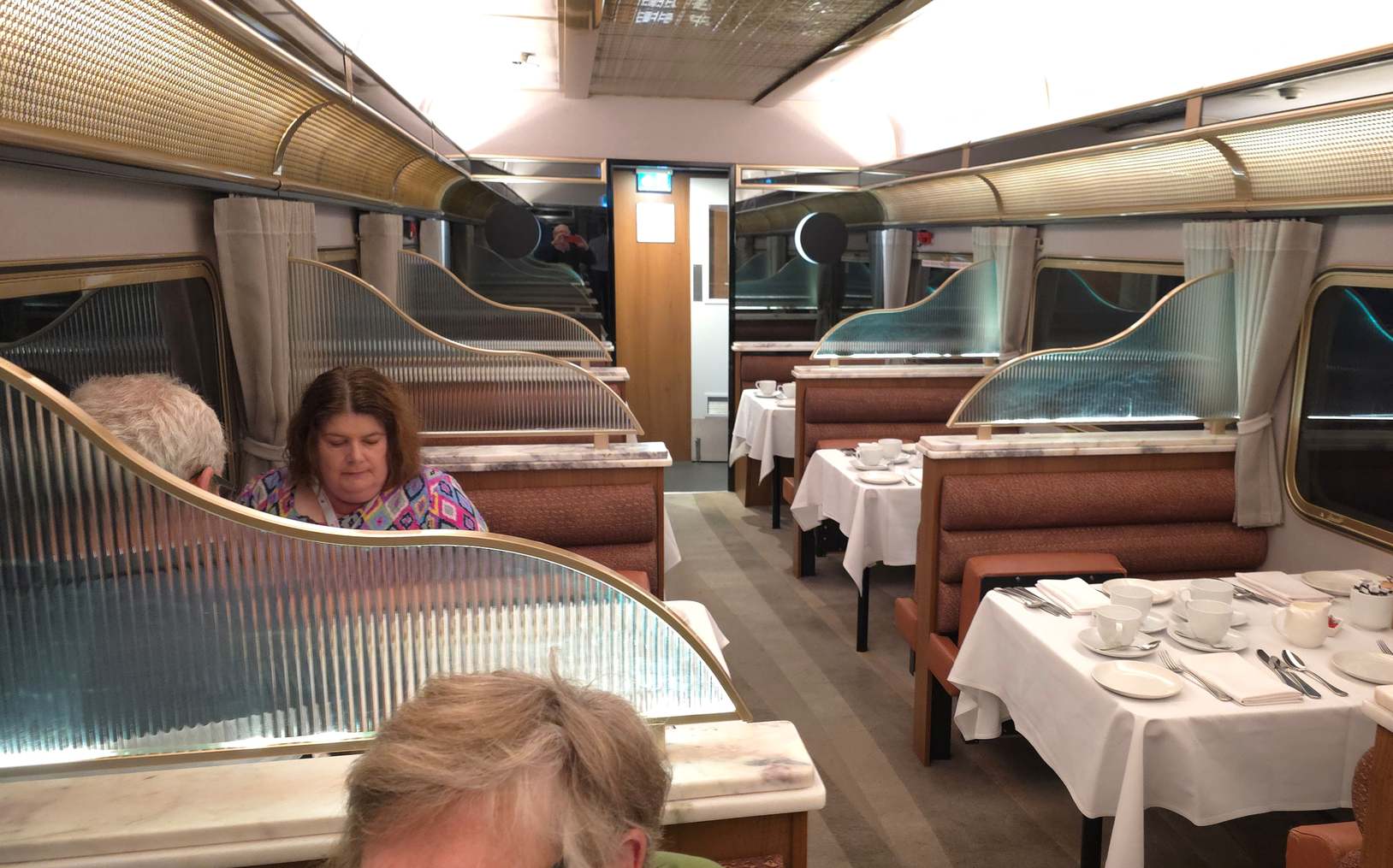
Early breakfast in the dining car.
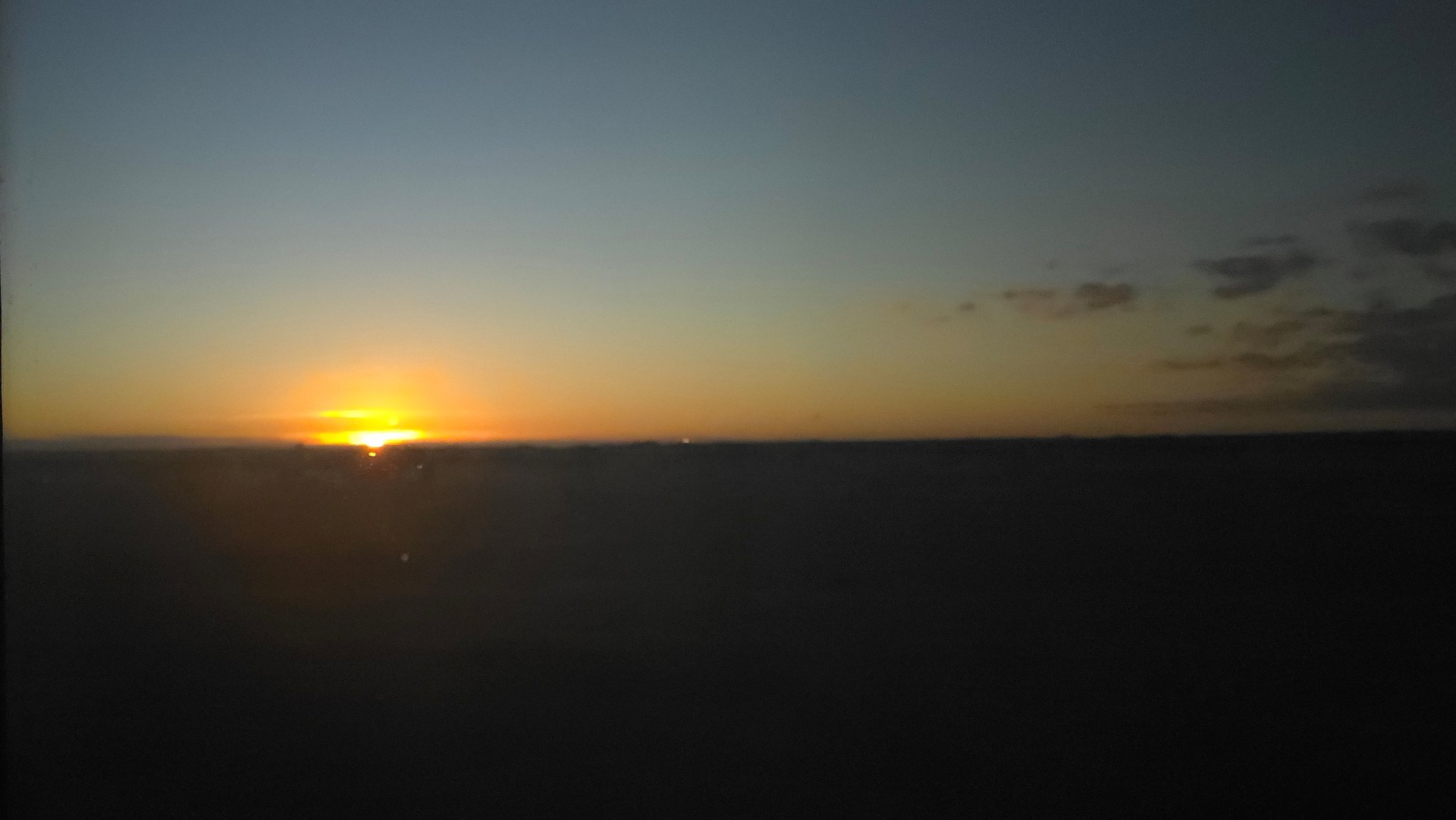
Sunrise while we have our breakfast.
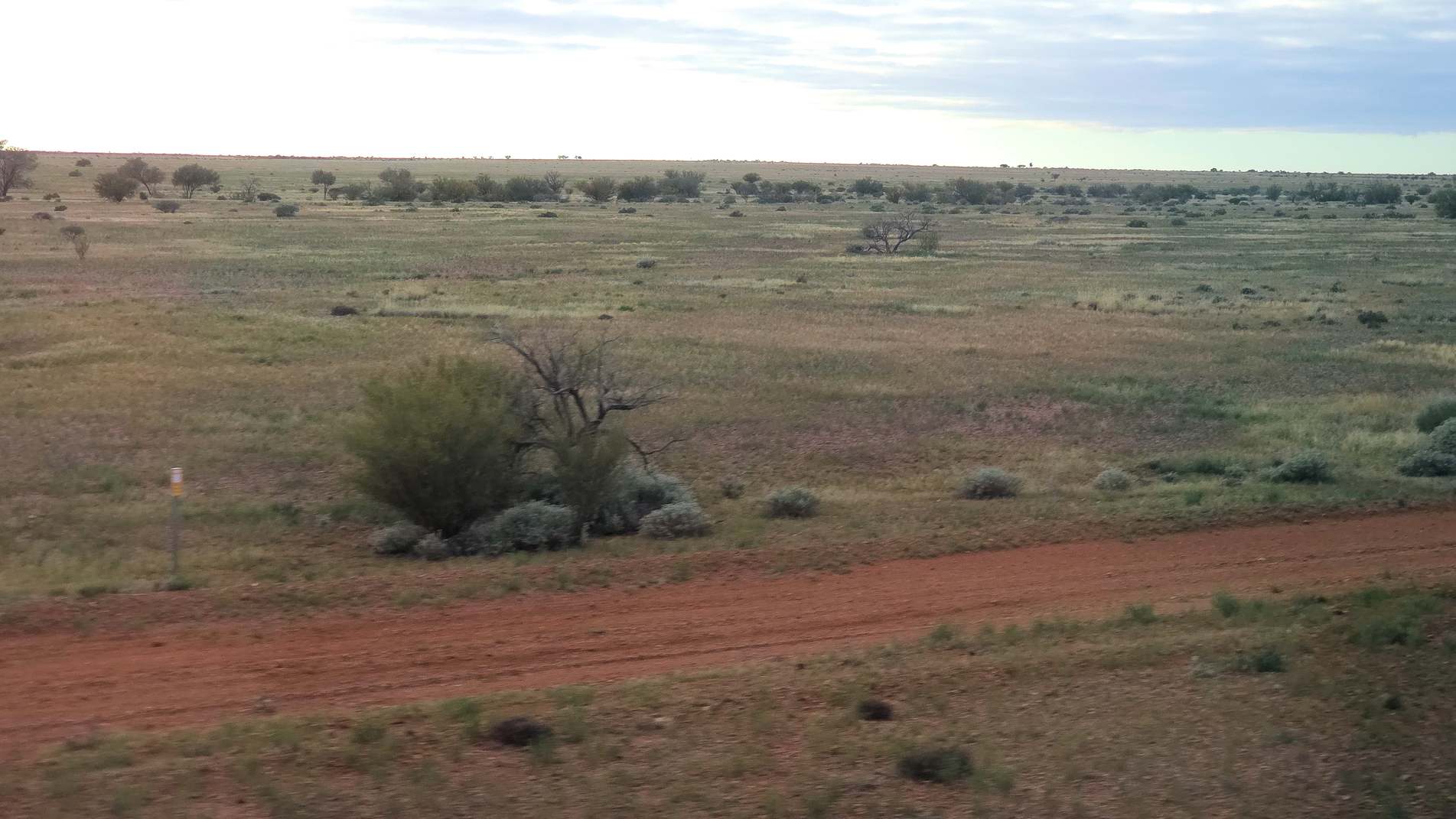
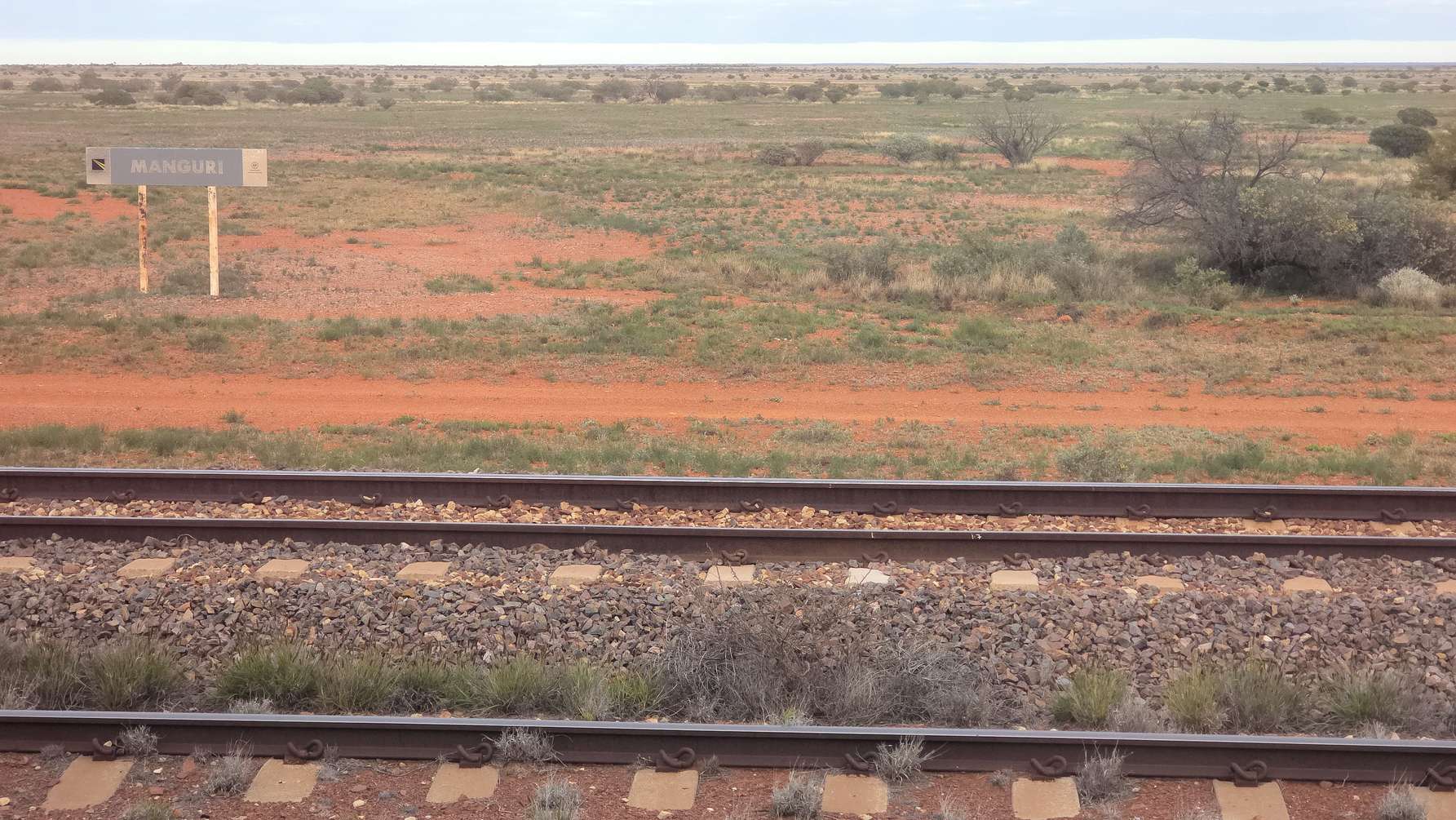
On the way to Manguri.
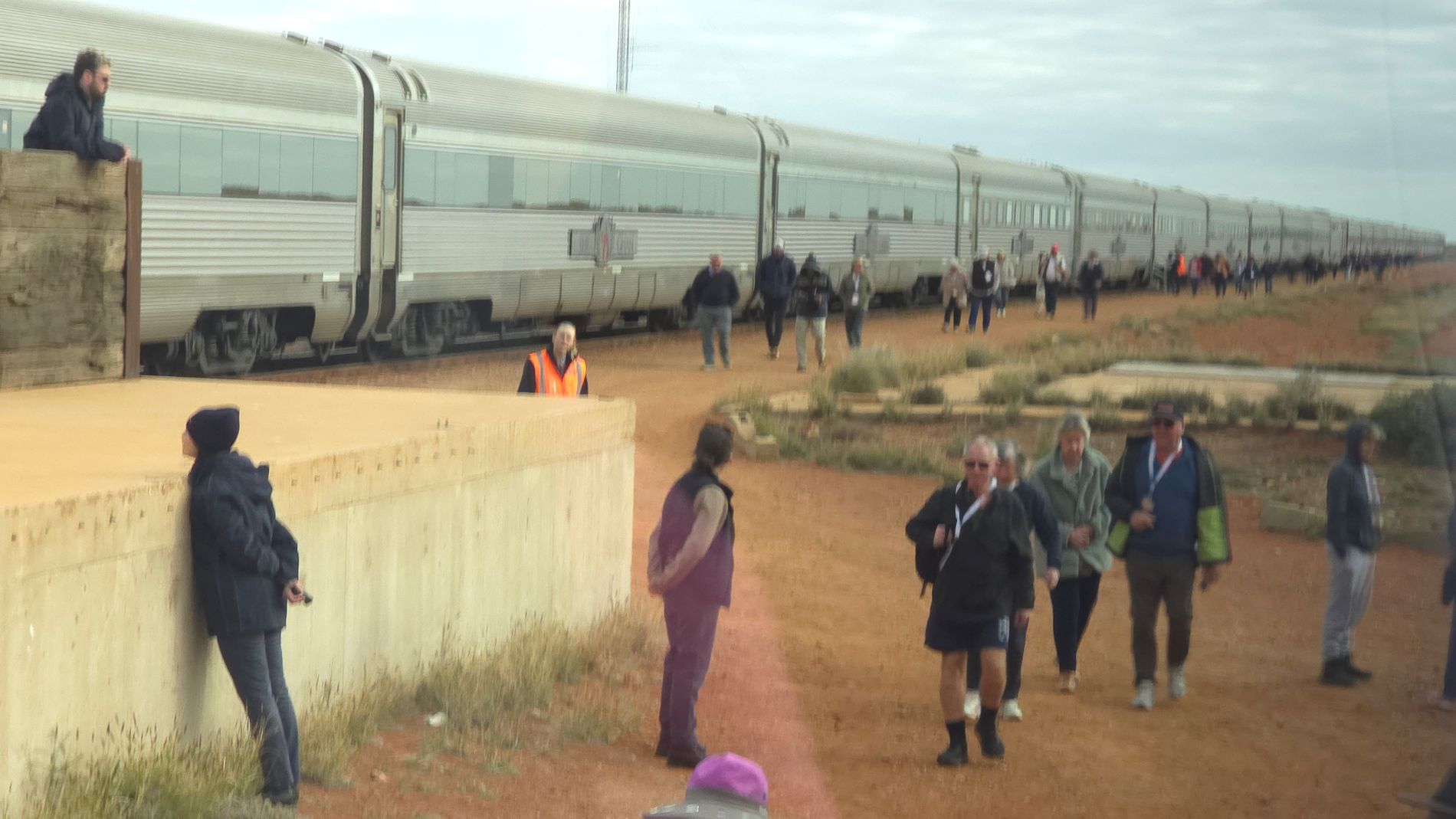
Manguri is a remote railway siding.
Here the coaches were waiting to take us on our Off Train Experience.
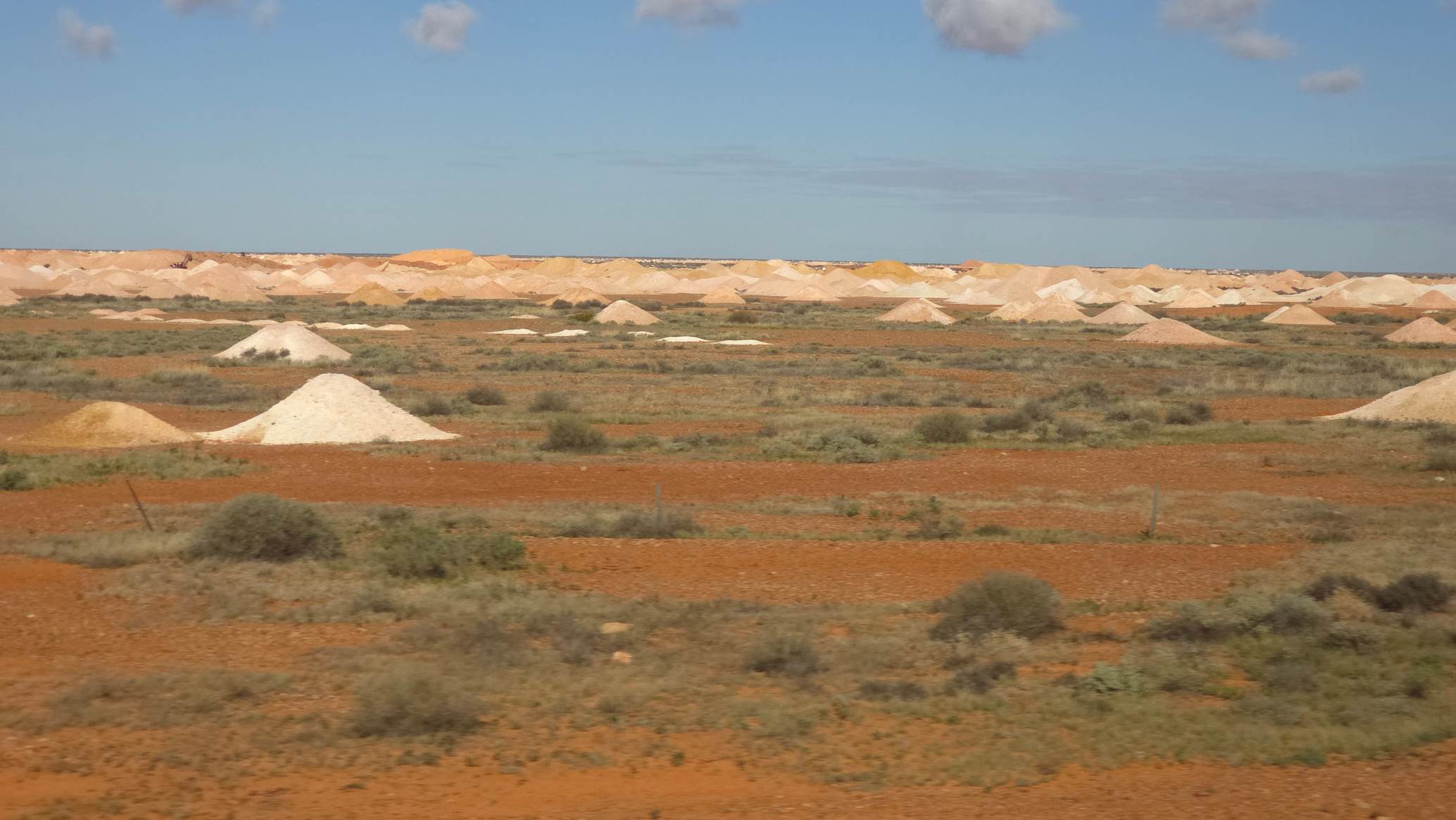
These mounds, Mullocks, are the waste dirt from old Opal mines.
The reason they are left where they are is to warn people that there is a mine shaft nearby.
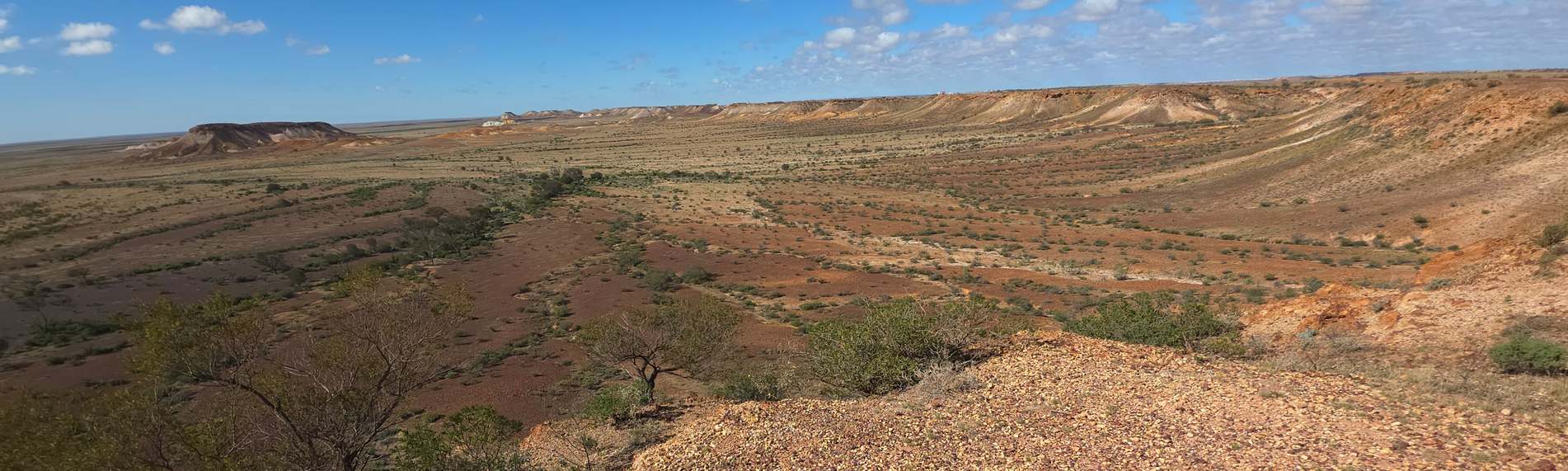
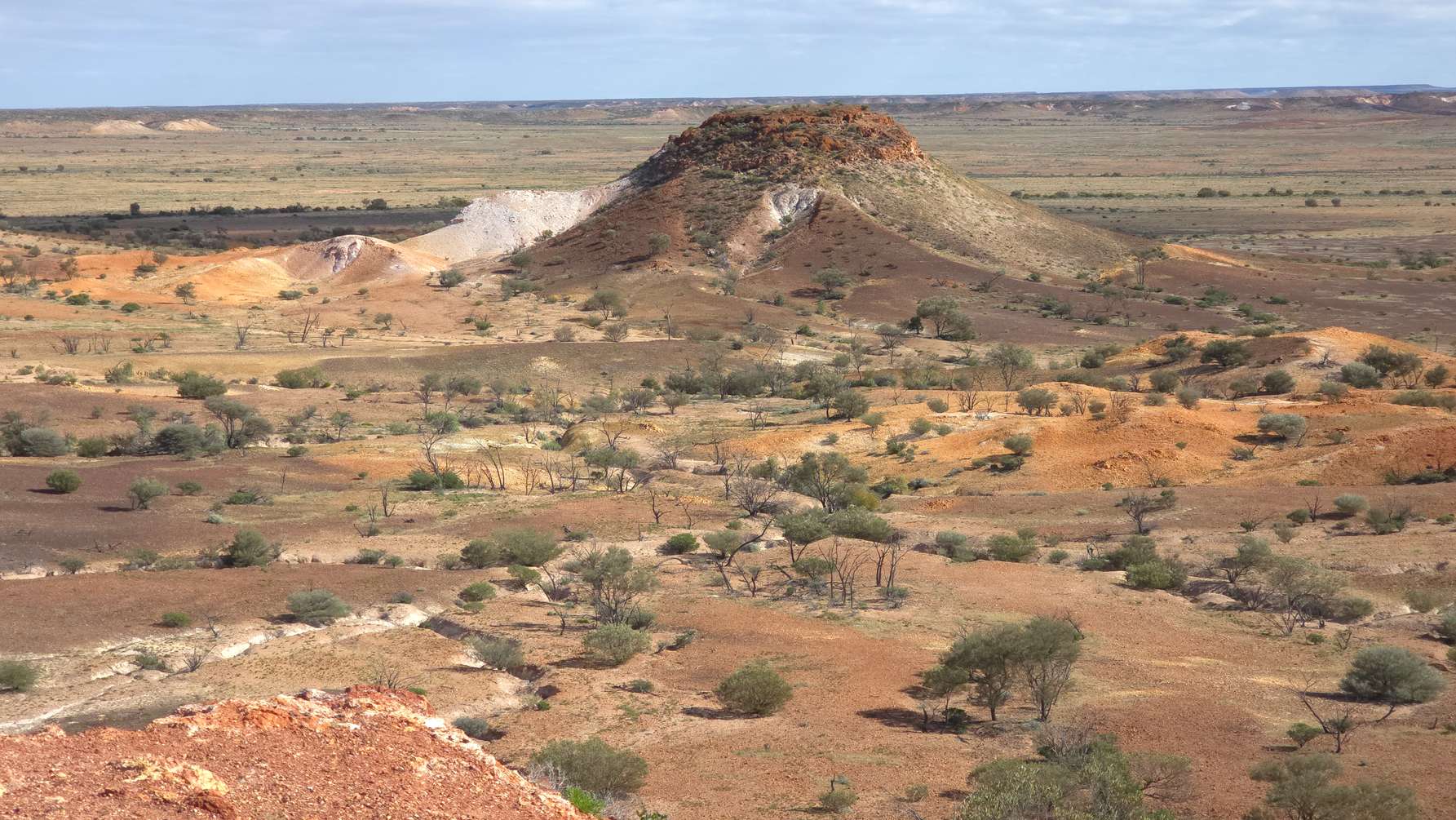
The Breakaways. So called because the appear to have broken away from the escarpment.
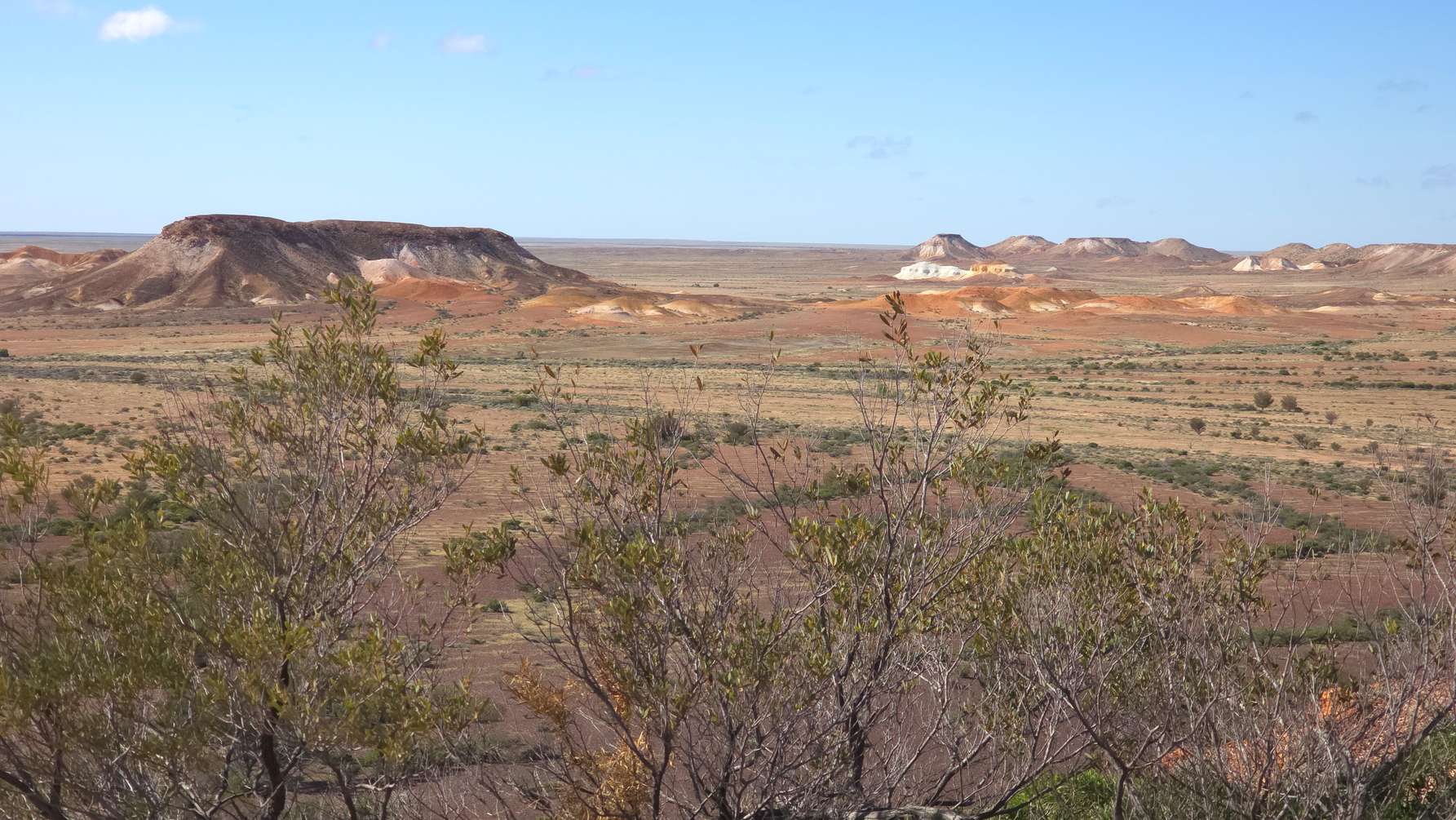
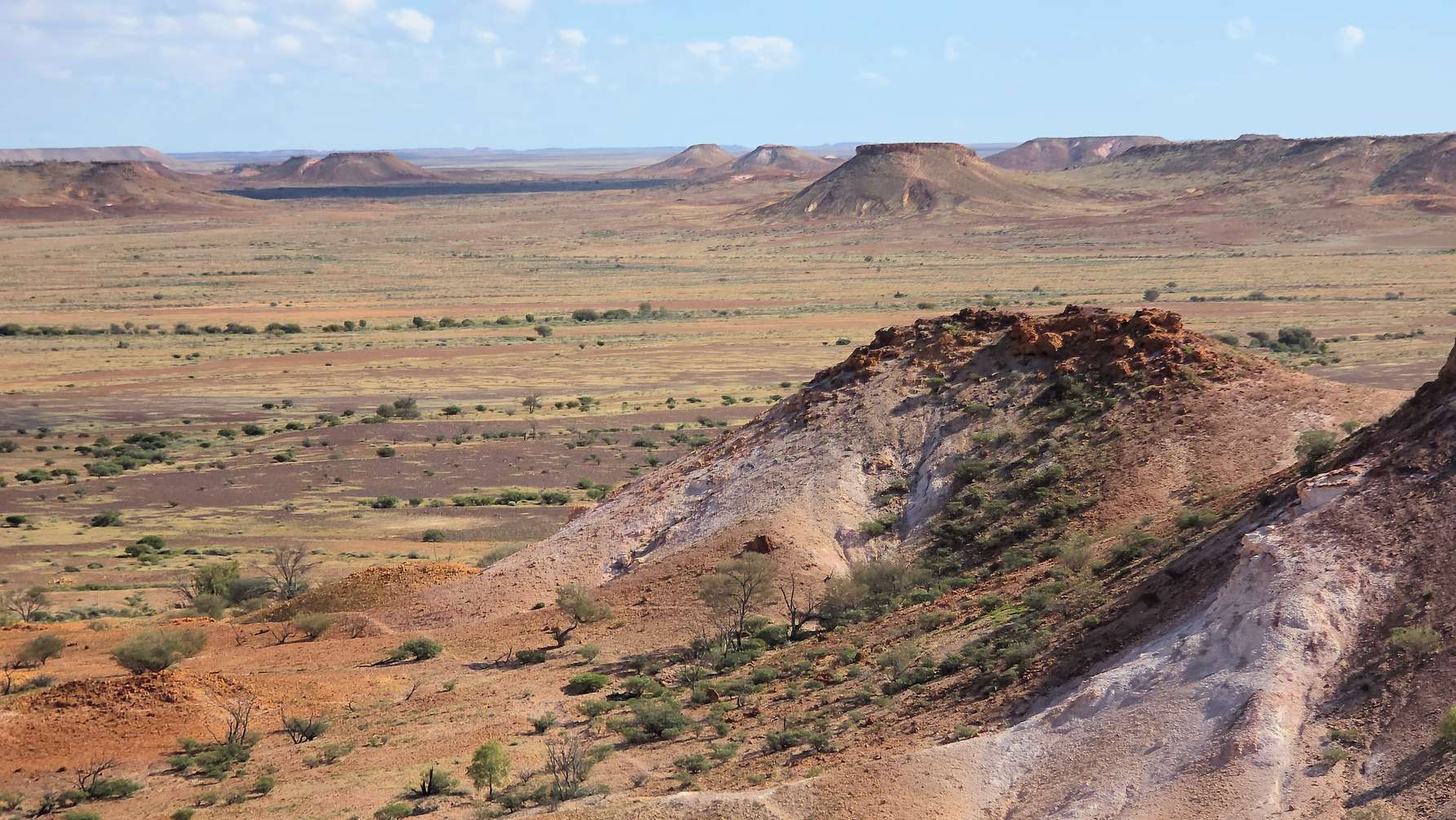
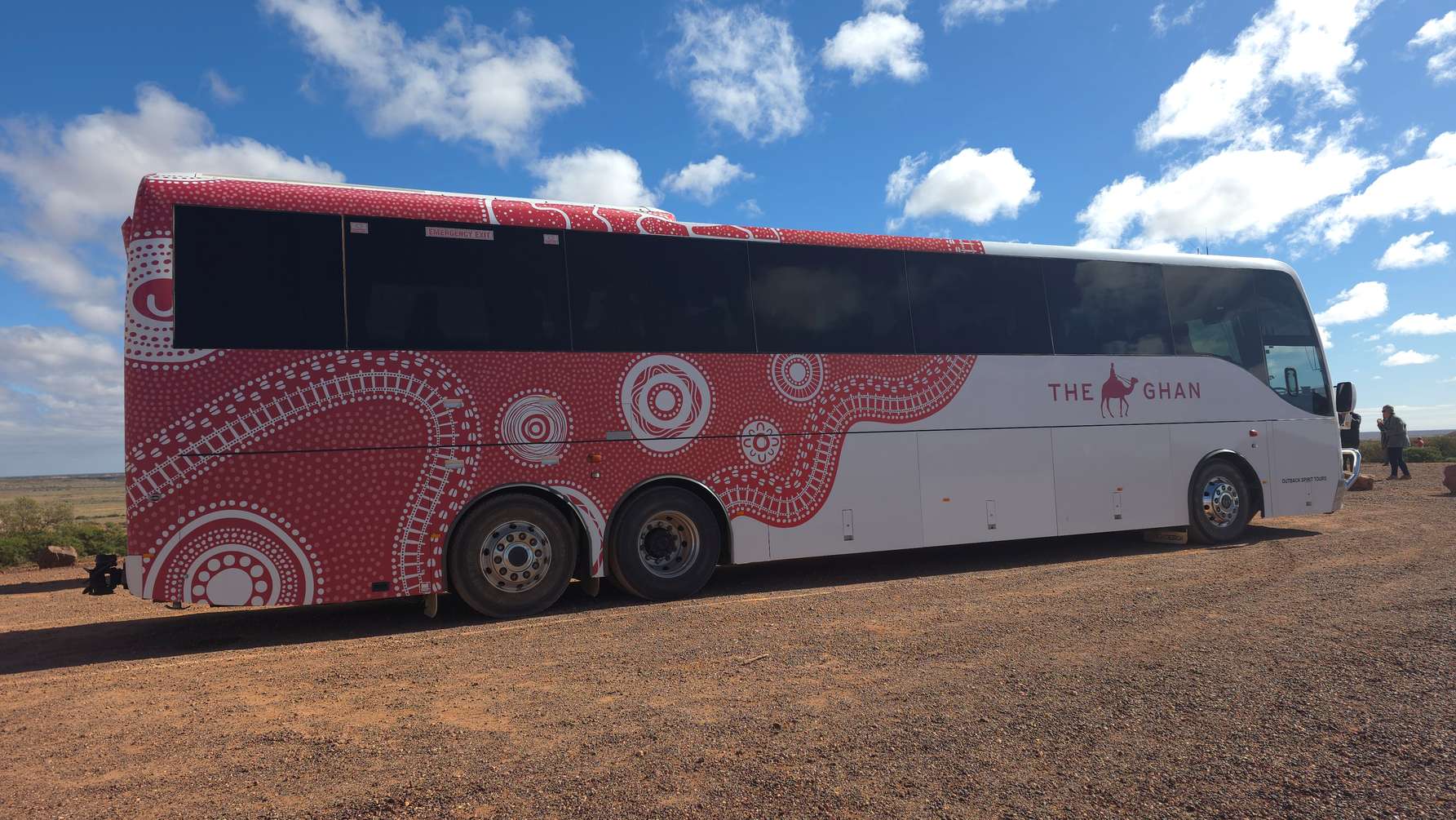
Our coach.
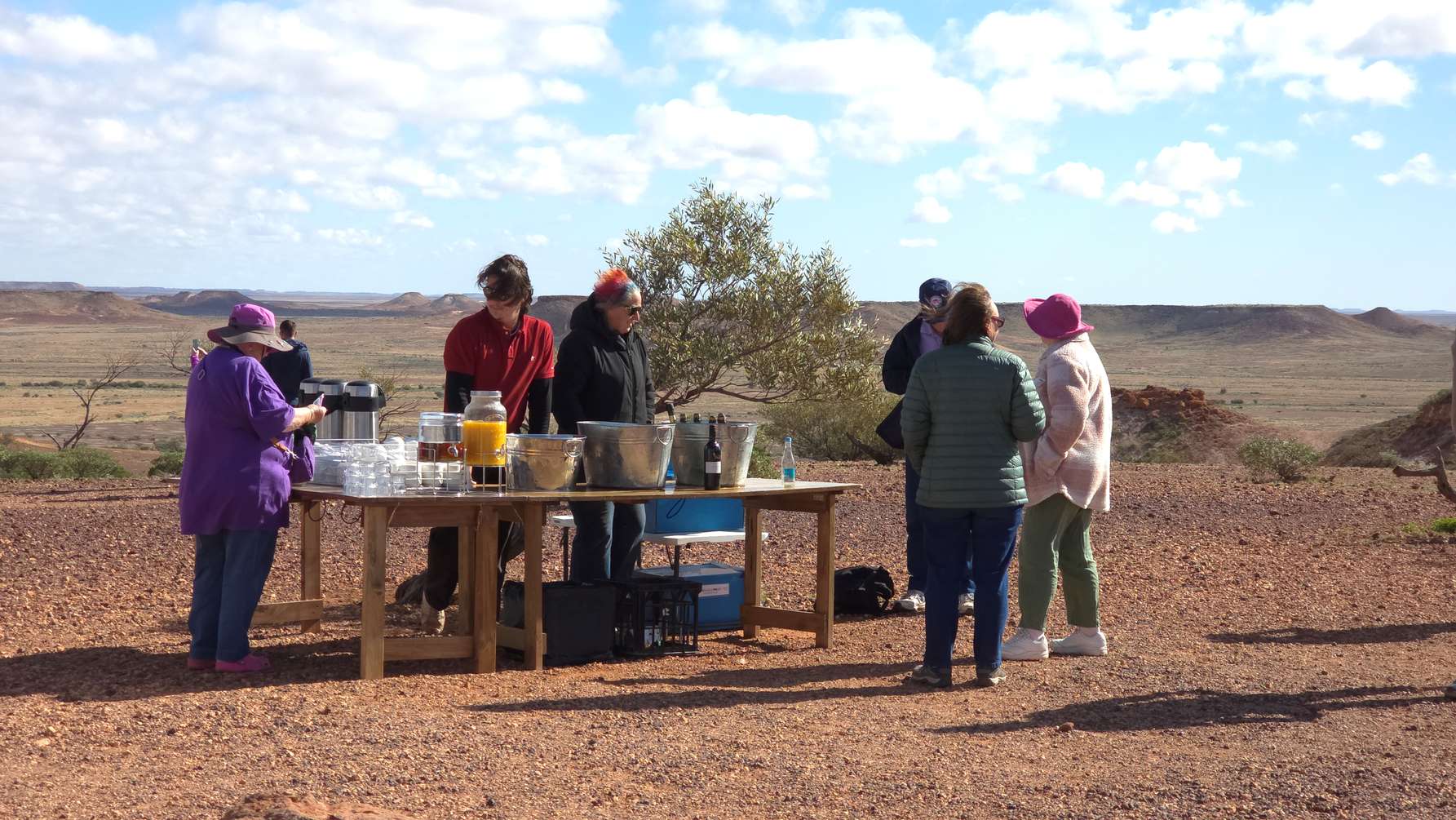
The train crew had come out before us and setup this refreshment table. Notice the wine bottles. We did not have anything to drink as the next stop was lunch.
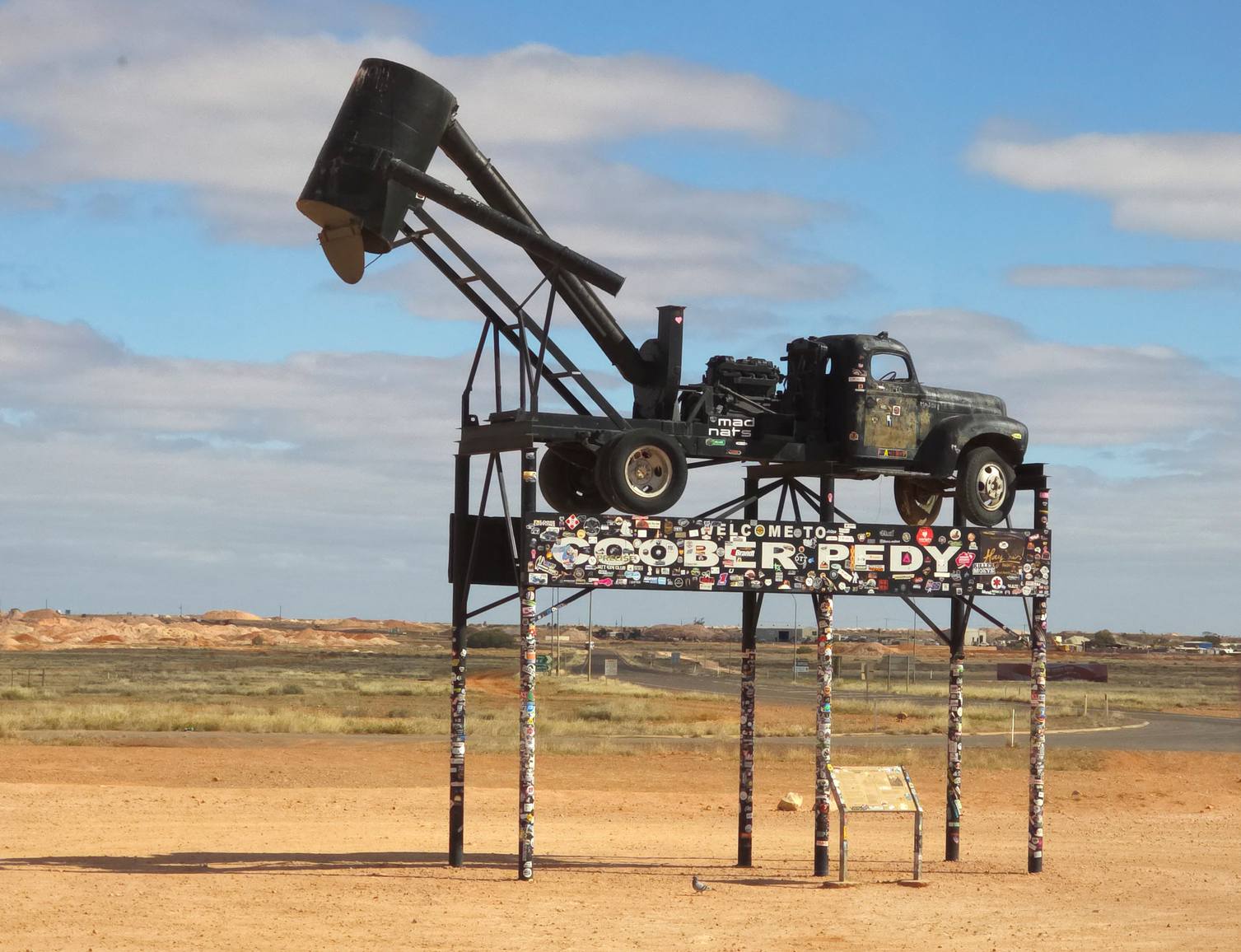
The iconic Coober Pedy Blower Truck welcome sign.
A blower truck has a large vaccume system on the back which sucks up loose dirt and rocks from down in the mine. And dumps the earth on the surface in mullocks.
Coober Pedy is derived from the Aboriginal Kupa-Piti meaning 'white man's hole in the ground'.
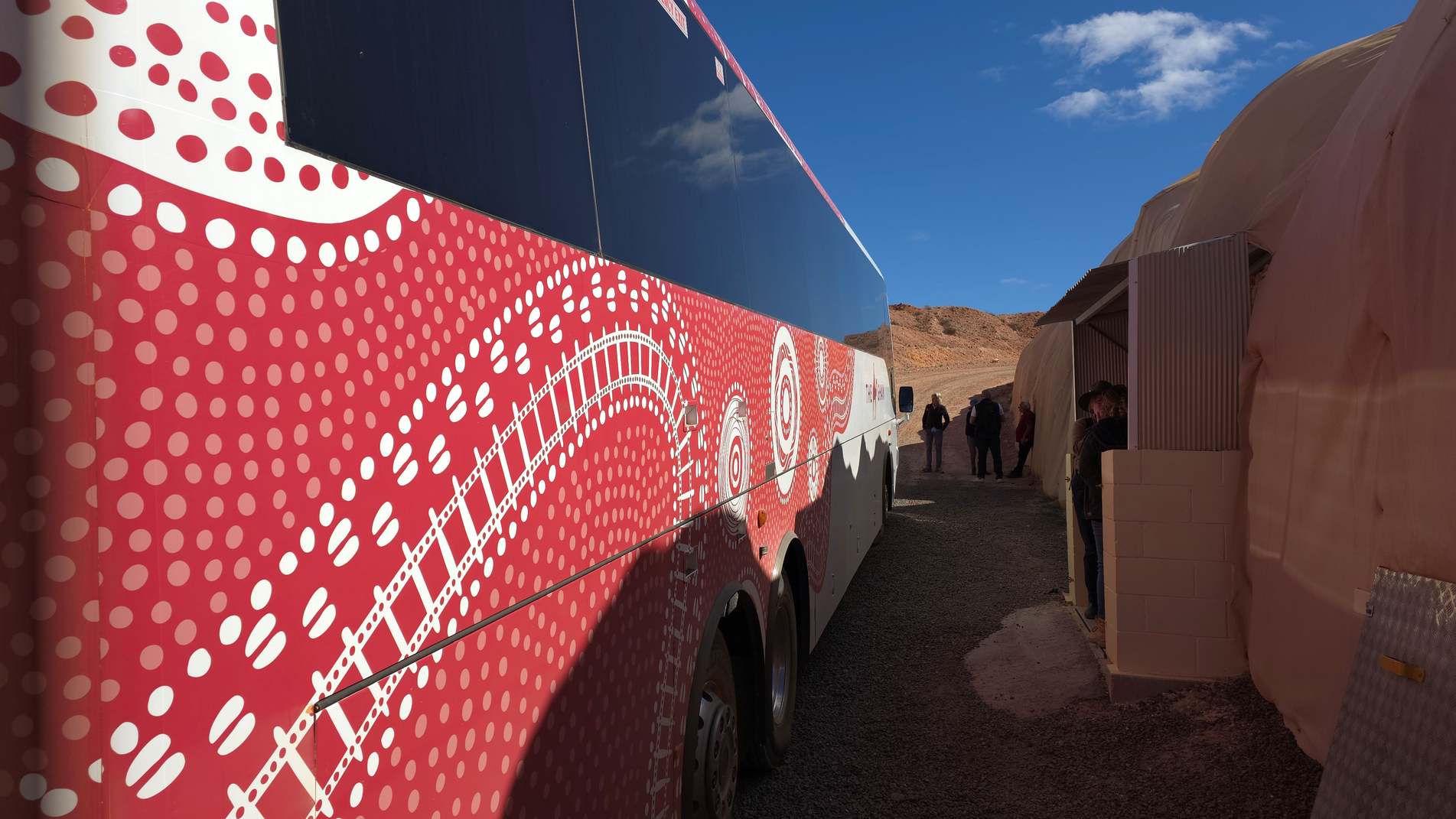
The Quest Mine where we had lunch.
On the right is the exit from the mine, the entrance is behind me.
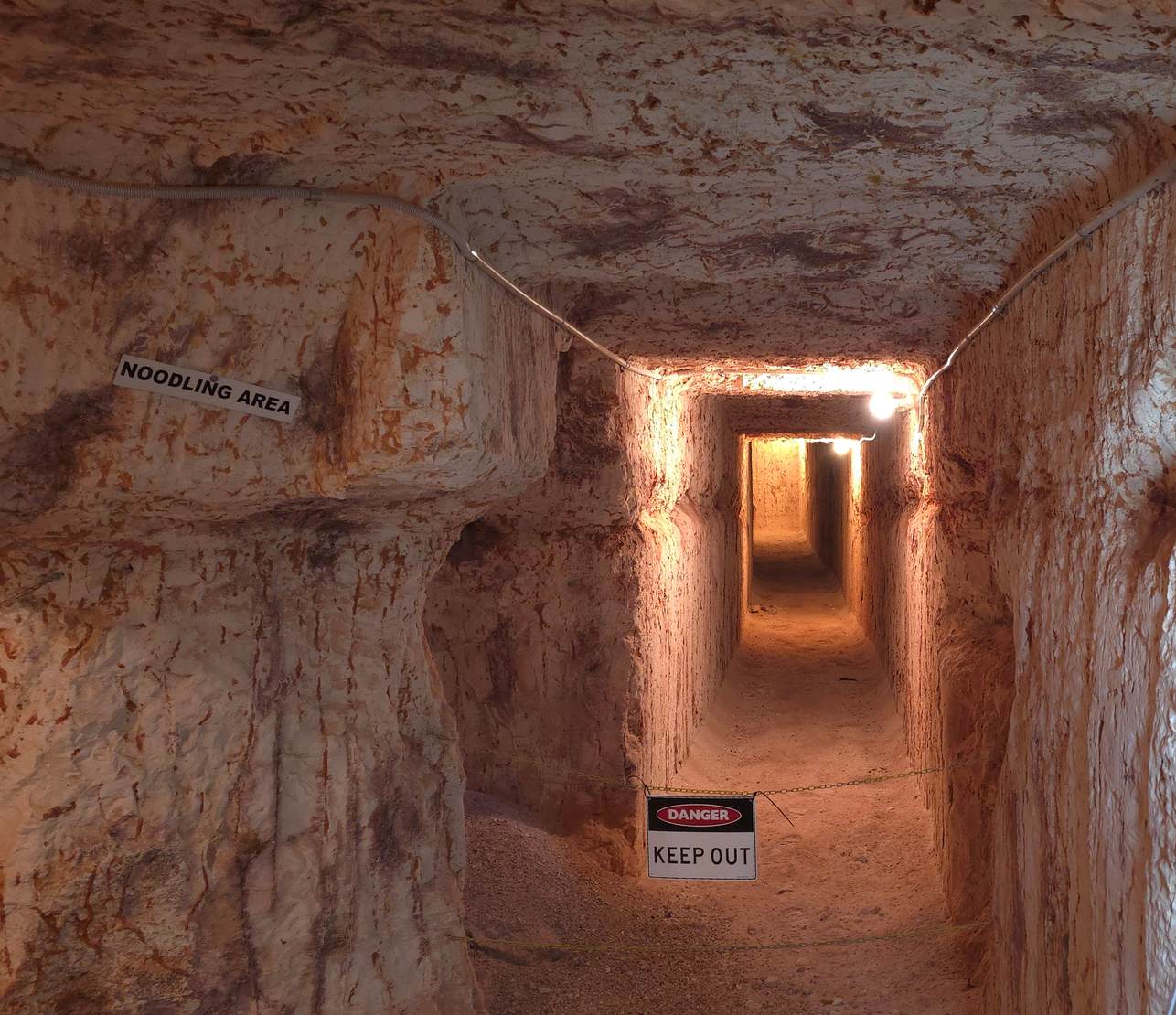
Down in the mine as we make our way to lunch.
Noodling is searching through mullocks to see if the miners have missed any pieces of opal.
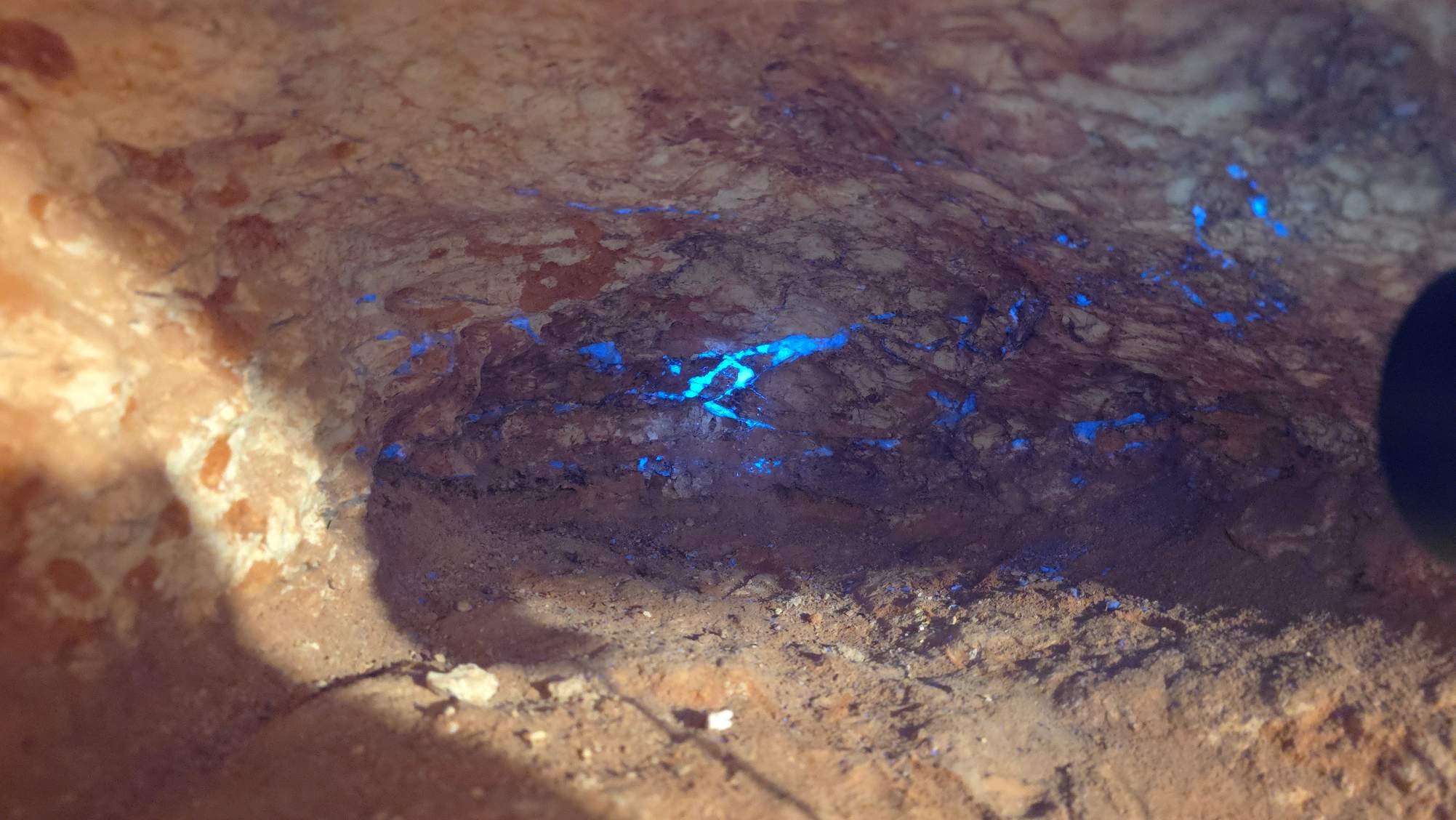
Opal fluorescing under U.V. light.
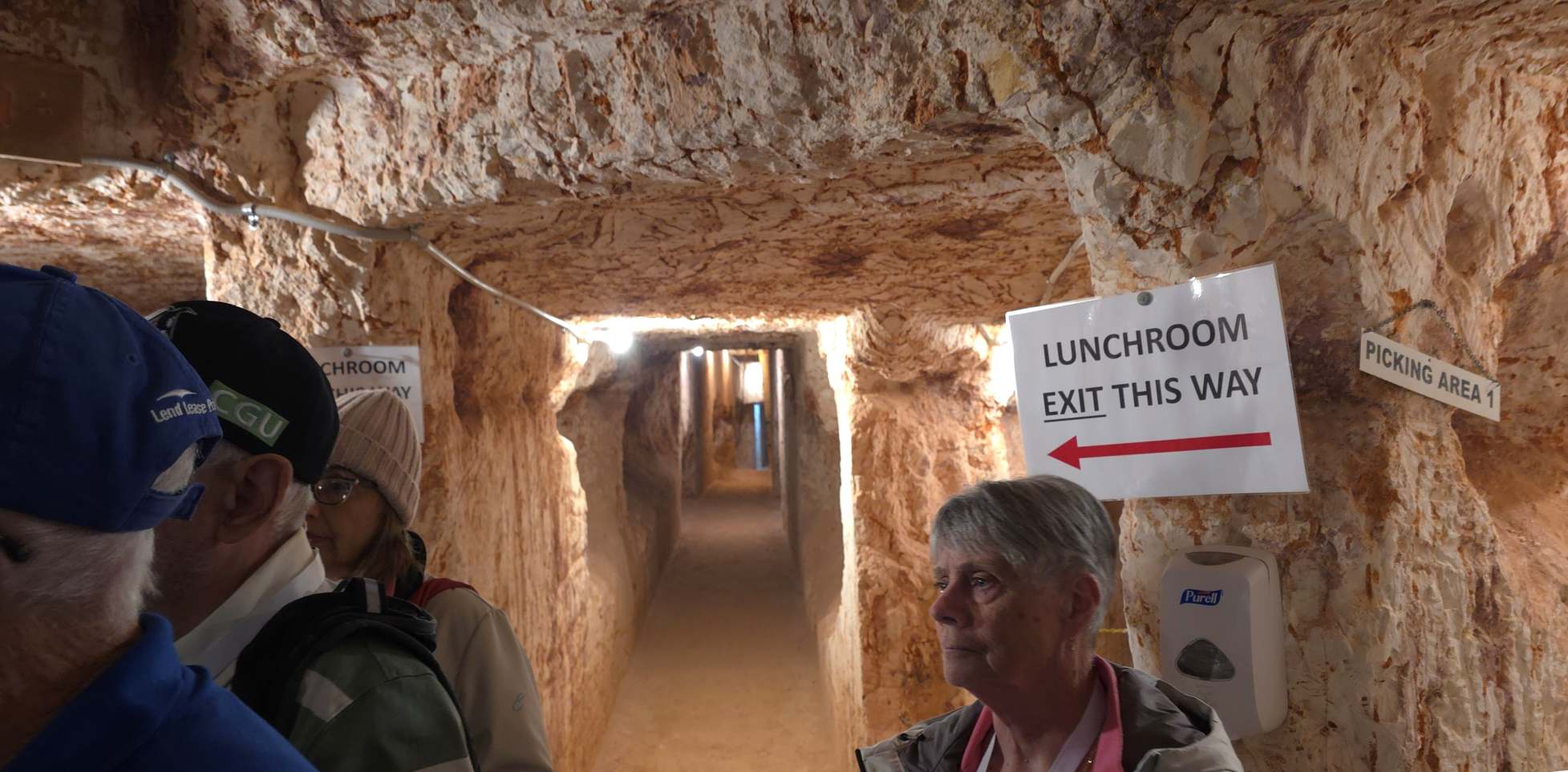
There is a one-way system in the mine. The path leads past displays to the lunch area and on the other side is the exit.
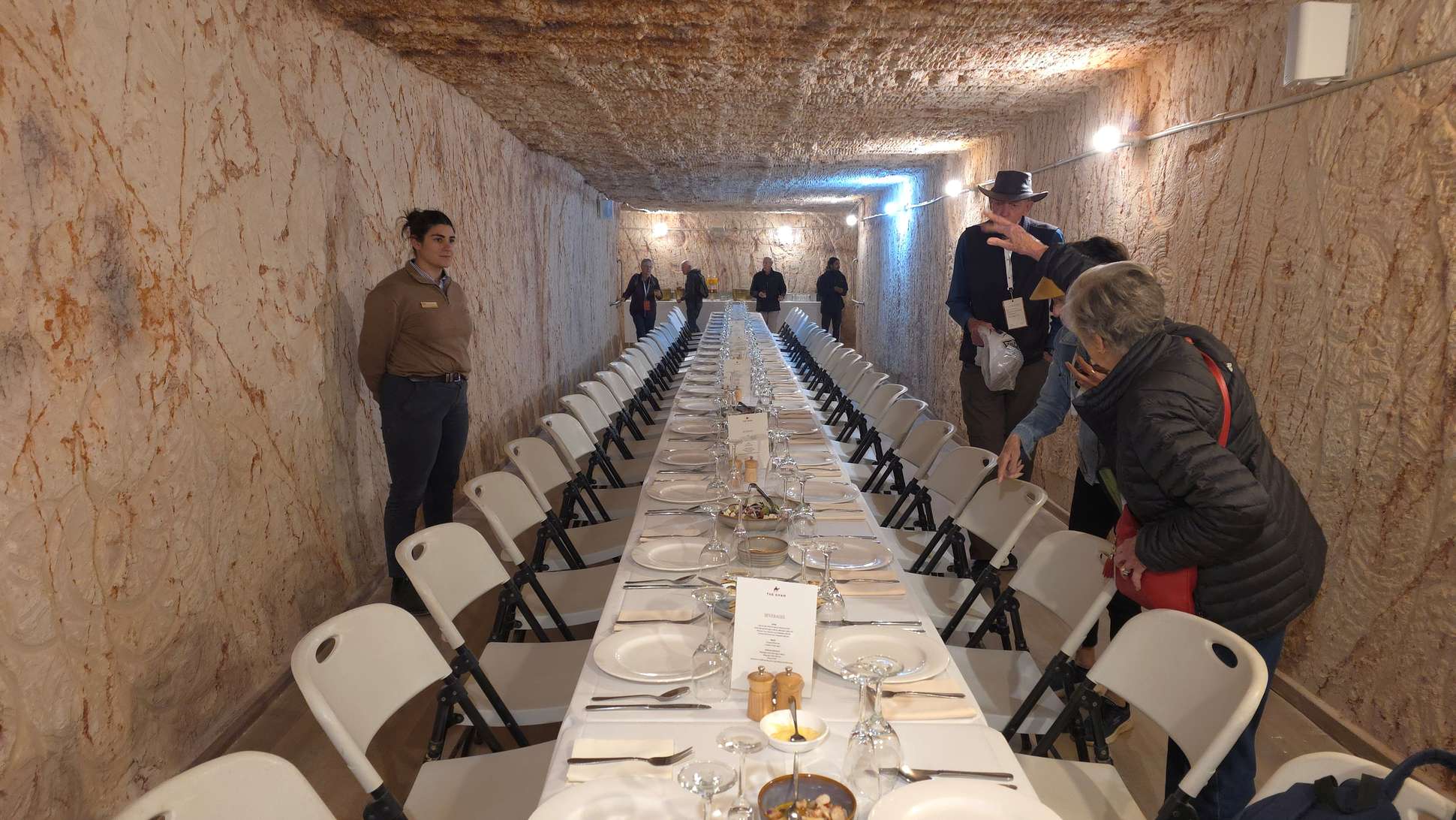
There are three dining shafts like this.
We were the first to arrive so we had to walk down to the end and took seats on either side of the table.
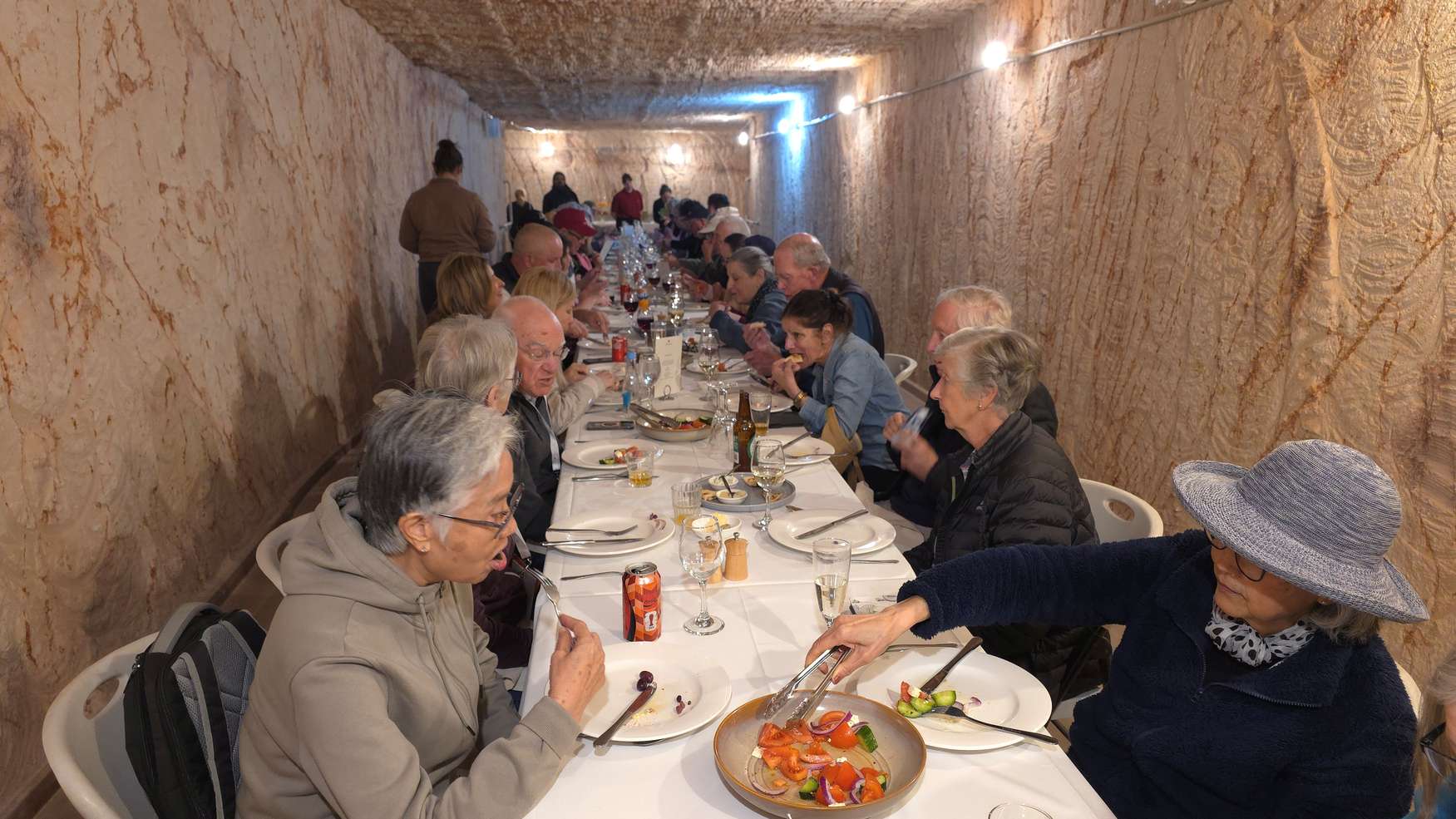
A delicious Greek lunch was served by staff from the train.
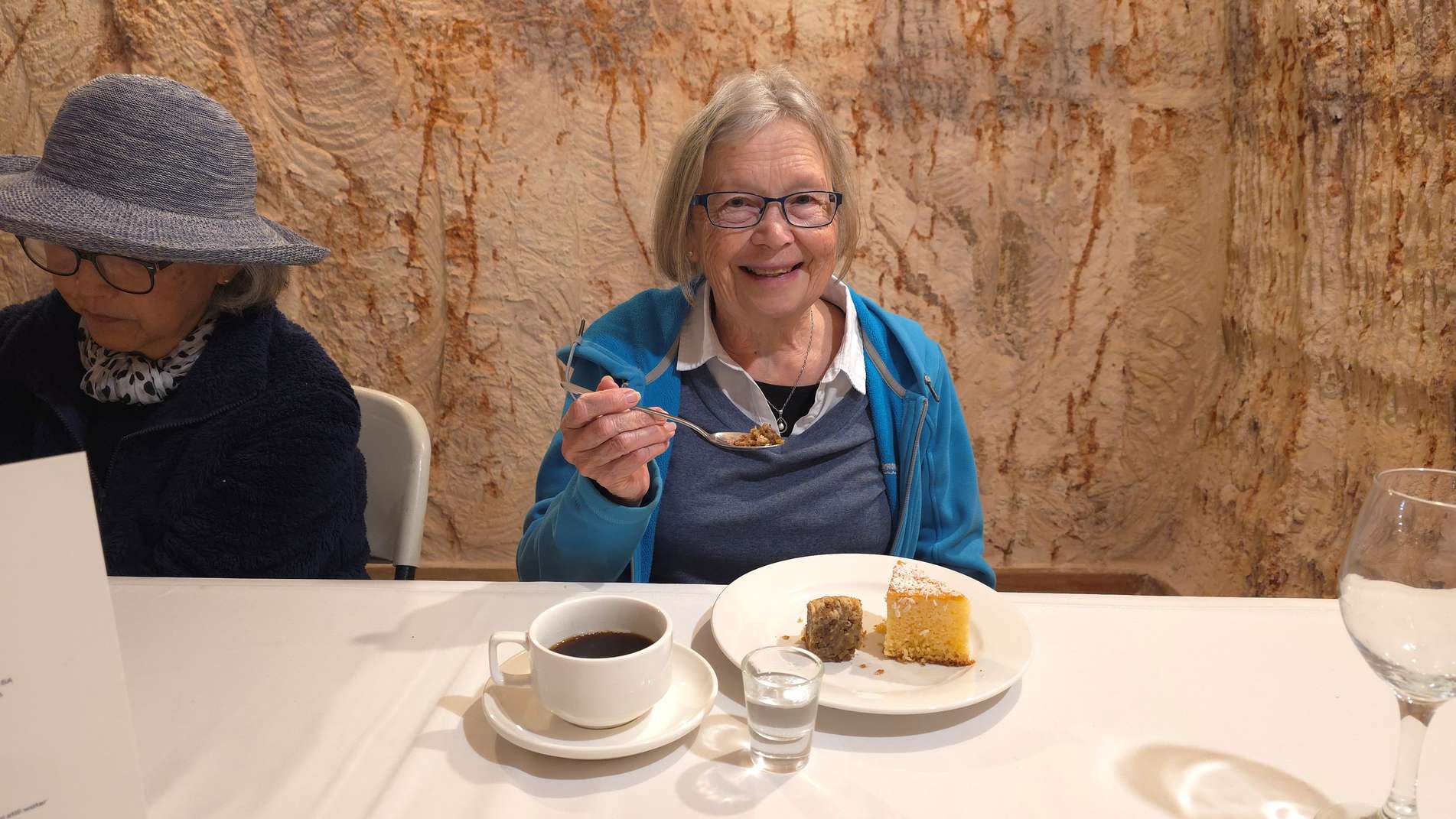
Colleen eating her Baklava, on the plate is also Ravini.
Next to the coffee is an Ouzo for a traditional Greek toast. The mine chef is Greek.
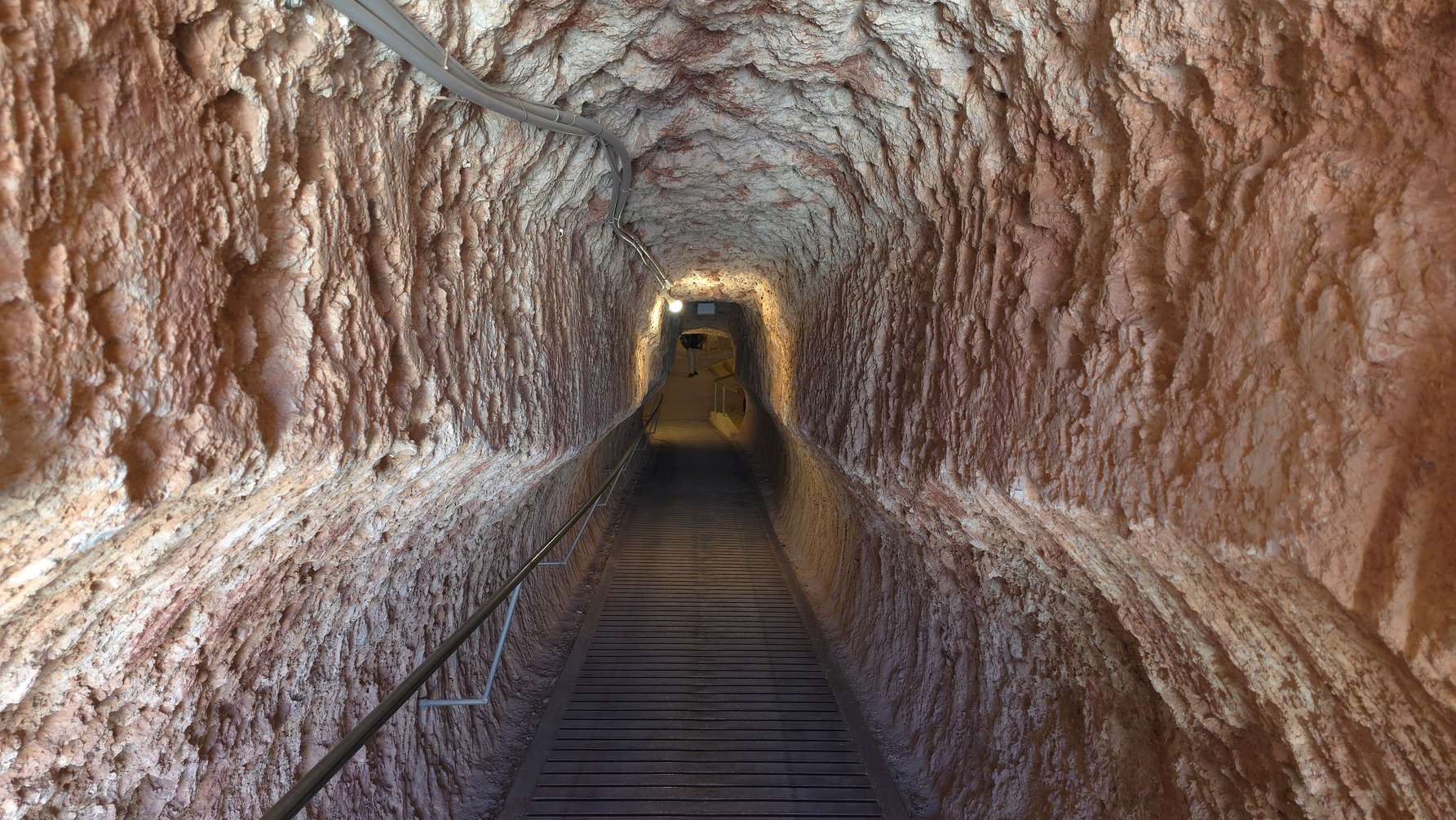
Looking down the exit shaft to the dining area.
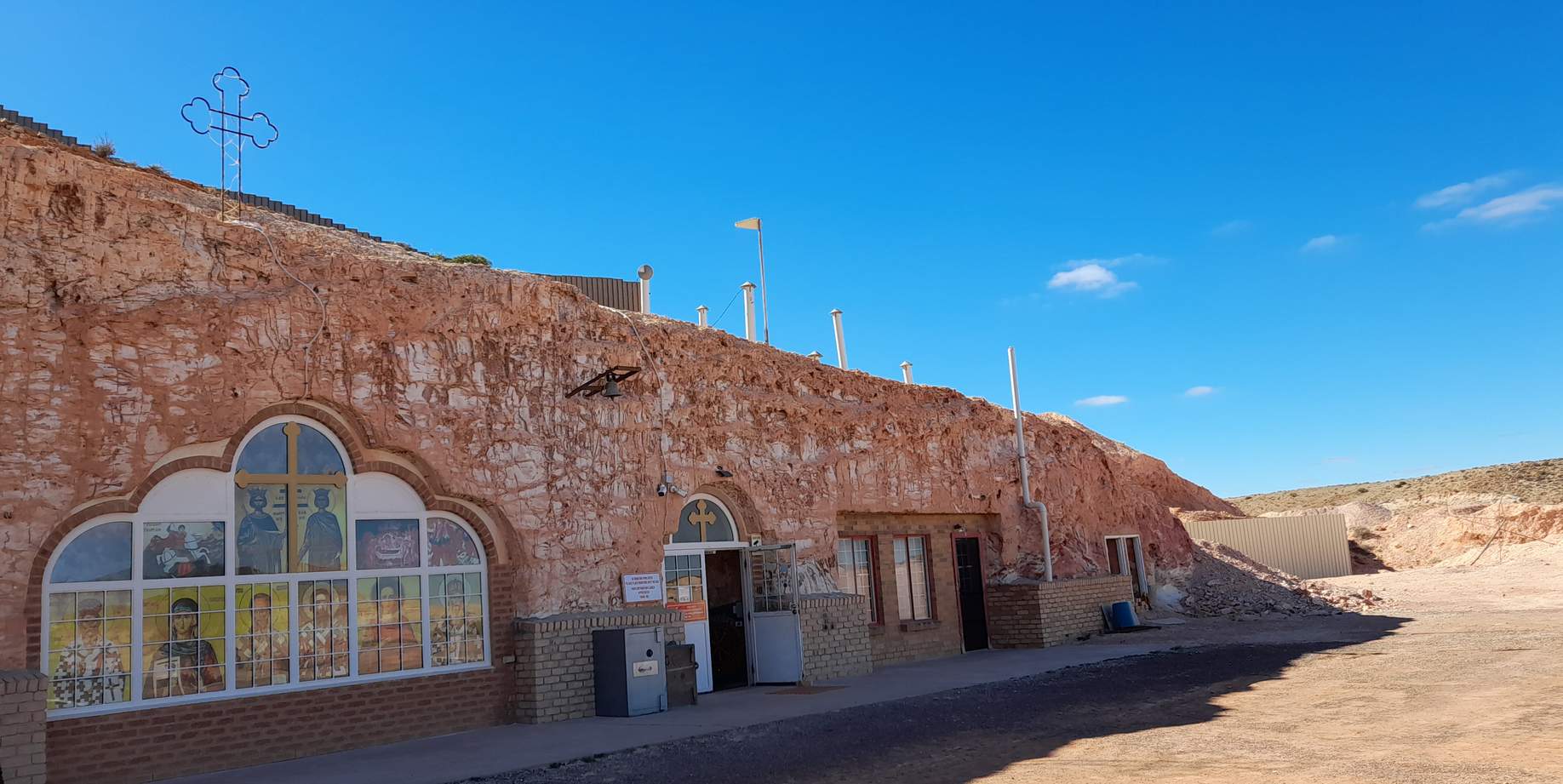
St. Elijahs Serbian Orthodox Church.
In 1992 Fr Milorad Jovcic visited Coober Pedy to bless the waters for the Easter holy week celebrations. Before he left three days later preparation for an underground Orthodox Church were started.
(Photographer Colleen)
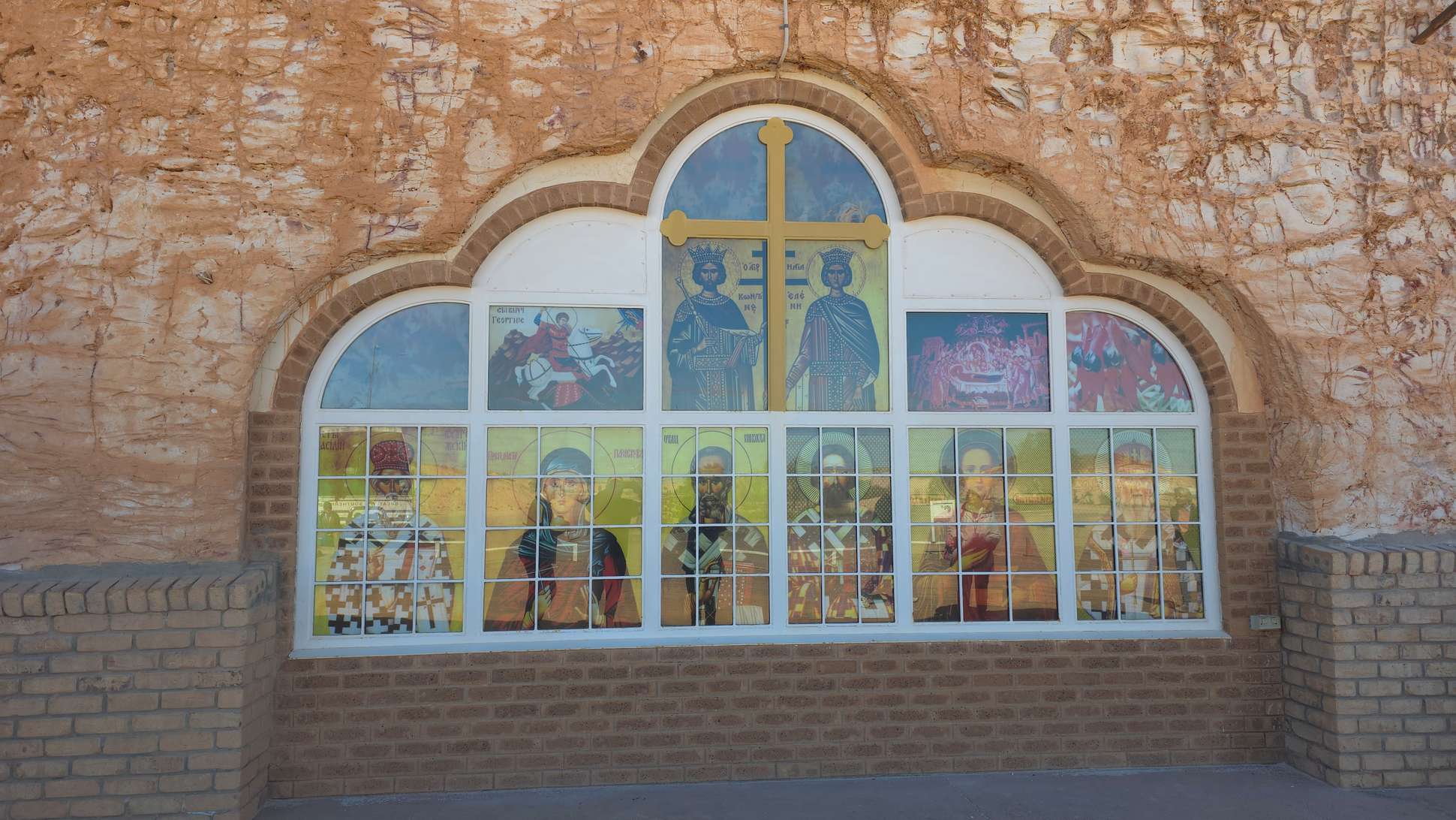
Three years later, in 1995, the final consecration was celebrated.
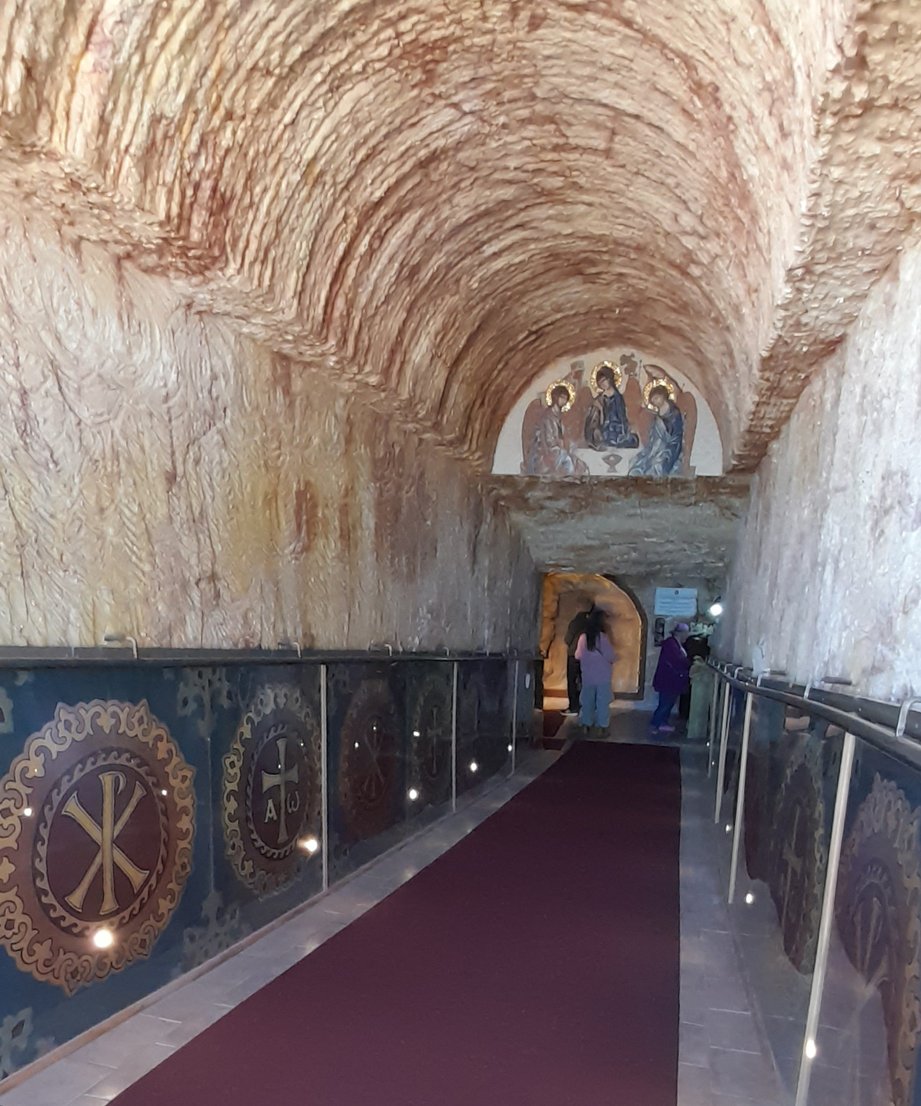
The way into the church.
(Photographer Colleen)
The main body of the church. The entrance is on the left.
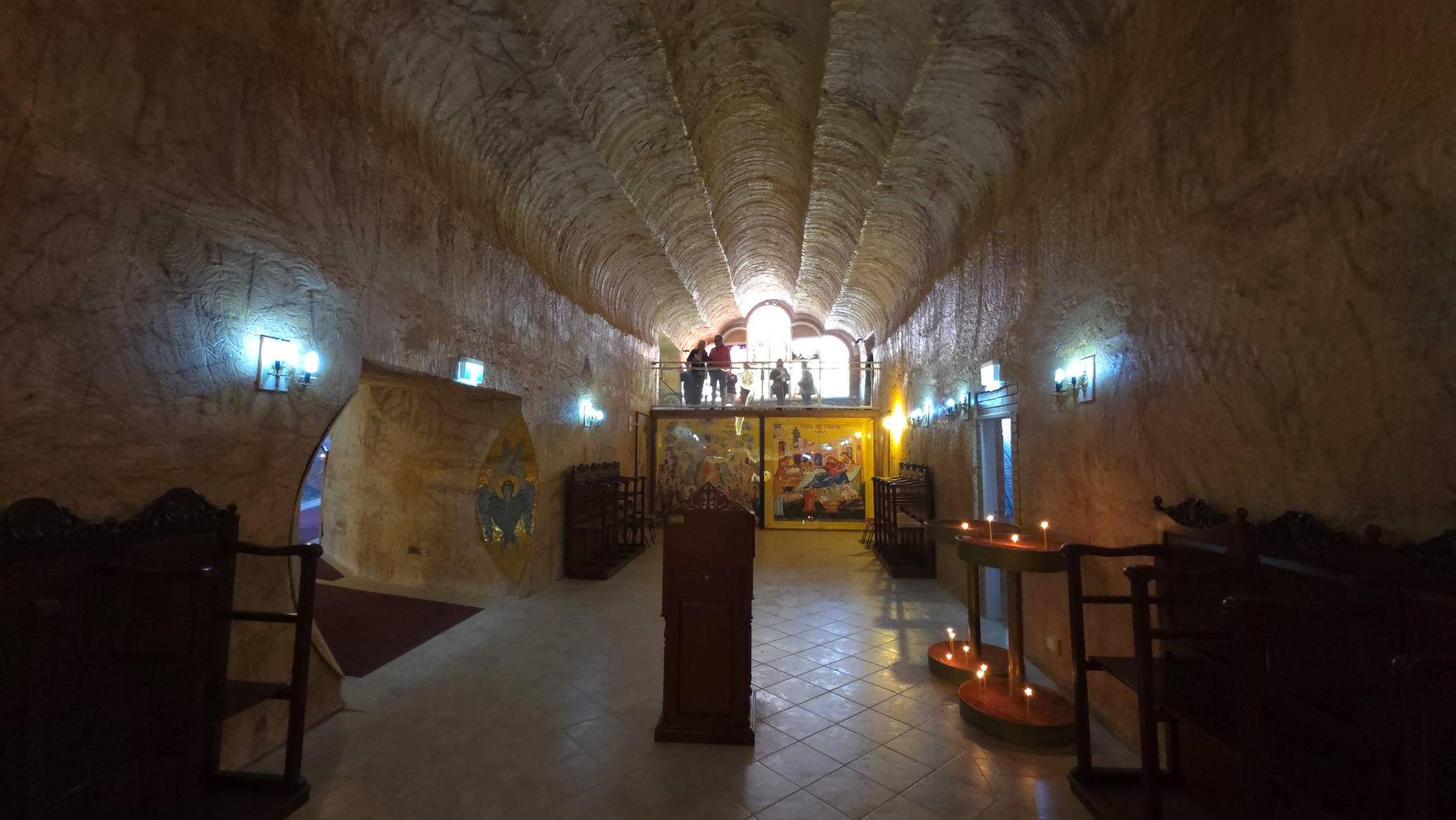
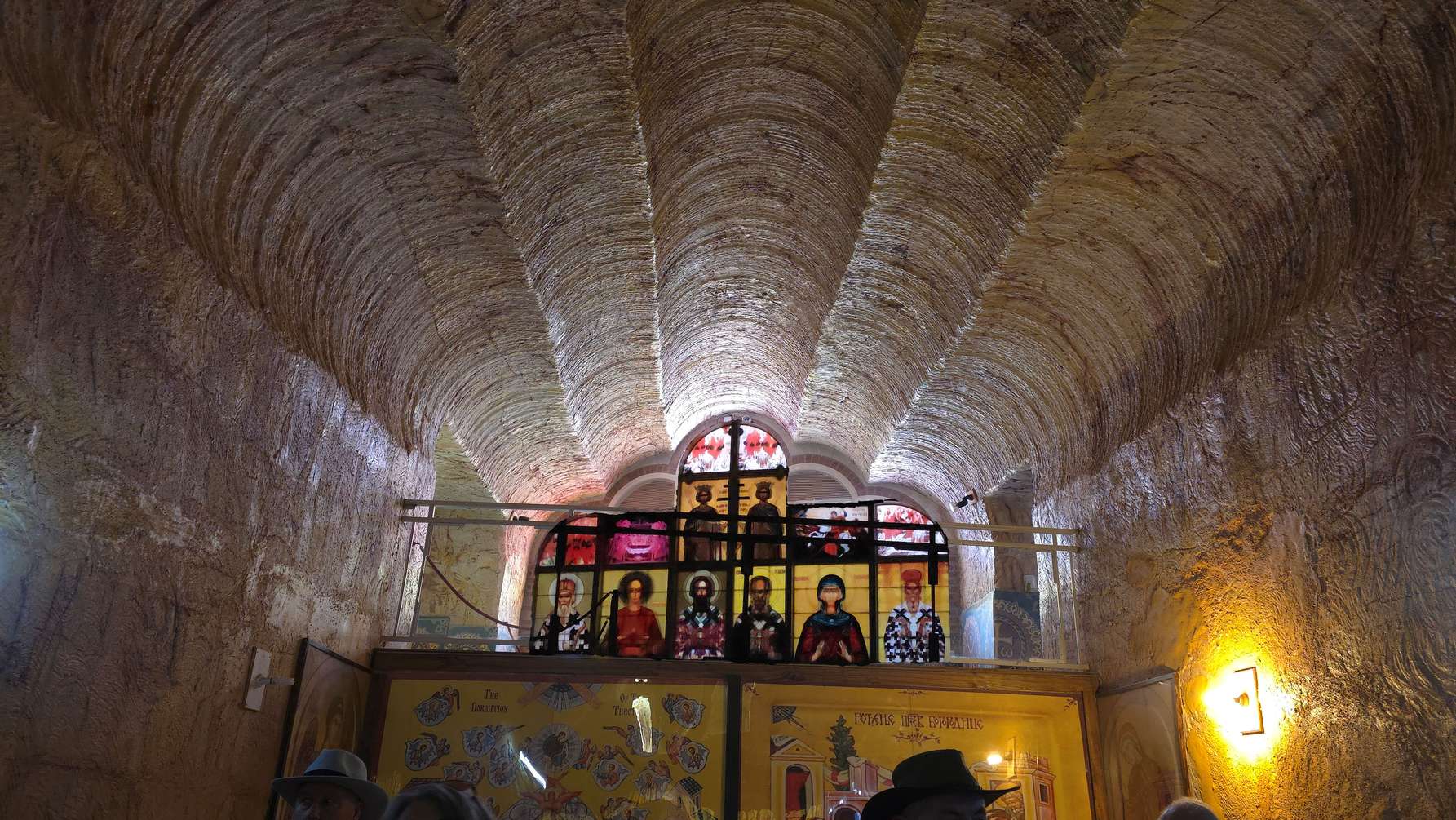
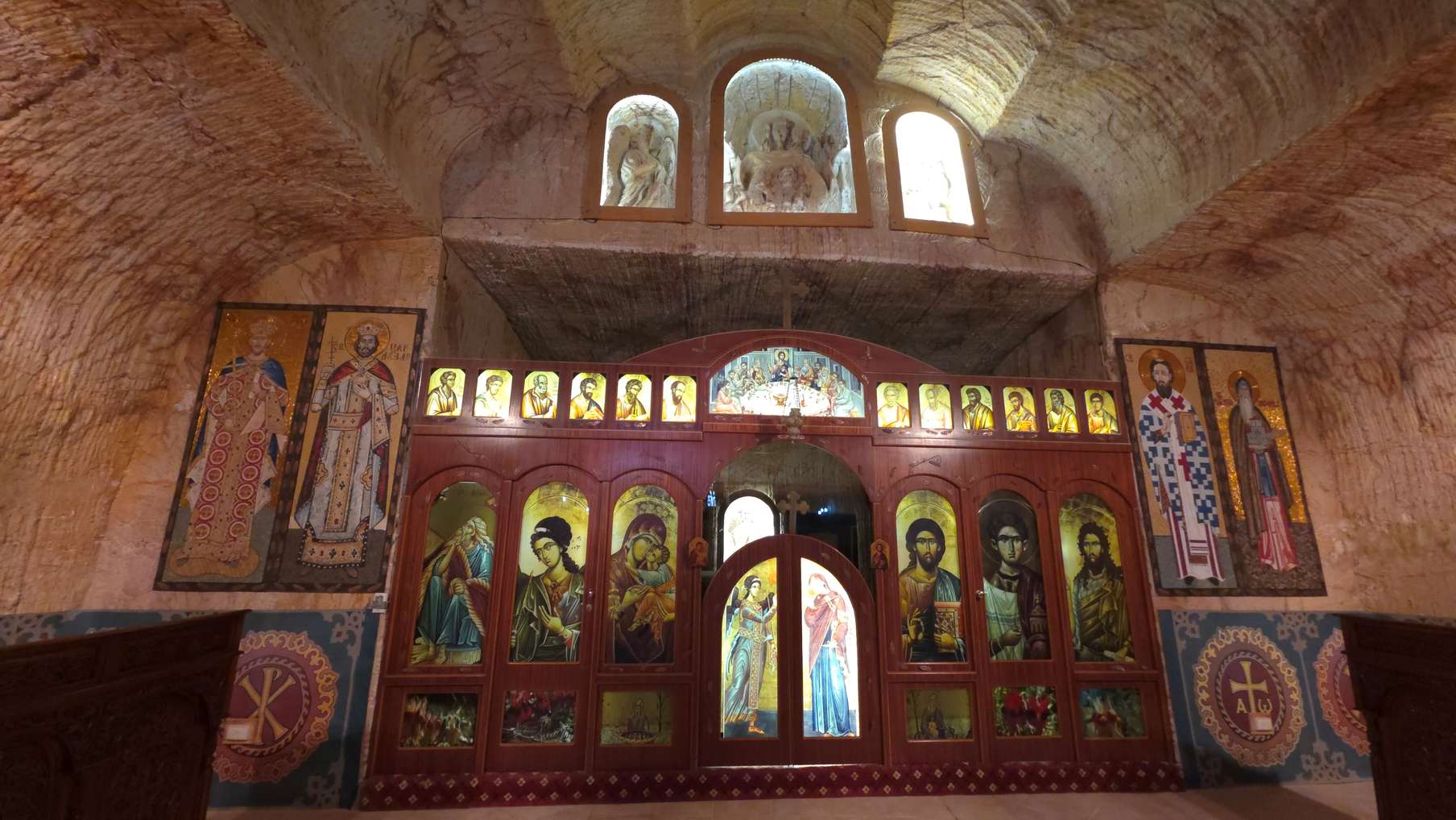
The Iconostasis.
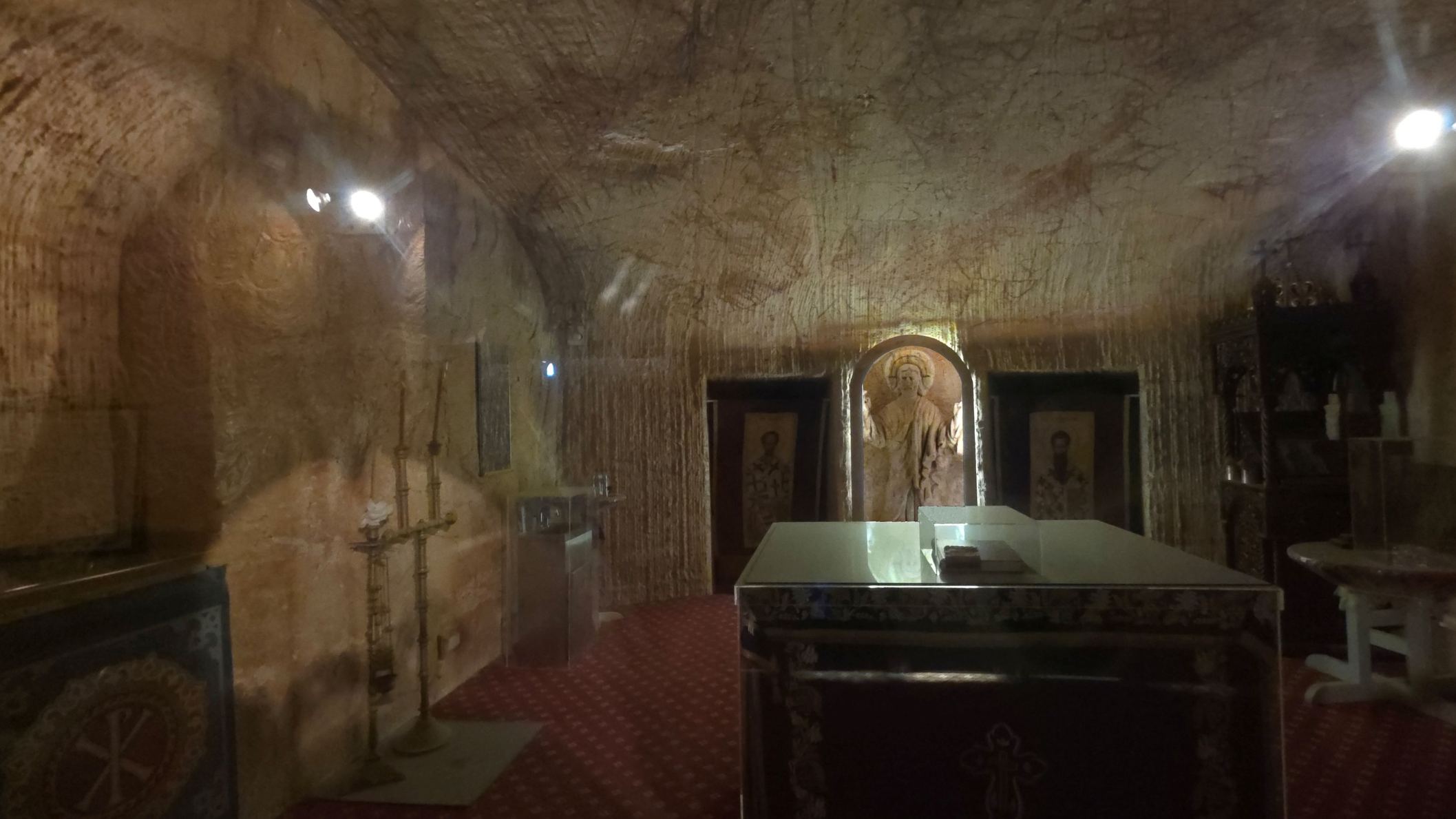
Behind the iconostasis.
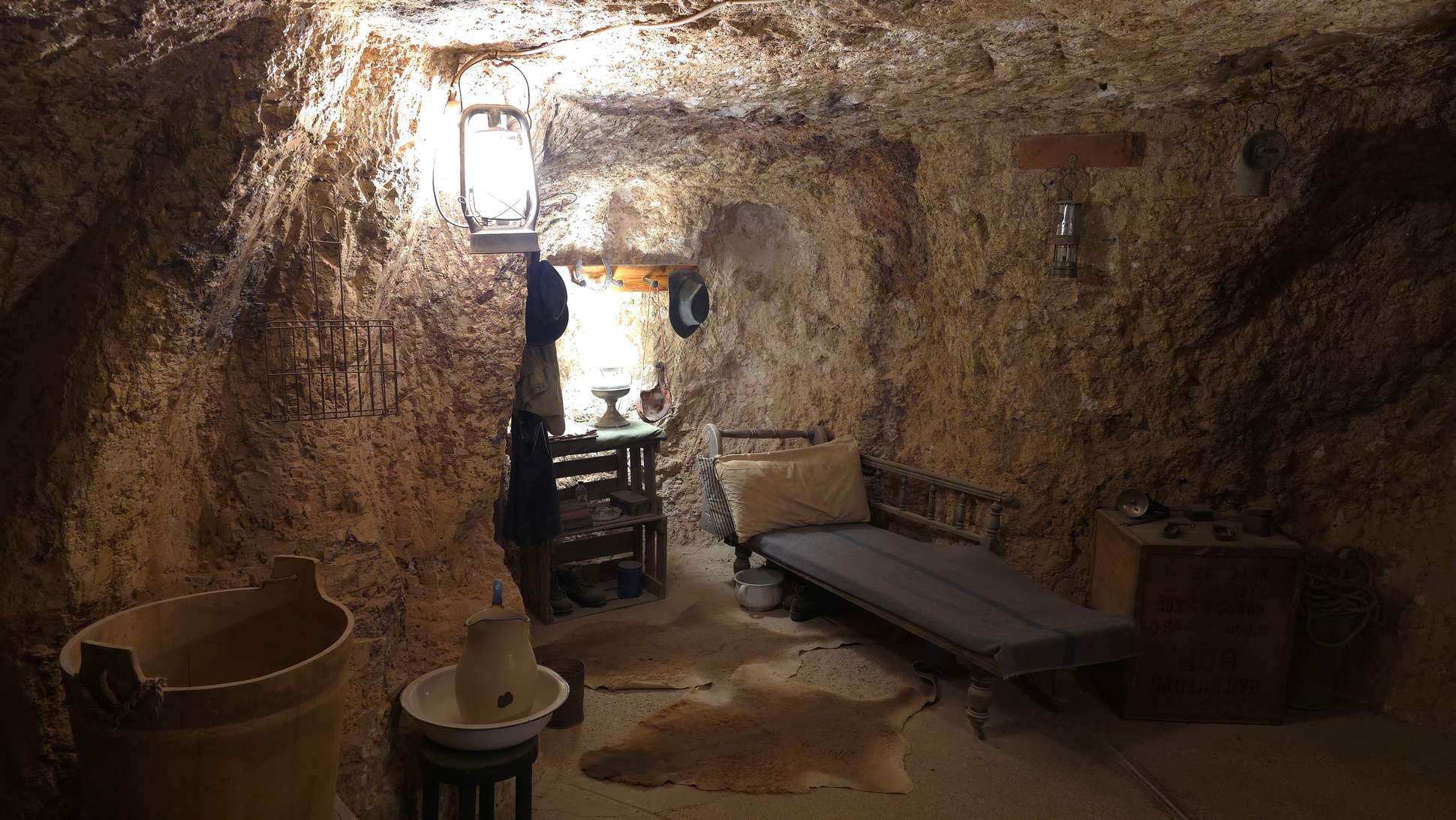
Umoona Opal Mine and Museum display showing how miners lived underground.
Many people live underground to escape the scorching summer heat. The temperature in the 'Dugouts' is 22-24degC year-round.
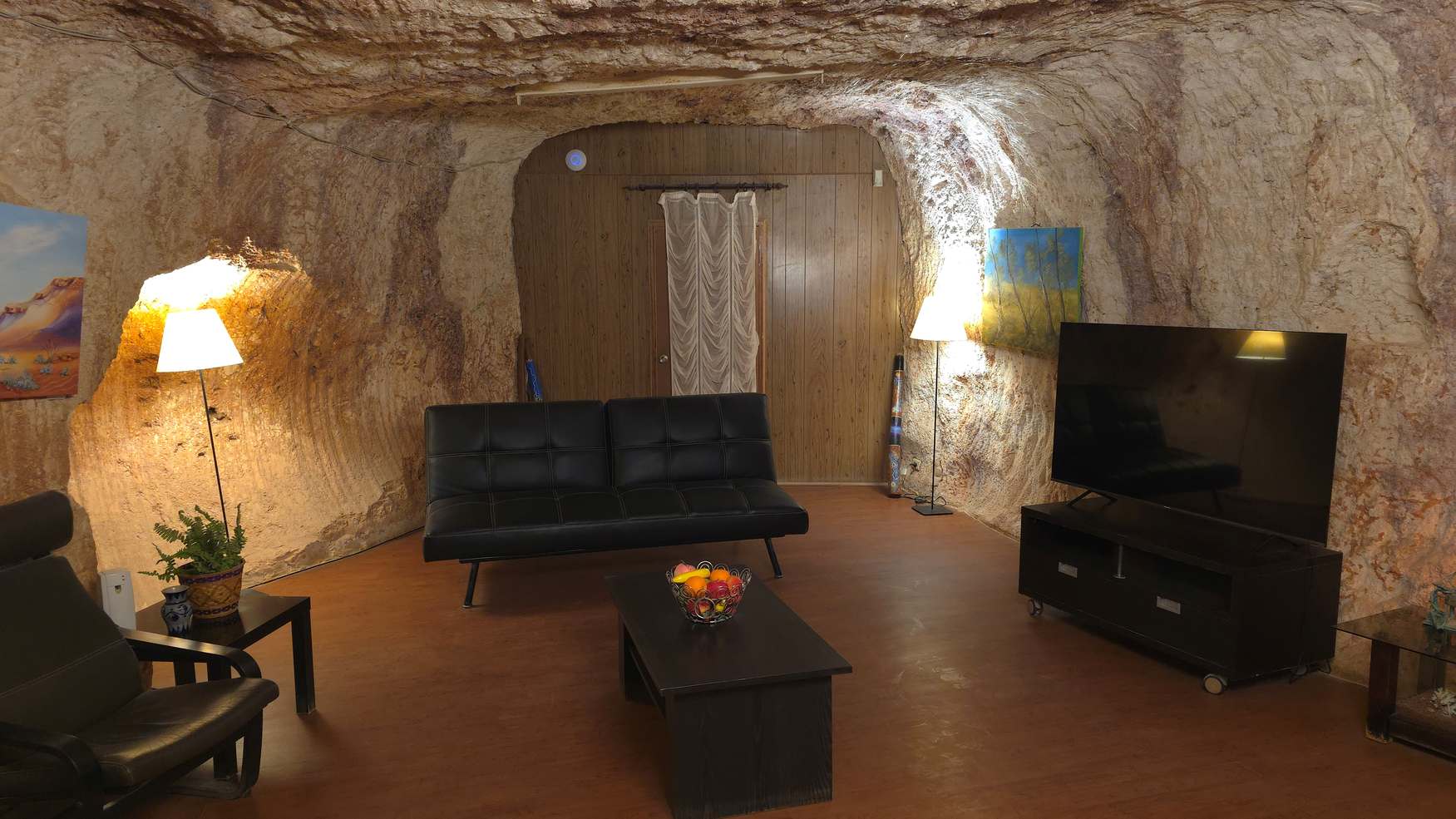
This display shows a contemporary dugout setup.
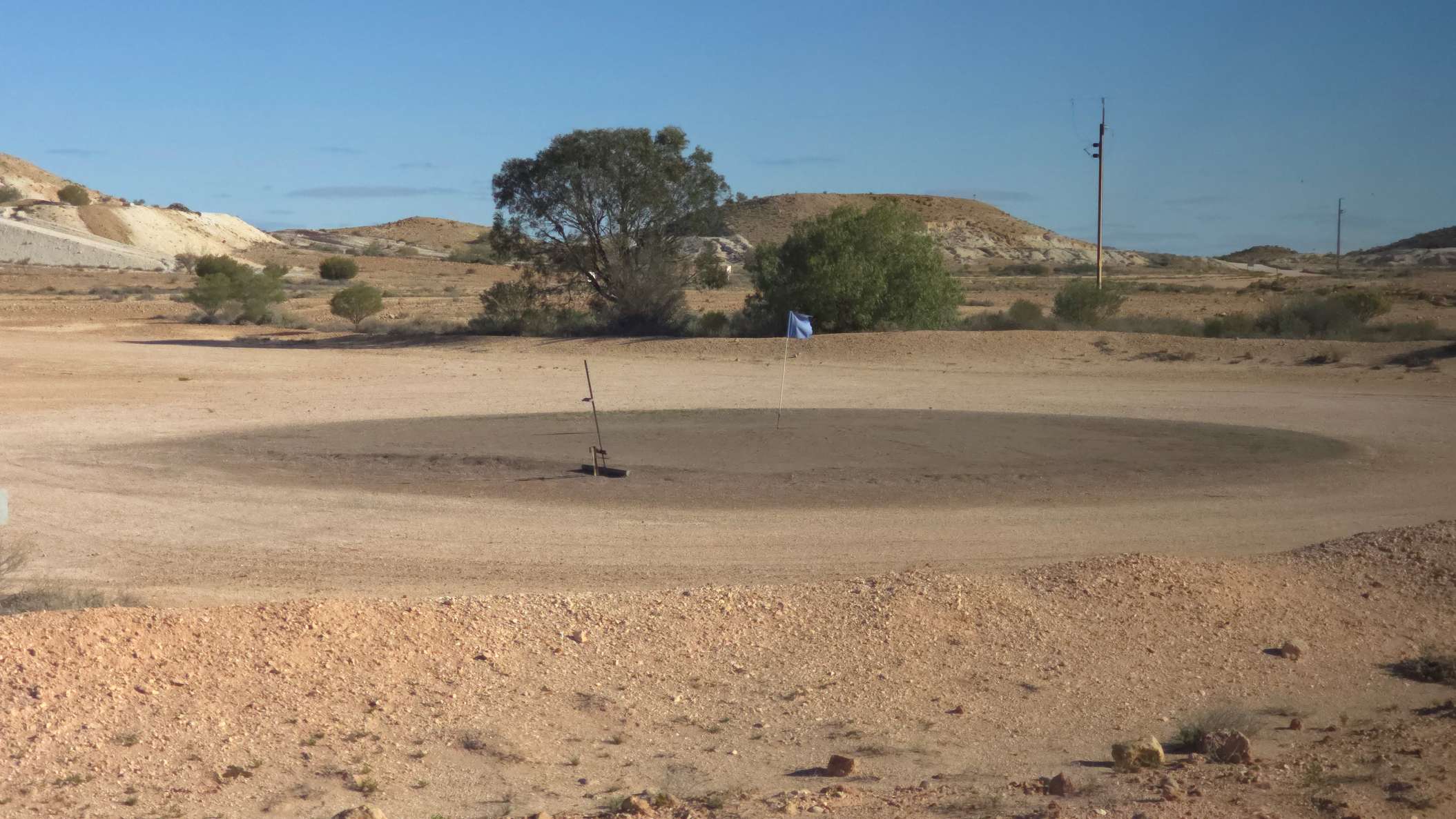
On the way back to the train we were shown the Coober Pedy Opal Fields Golf Club.
It is the only golf club in the world to have reciprocal arrangement with St. Andrews.
It cost them an opal mine and is only for January on the 9 hole Balgrove course.
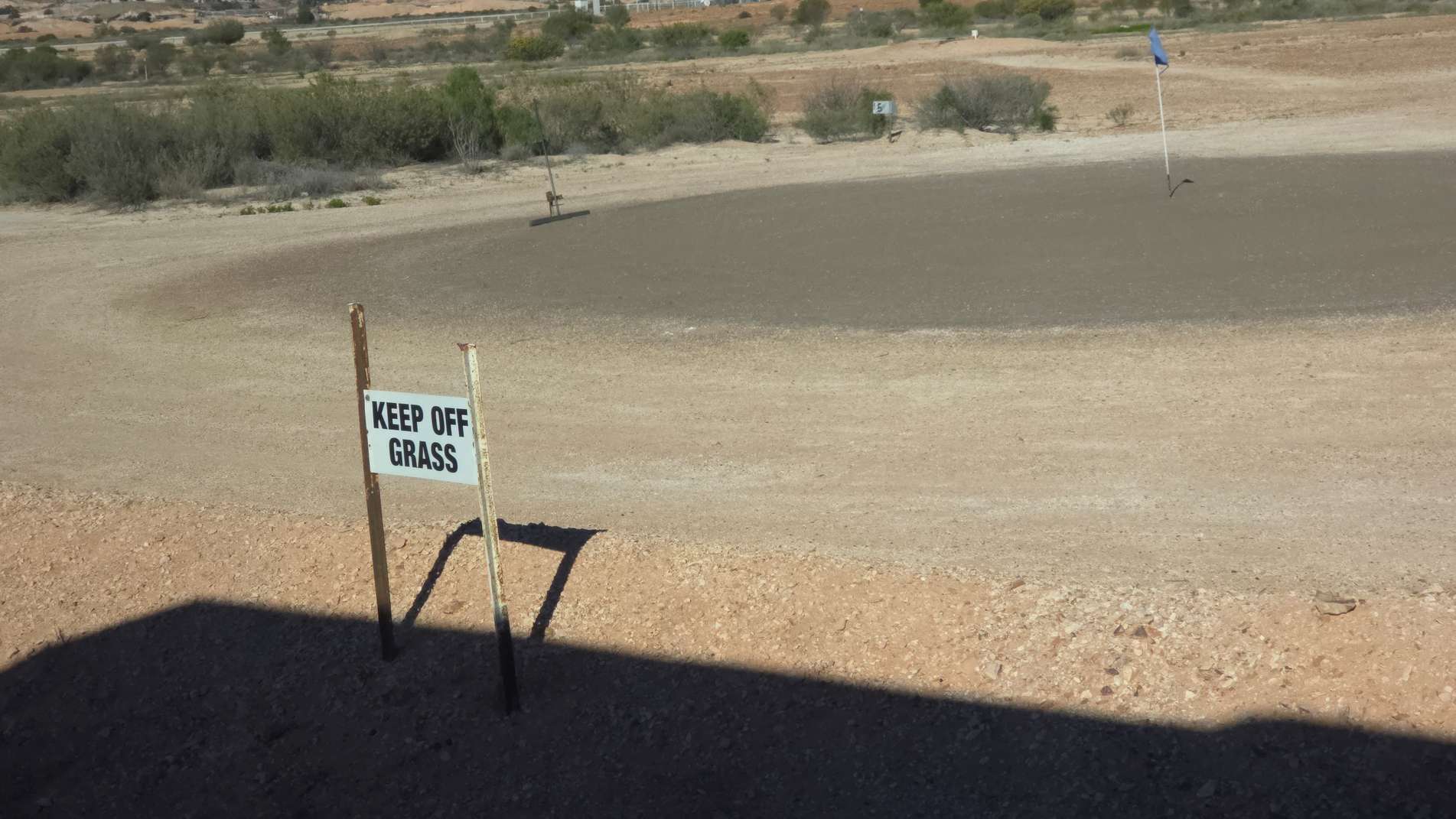
And of course the 'Keep off Grass' sign. Not a problem. There is no grass.
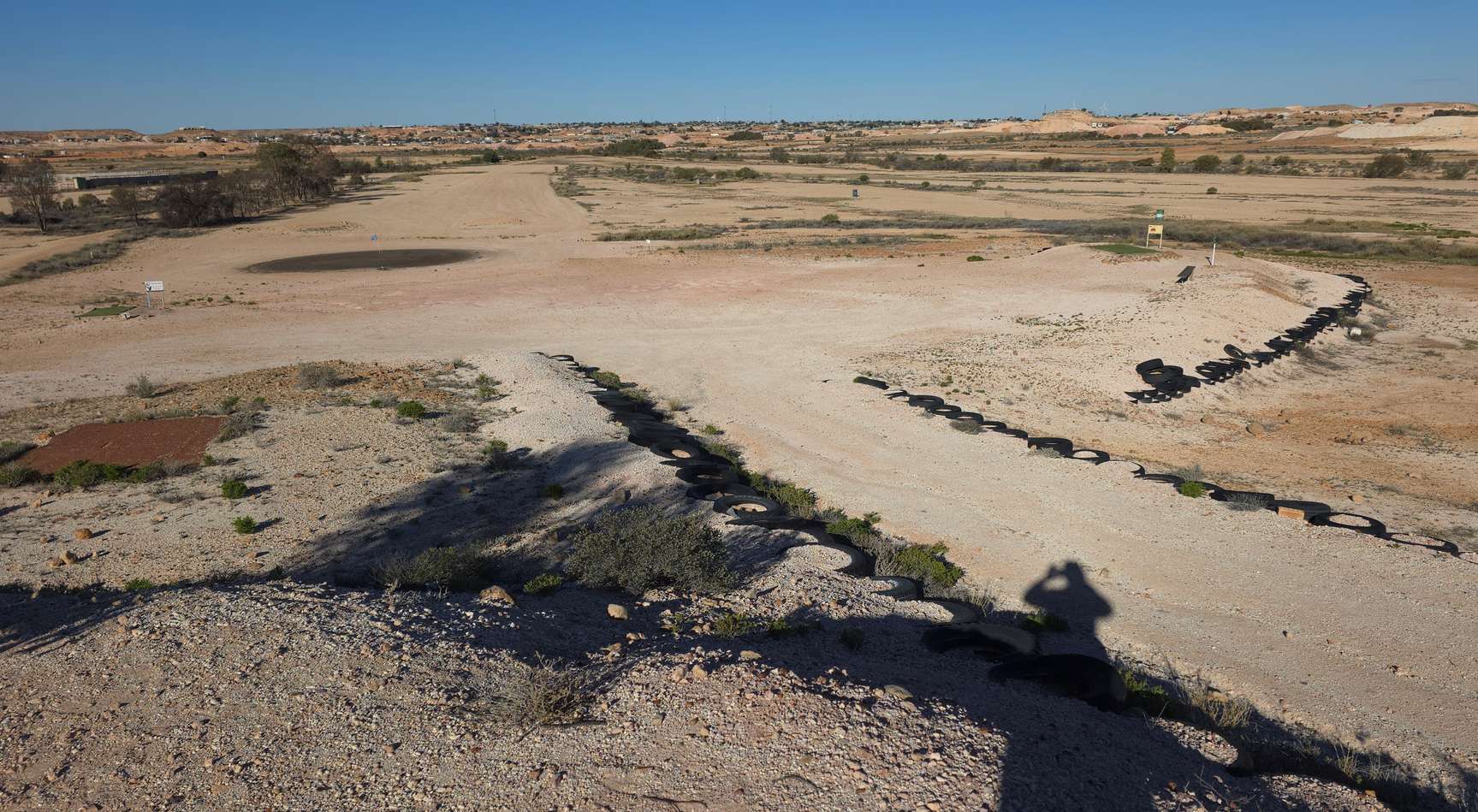
Looking over the course.
A popular time to play is in the cool of the night with flourescent balls.
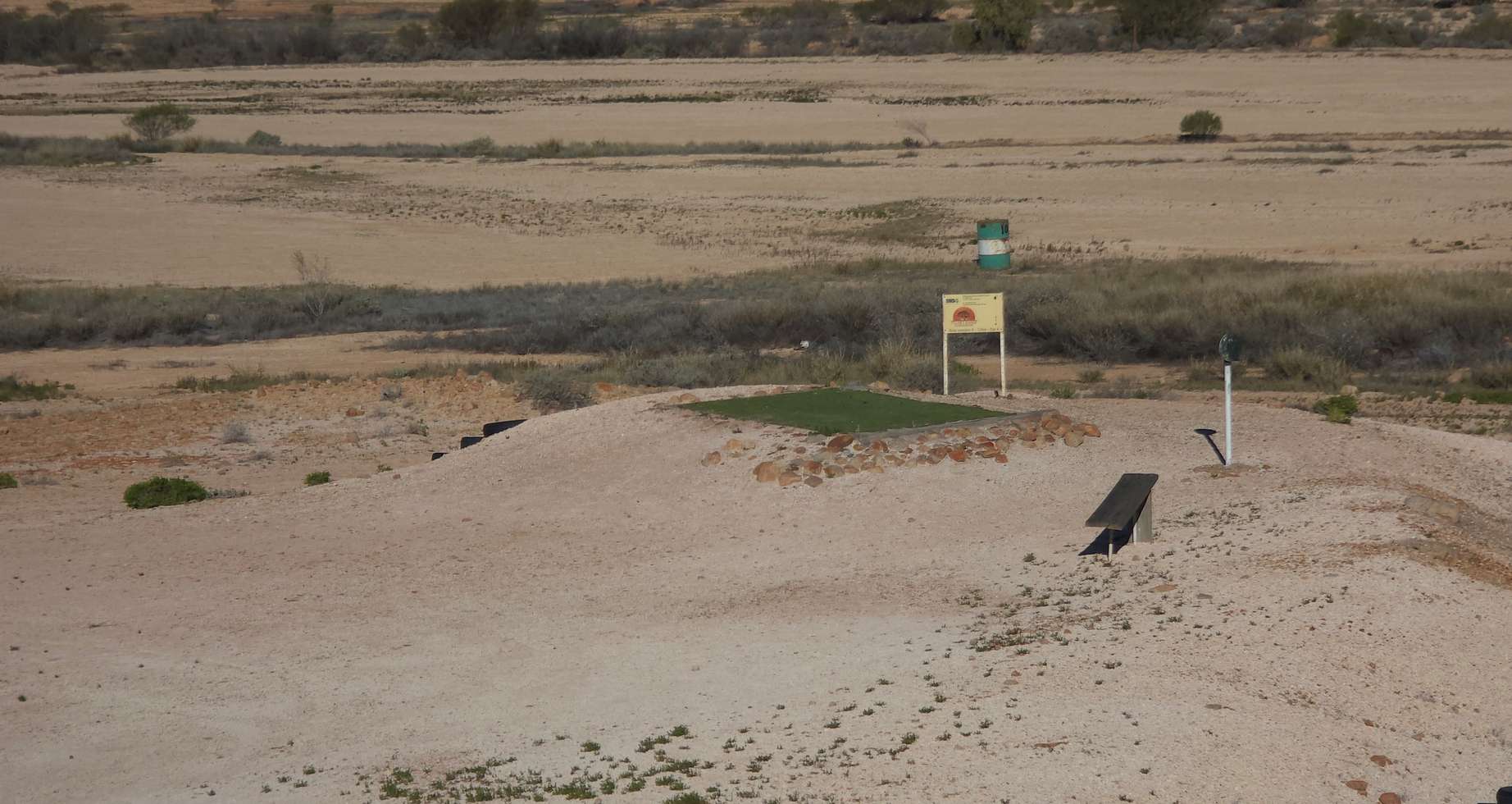
One of the tees.
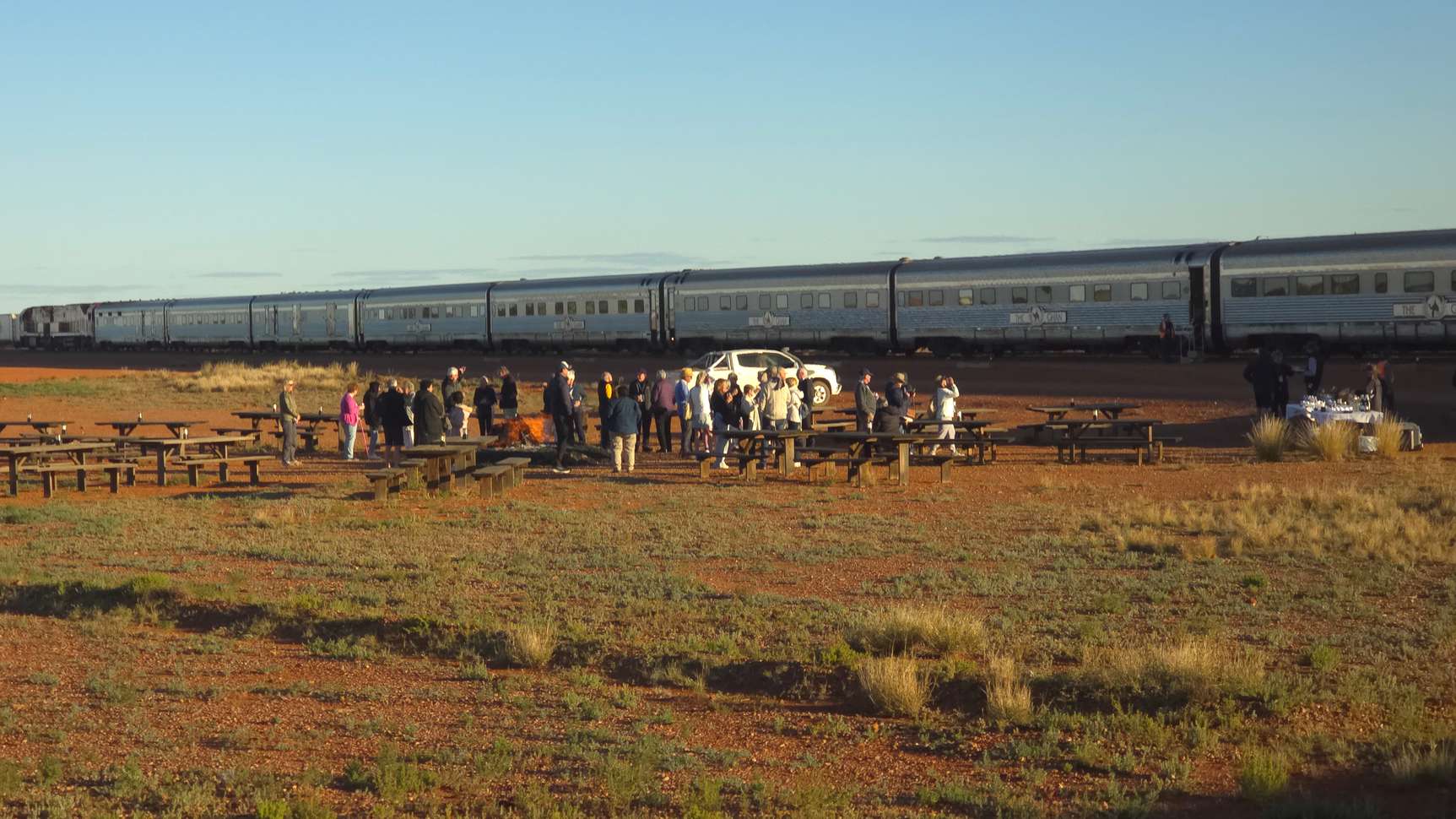
When we returned to the train there were drinks and nibbles round the camp fire.
We chose to go to the warmth of the lounge car for a cup of tea and nibbles.
Adelaide
25th July
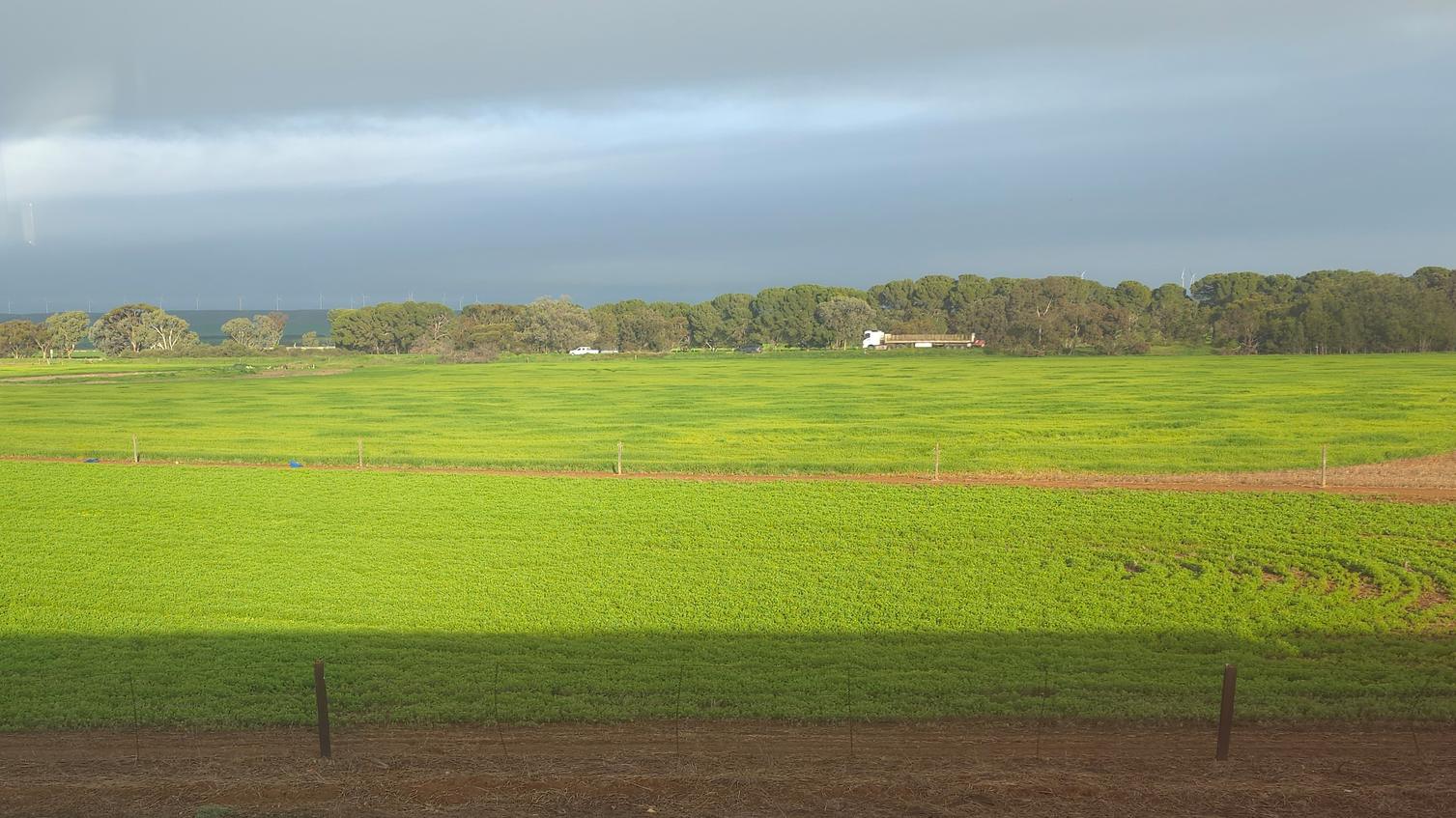
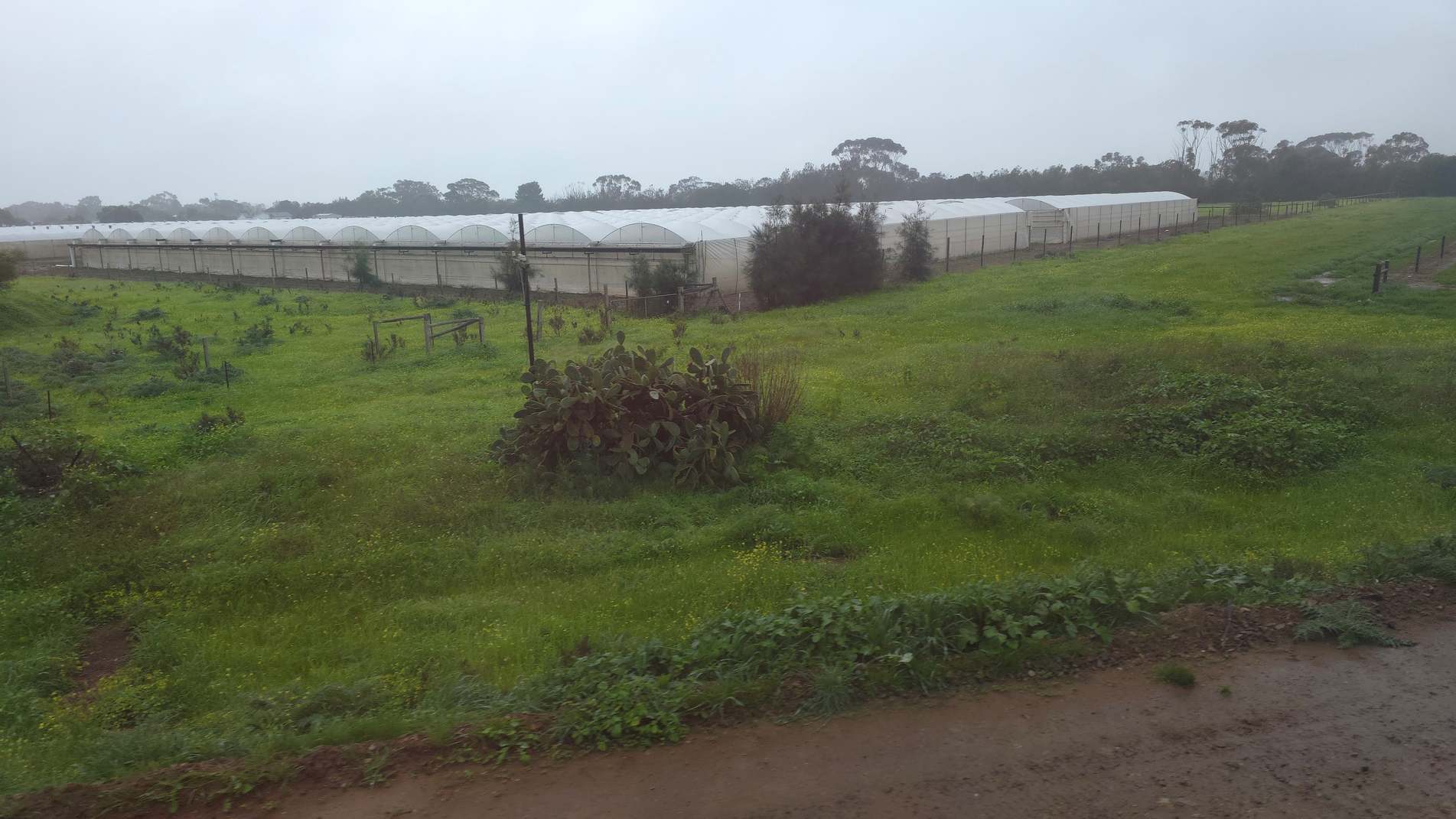
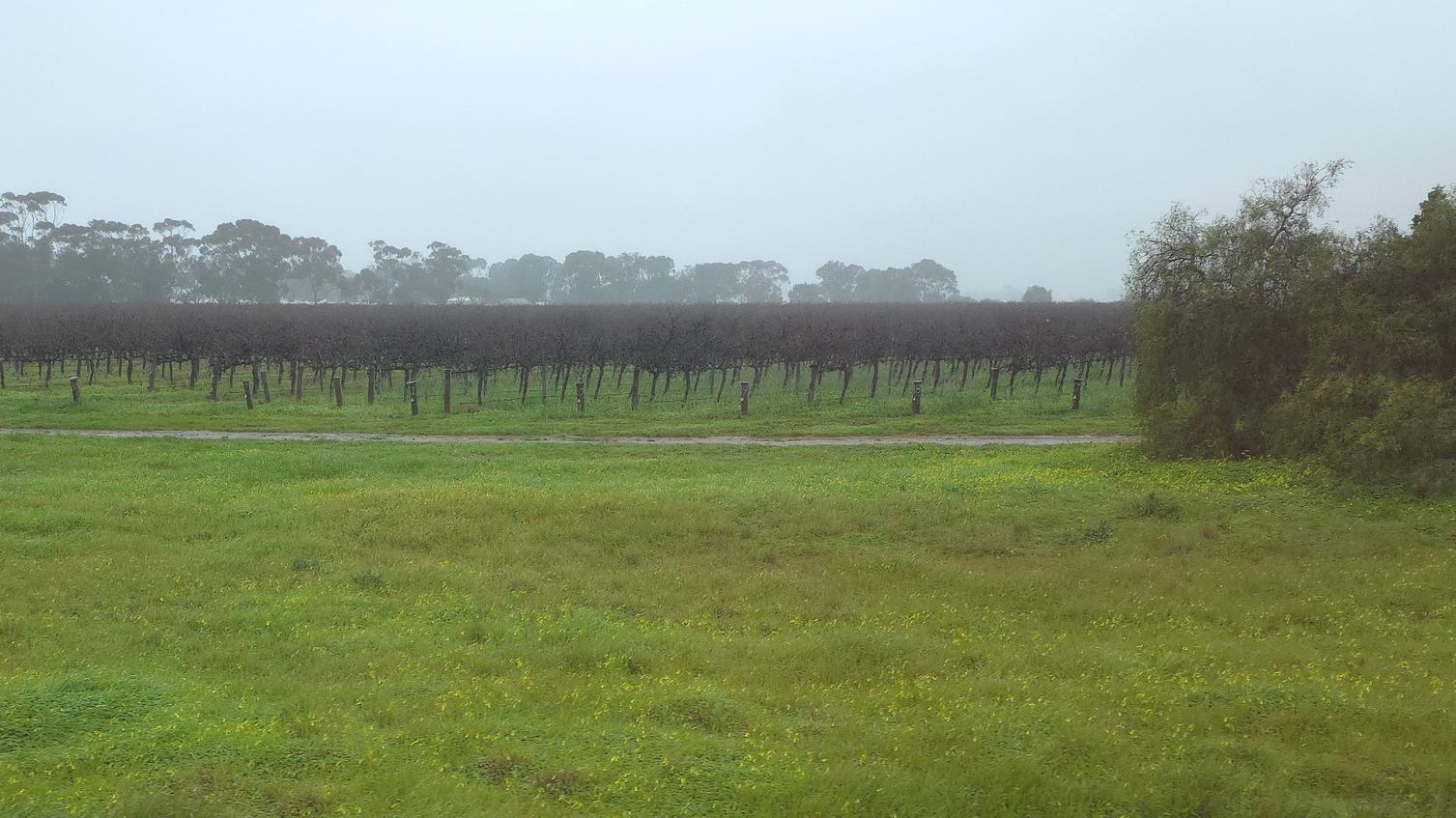
After breakfast as we travelled into Adelaide the weather looked fine.
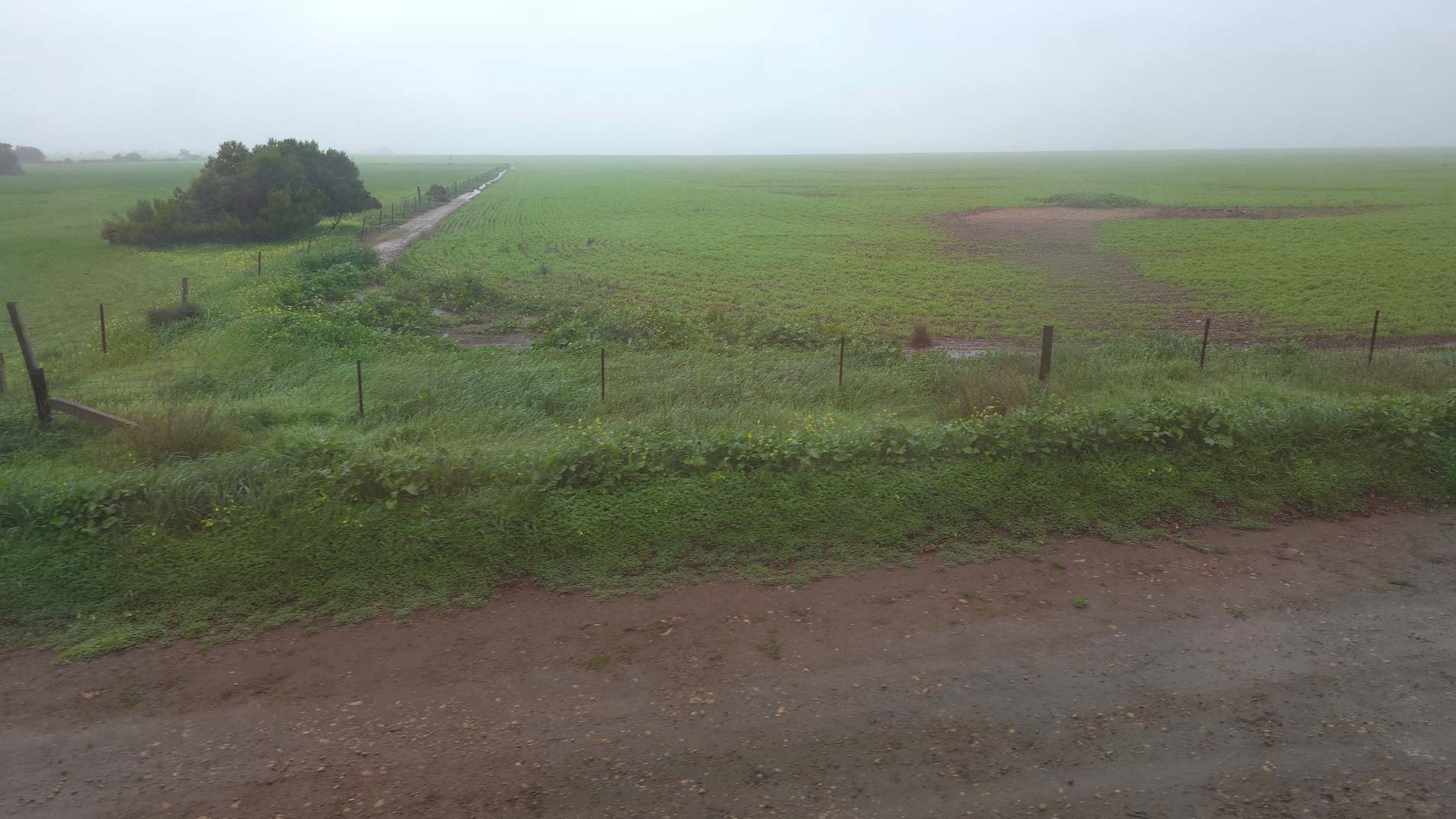
And the landscape had changed.
But as we got closer the weather changed.
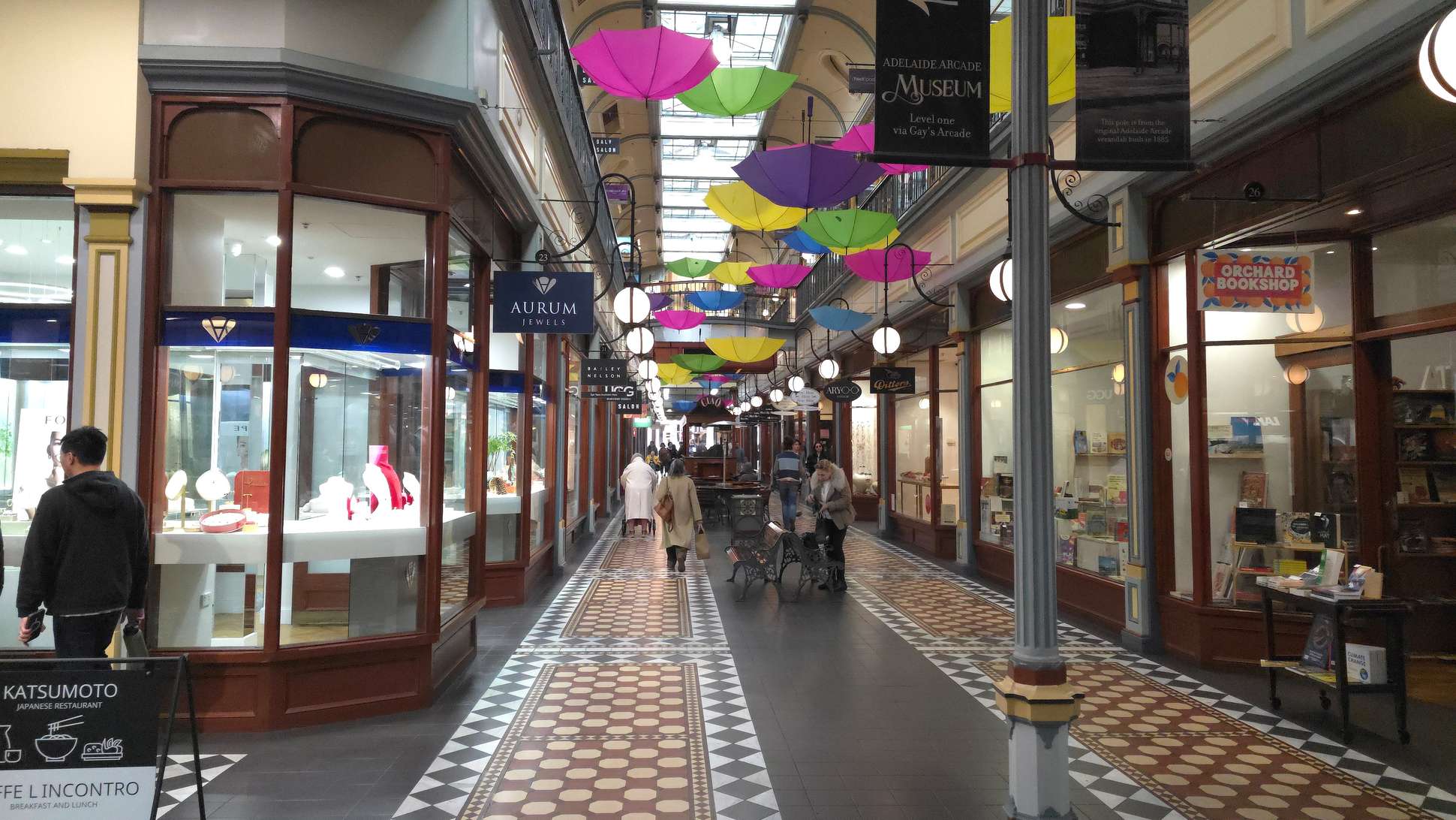
In Rundle Mall was this arcade with coloured umbrellas hanging from the roof.
We were filling in time while our room was got ready.
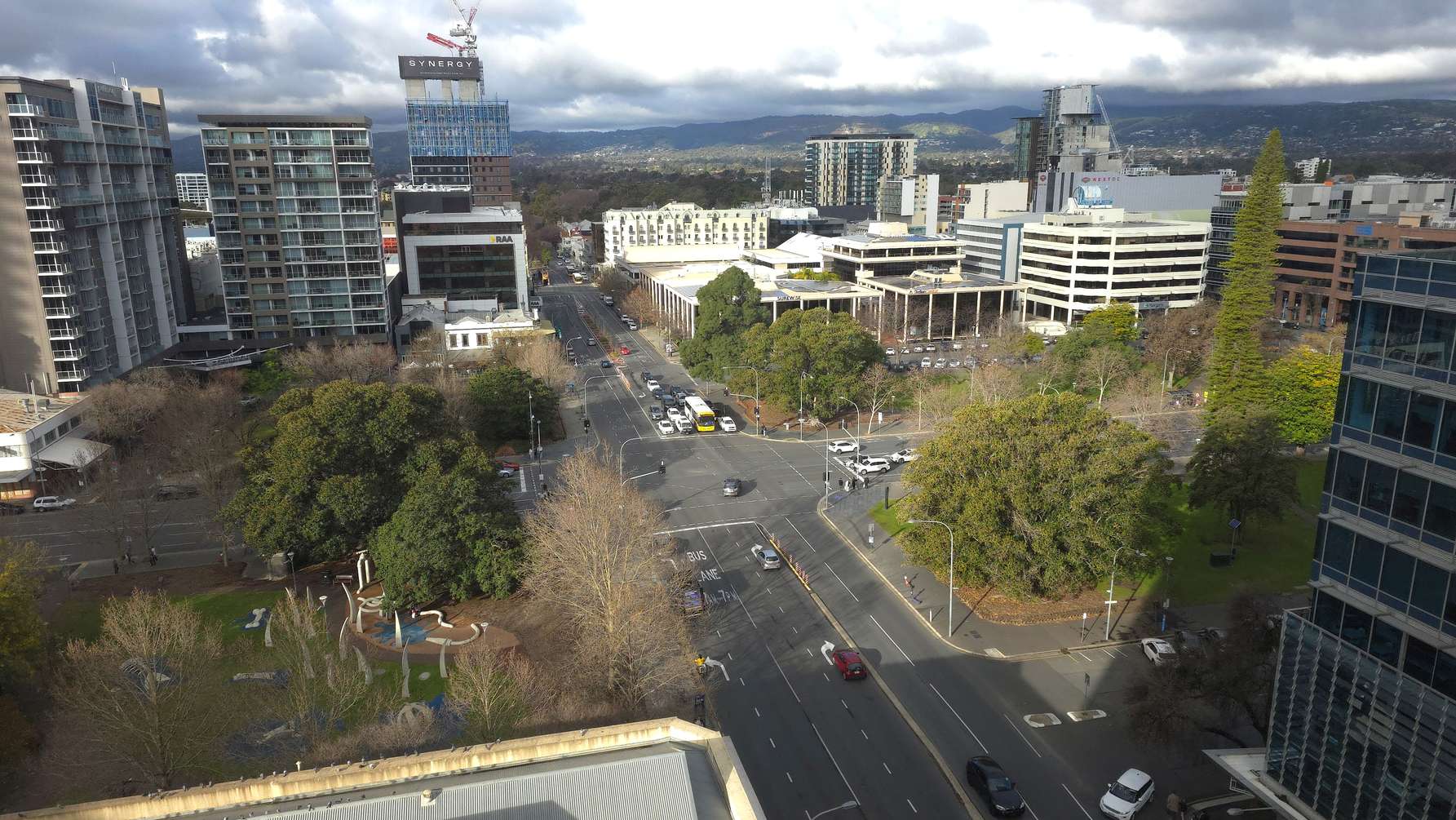
Later in the afternoon the weather improved.
The view from our room window.
Adelaide - Auckland
26th July
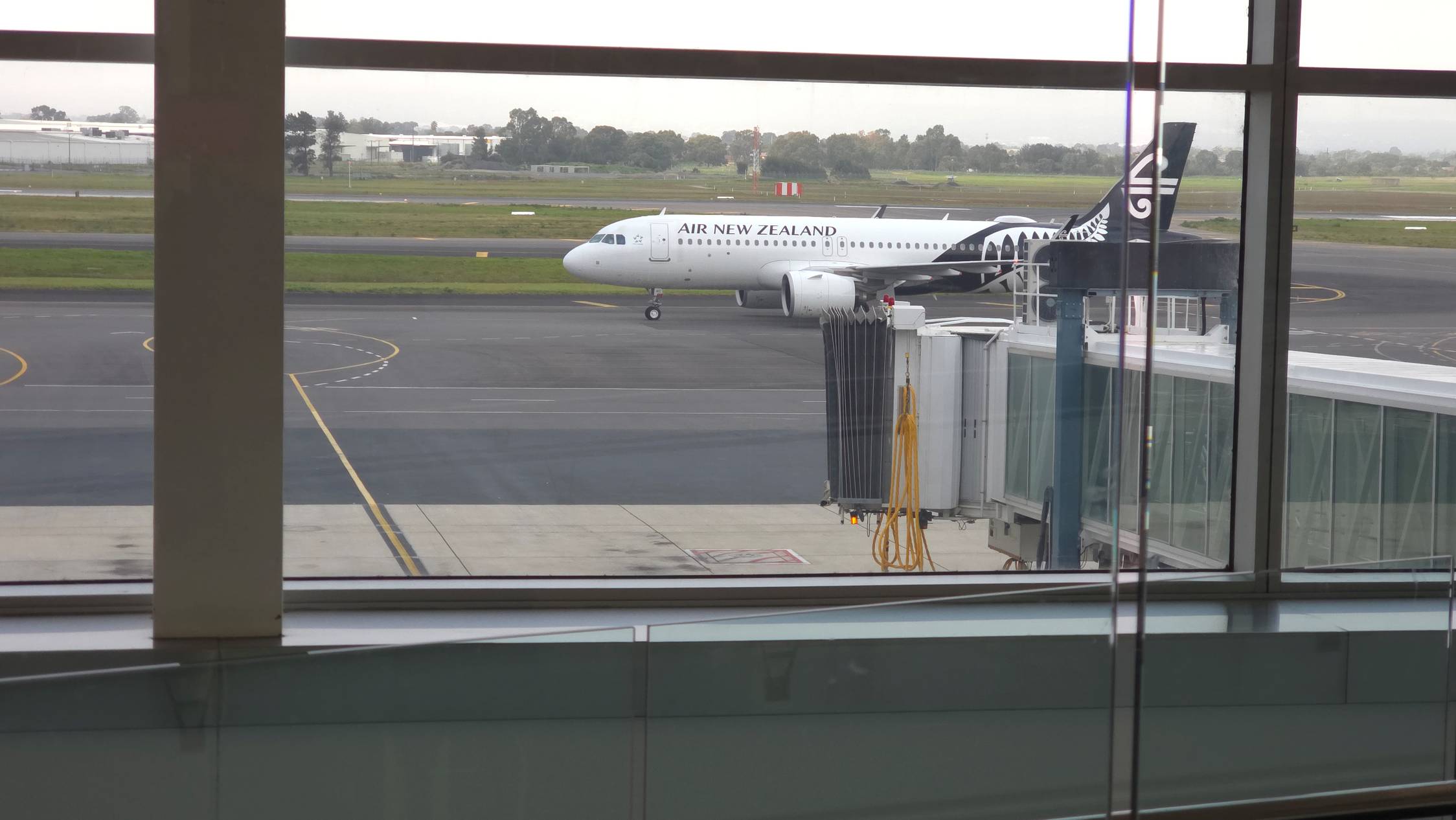
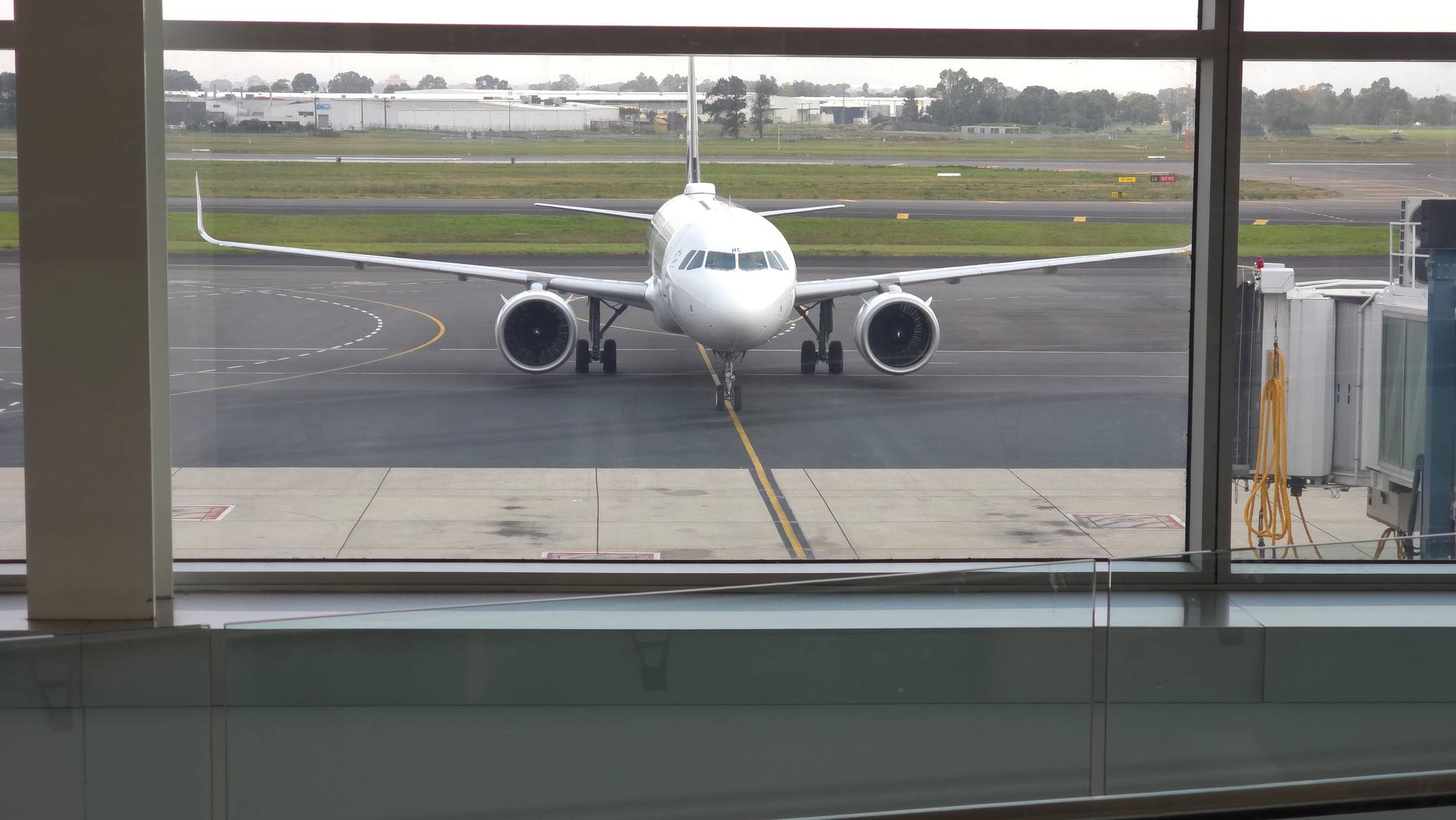
Our plane arriving at the gate.
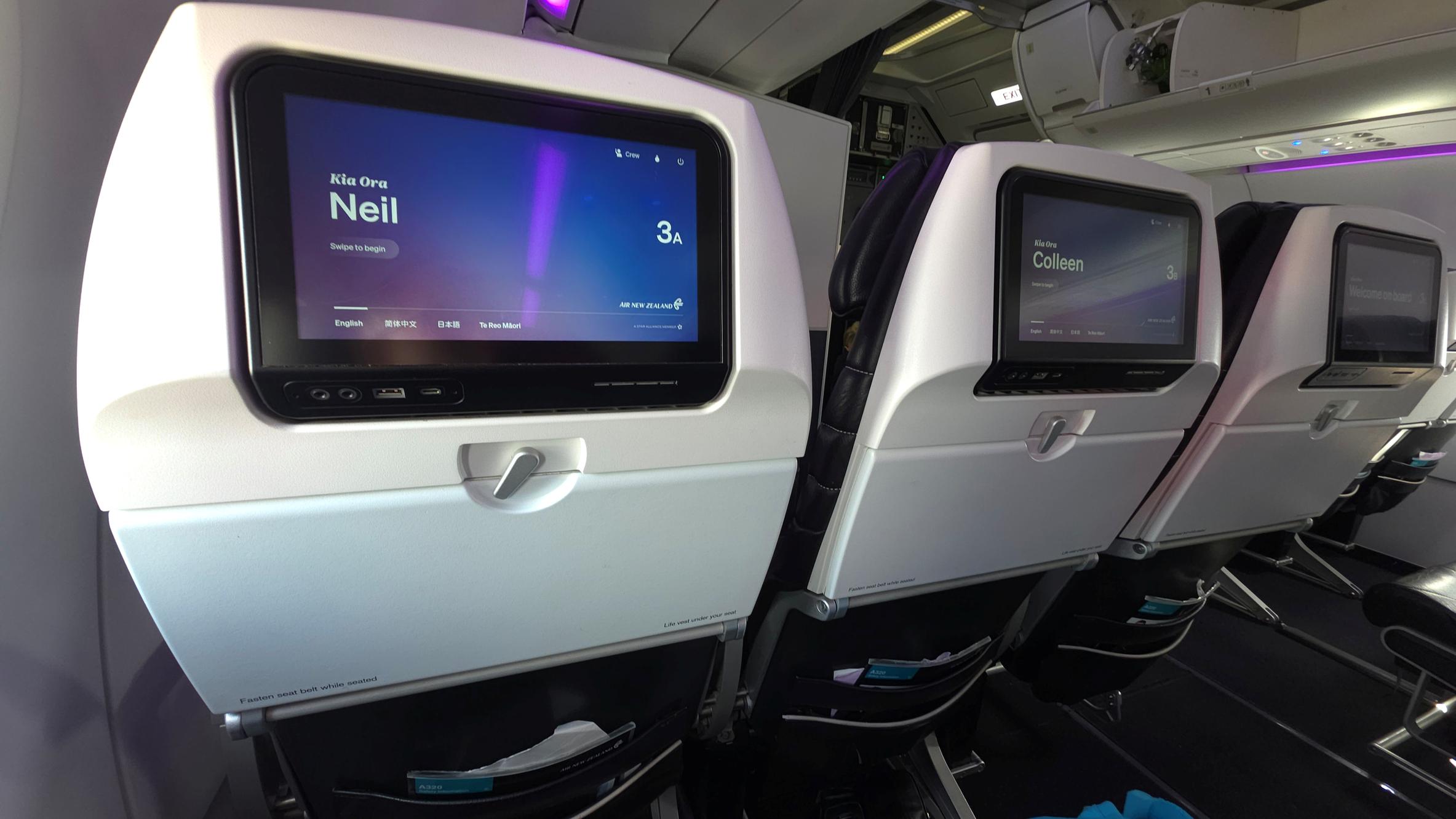
On board.
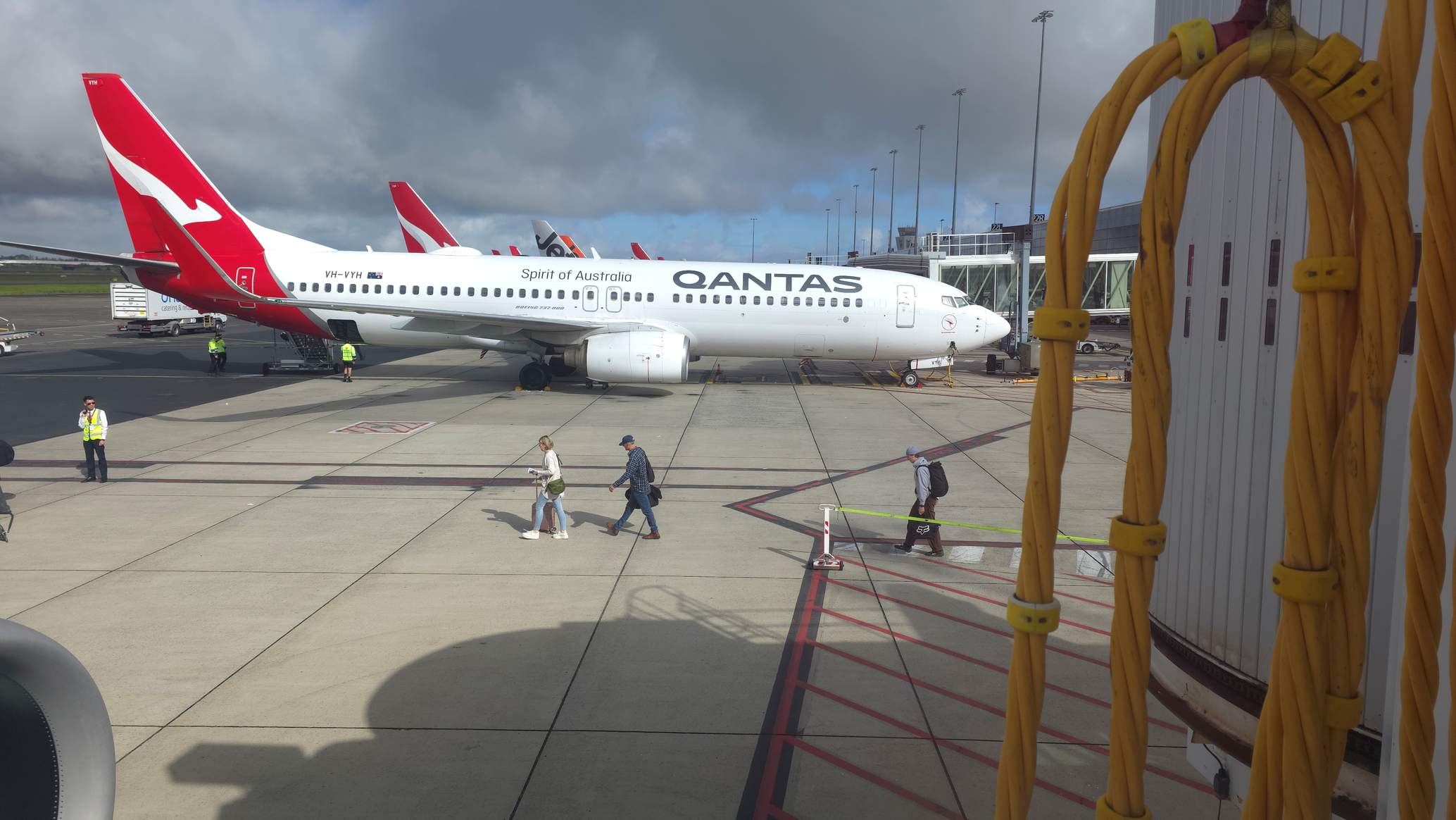
Once again the passengers at the back of the plane had to walk there.
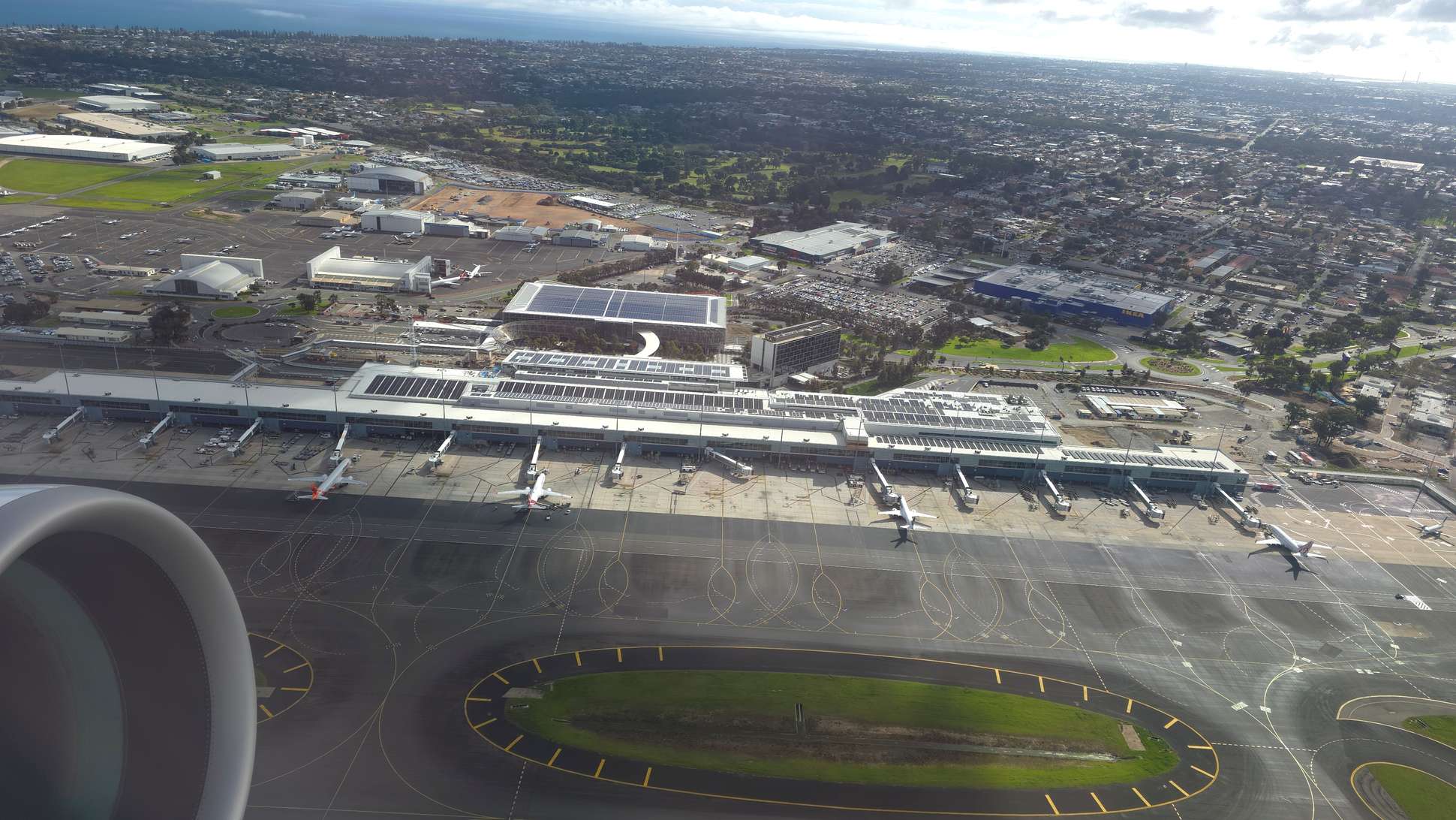
In the middle of the photo is the gate we departed from.
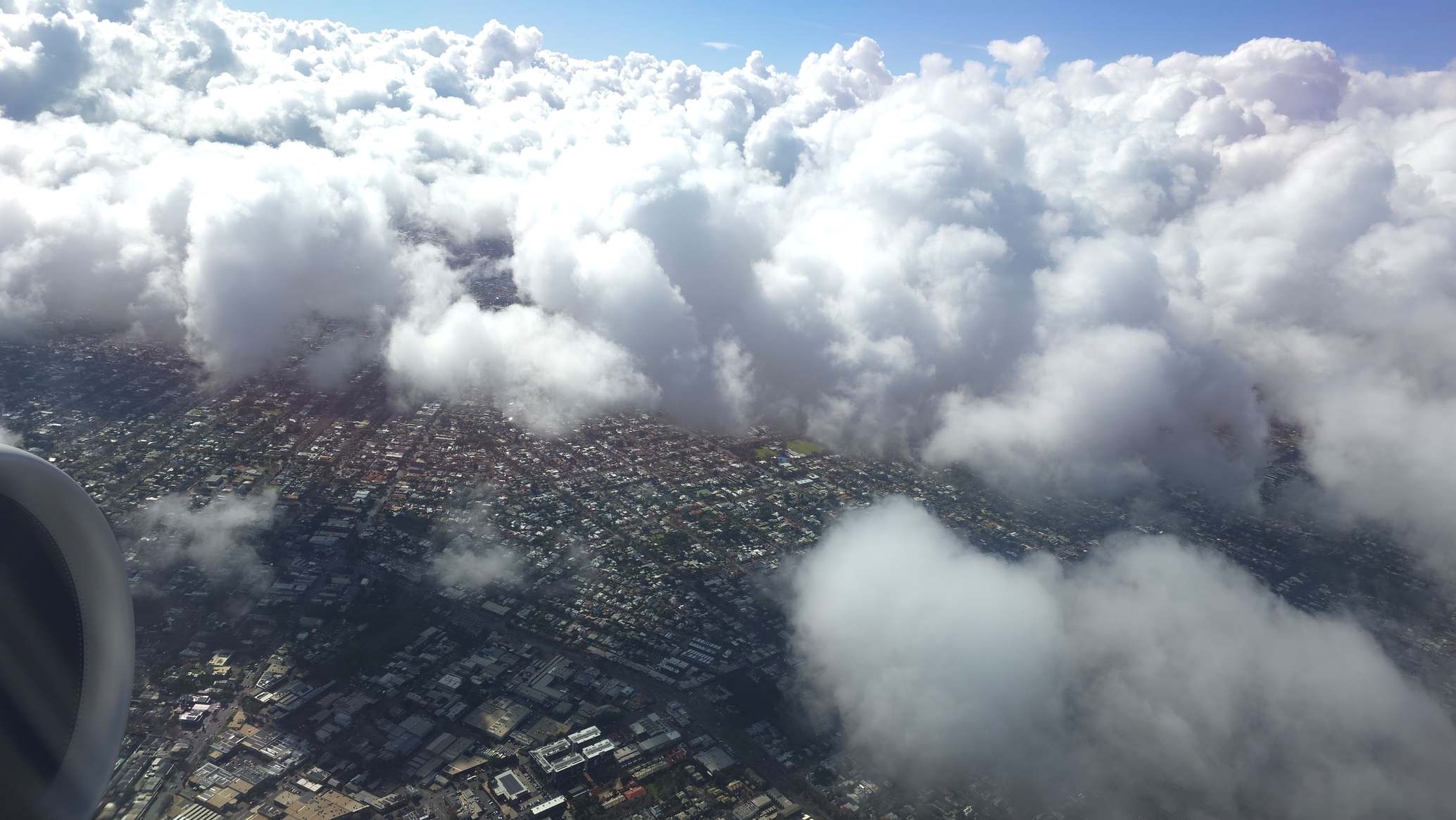
Climbing through the clouds.
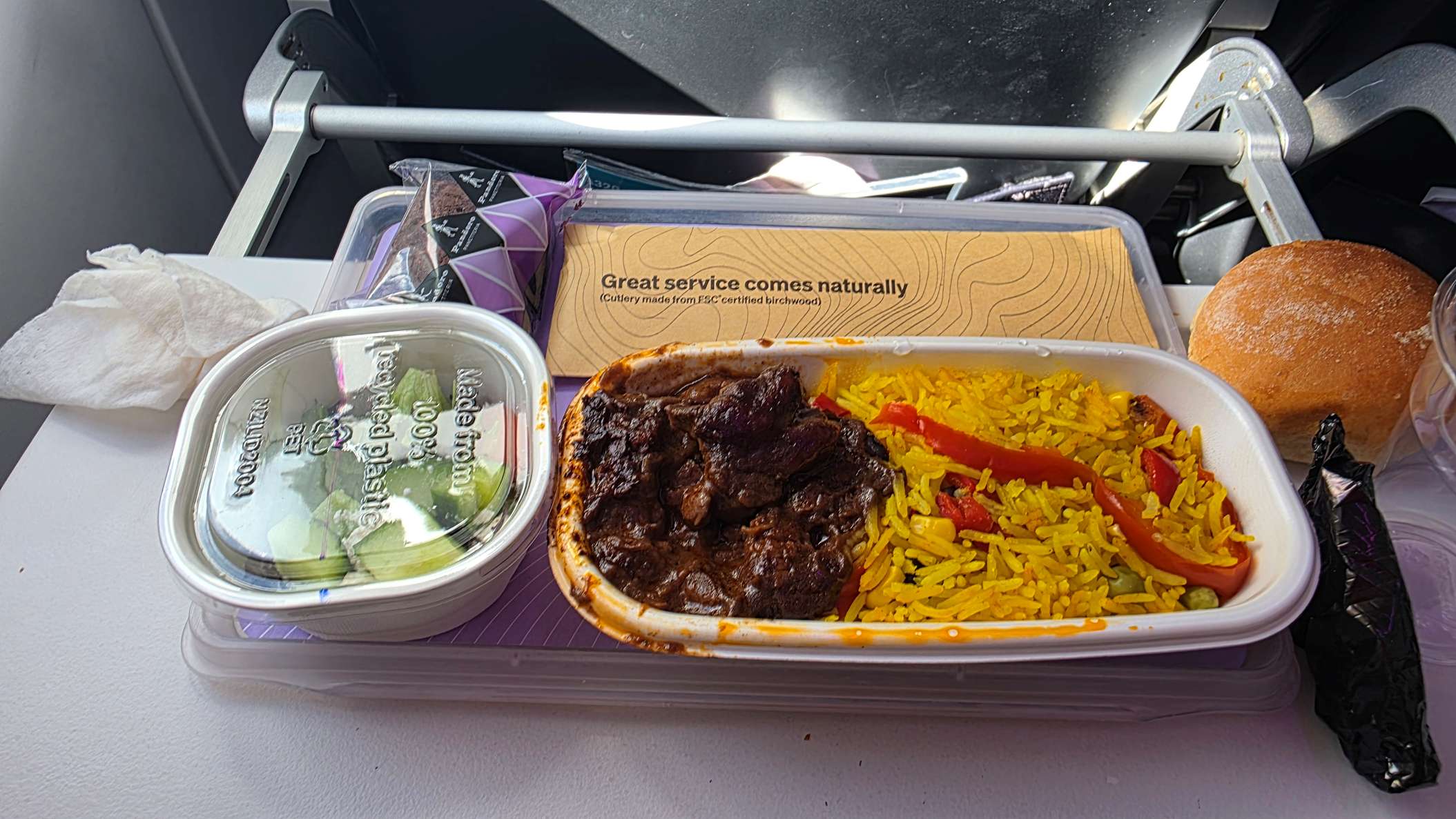
My lunch. Beef with Mexican rice.
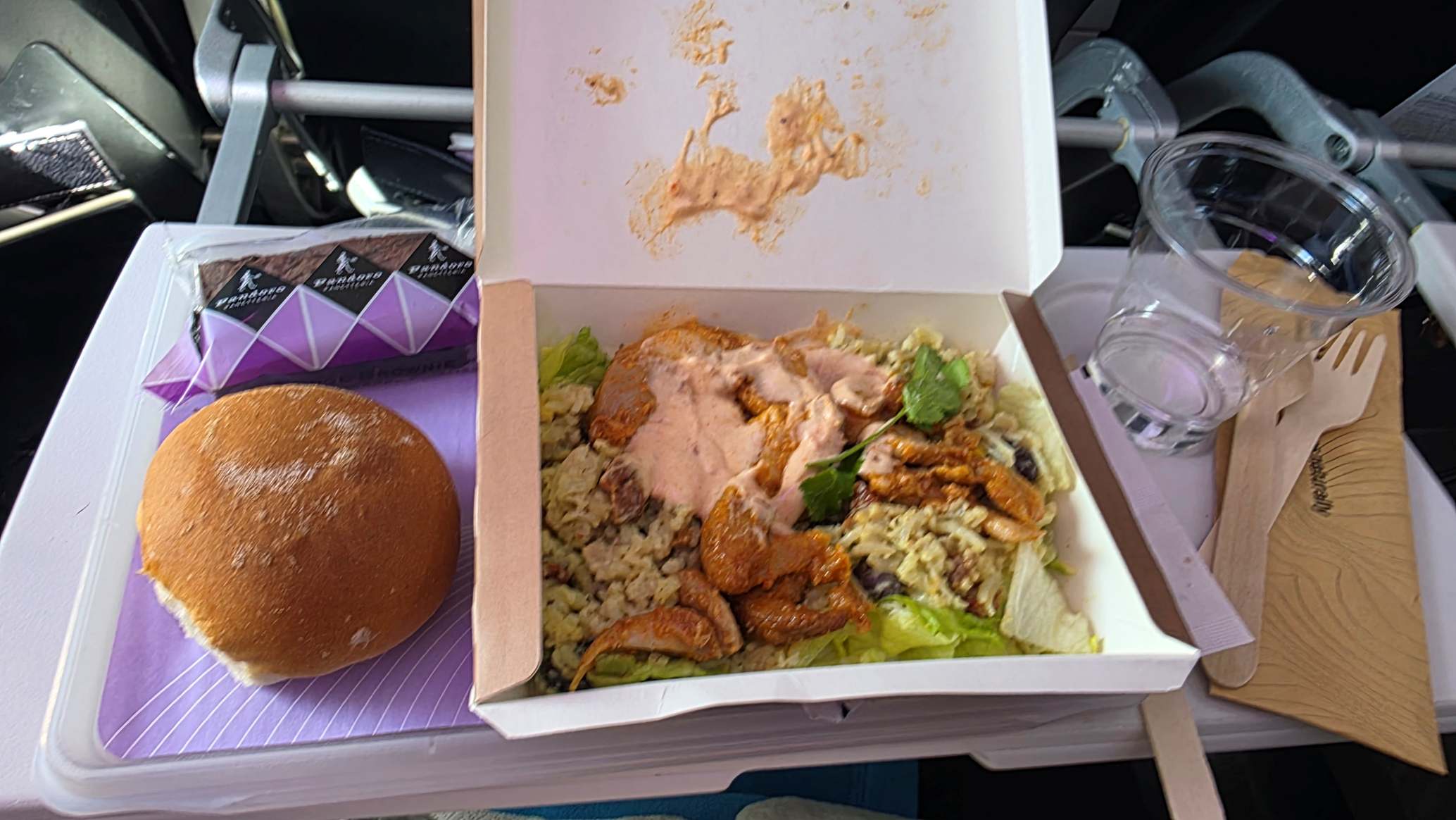
Colleen's lunch. Mexican chicken salad.
A bit different from the one on our way over to Australia.
Wooden cutlery and plastic glasses.
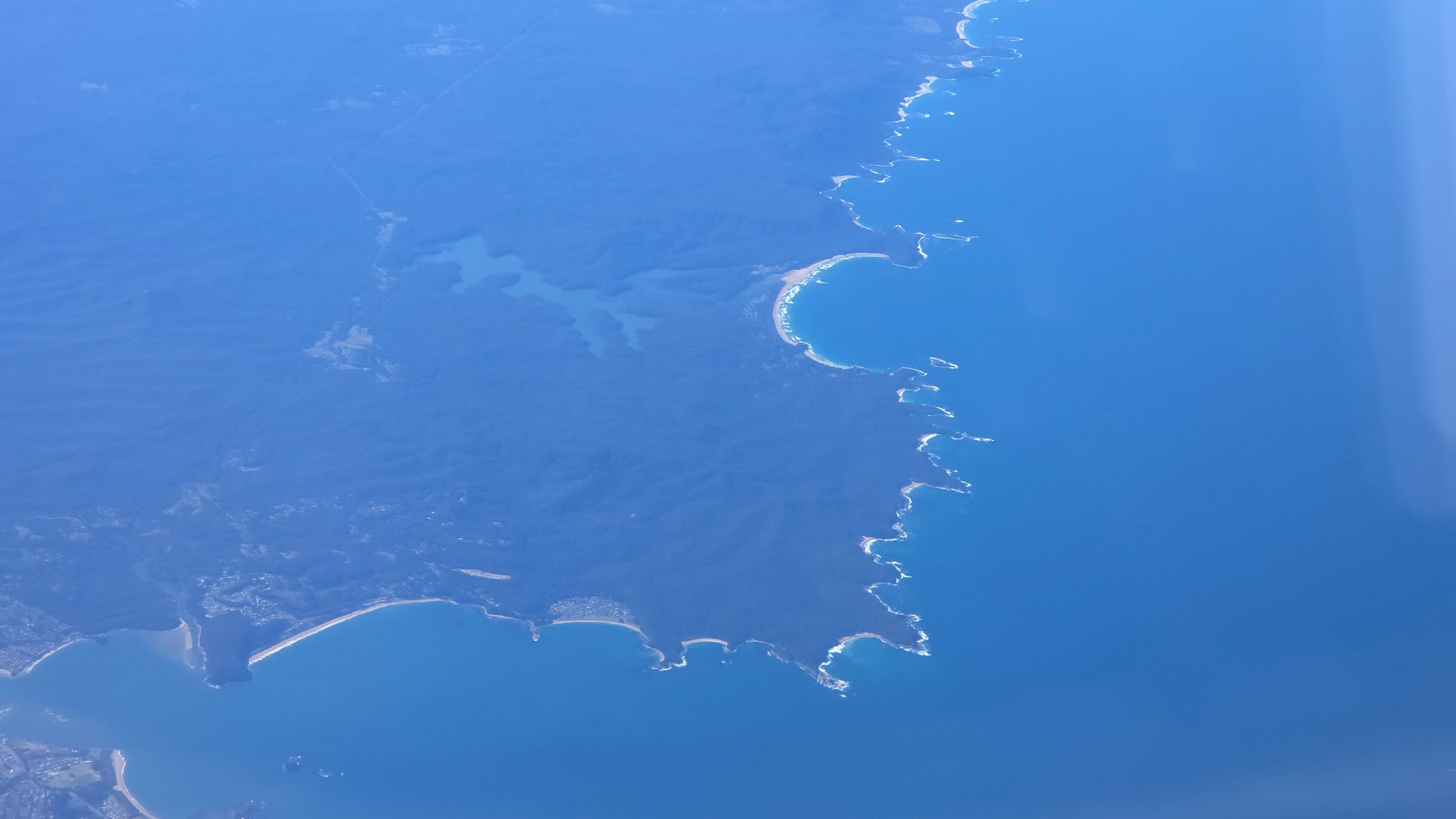
Crossing the Australian coast.
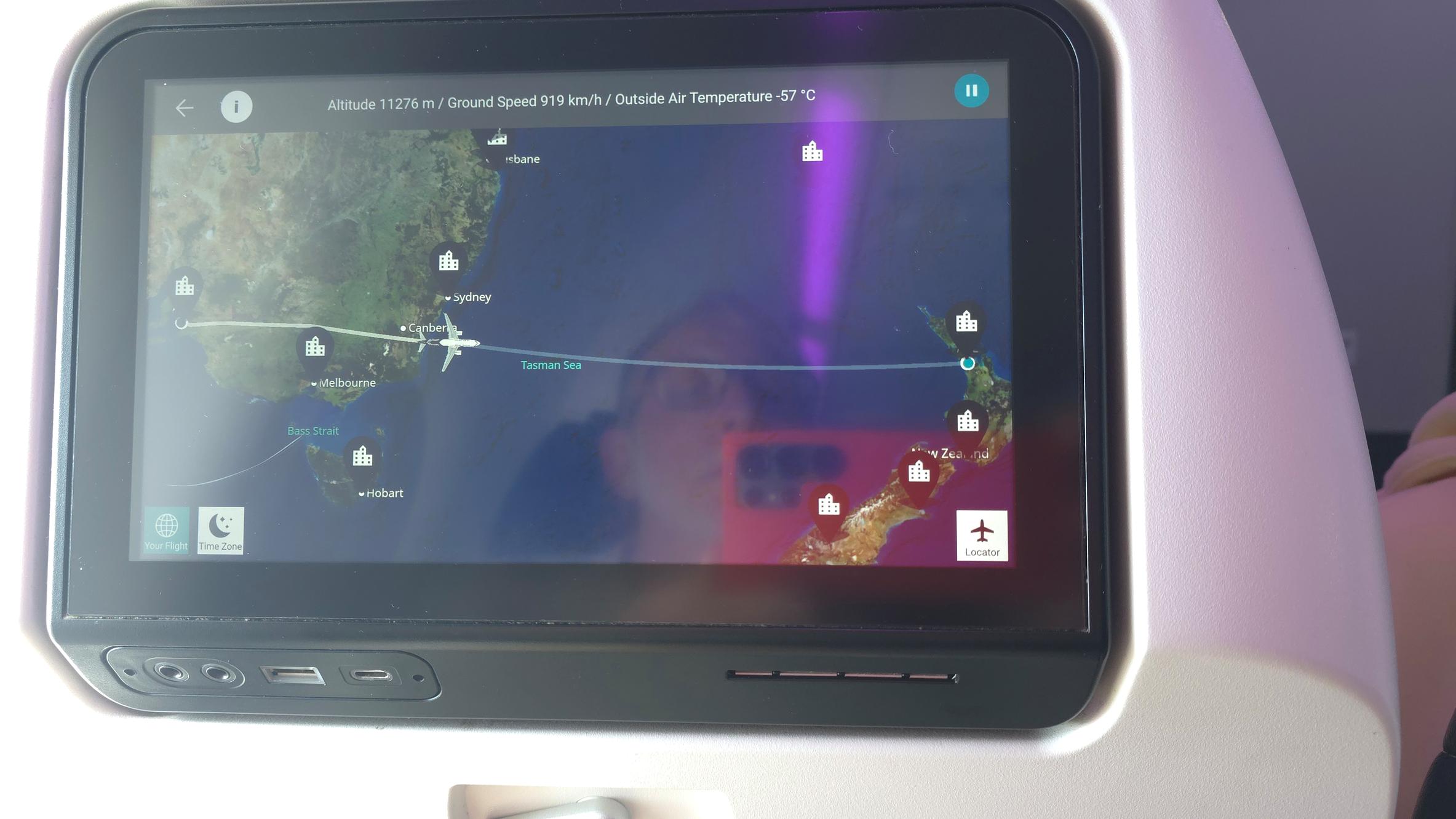
Our flight path. Adelaide to Auckland.
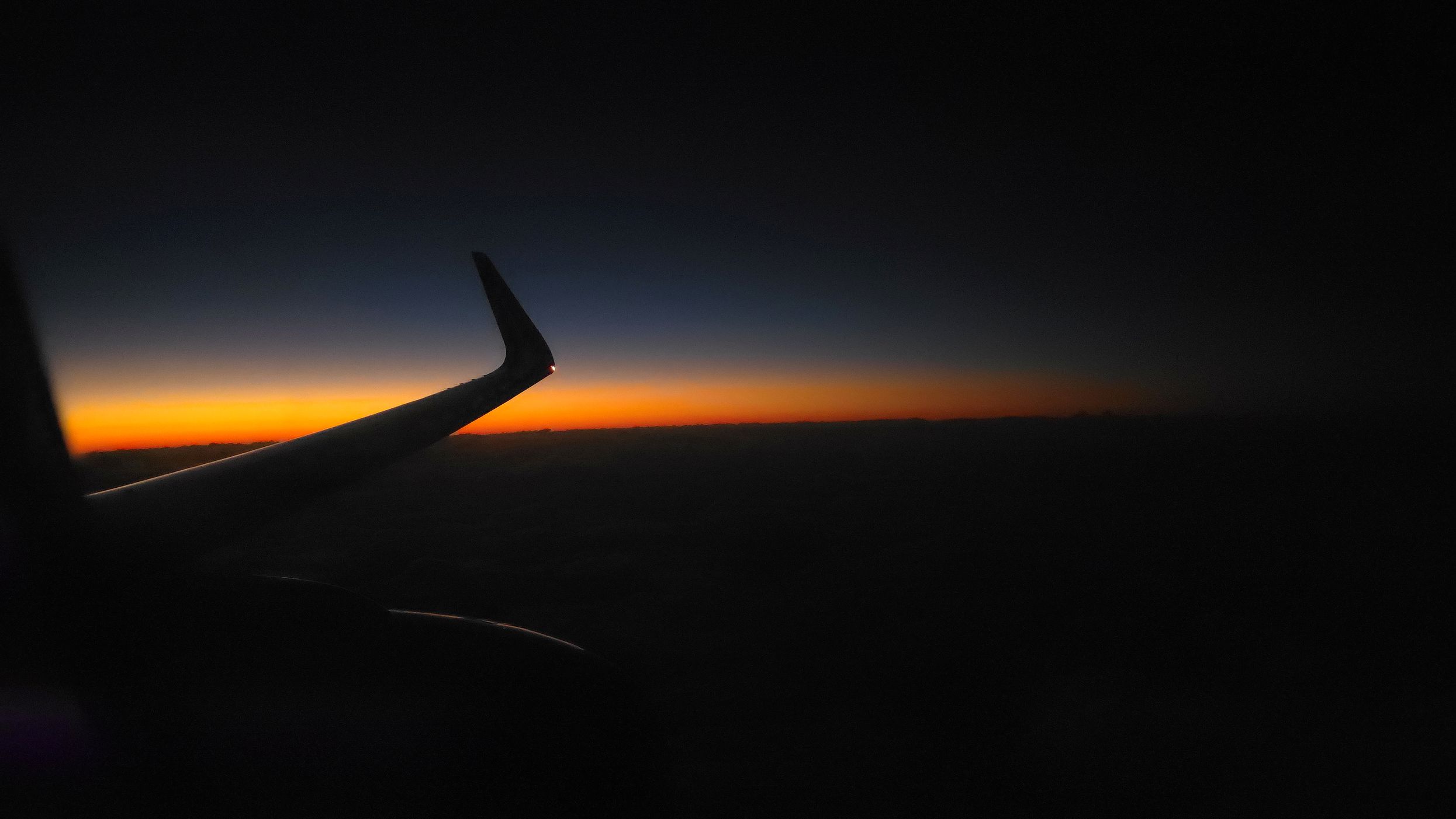
Sunset as we near Auckland.